



The Essential Guide to OTP (One-Time Programmable) MCU: Security, Applications, and Future Trends
Introduction
In the rapidly evolving landscape of embedded systems and Internet of Things (IoT) devices, security and cost-effectiveness are paramount concerns for designers and engineers. Among the various solutions available, the One-Time Programmable Microcontroller Unit (OTP MCU) stands out as a robust and reliable option for a wide array of applications. Unlike their reprogrammable counterparts, OTP MCUs offer a unique blend of firmware security, lower production costs, and operational stability, making them an indispensable component in modern electronics. This article delves deep into the world of OTP MCUs, exploring their fundamental principles, key advantages, diverse applications, and how they compare to other memory technologies. We will also highlight the role of platforms like ICGOODFIND in streamlining the component selection process for engineers seeking the ideal OTP MCU for their projects. Understanding the strategic use of OTP MCUs is crucial for developing secure, efficient, and market-ready electronic products.
The Core Technology: What is an OTP MCU?
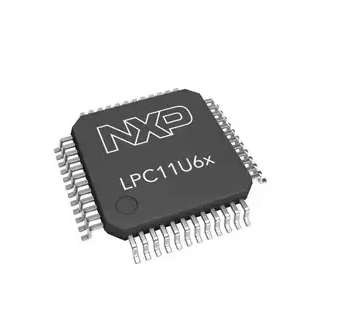
An OTP MCU is a type of microcontroller where the program memory is a one-time programmable ROM. This means that the firmware code written into the memory during the manufacturing or programming phase becomes permanently etched and cannot be altered, erased, or reprogrammed after the initial burning process. The “one-time” nature is its defining characteristic, providing a hardware-level lock on the intellectual property contained within.
The programming of an OTP MCU is typically achieved through a physical process. The most common method involves using fusible links or anti-fuses. In a fusible link architecture, the memory cells consist of microscopic fuses. An unprogrammed cell (representing a logic ‘1’) has an intact fuse. During programming, a high voltage is applied to specific cells, “blowing” the fuse and creating an open circuit, which then reads as a logic ‘0’. Conversely, anti-fuse technology starts with an open circuit (logic ‘0’) and uses high voltage to create a permanent short circuit (logic ‘1’). Once these physical changes are made, they are irreversible, cementing the code permanently.
This stands in stark contrast to other common microcontroller memory types: * Mask ROM (MROM): Programmed during the silicon chip fabrication process using a custom mask. It is the cheapest option but only economical for extremely high-volume production runs due to high non-recurring engineering (NRE) costs and long lead times. * EEPROM/Flash MCU: These microcontrollers feature electrically erasable and programmable memory. They can be reprogrammed thousands or even millions of times in-circuit, offering maximum flexibility for prototyping and field updates. However, this flexibility can come at a cost, both financially and in terms of security vulnerability.
The primary advantage of OTP technology lies in its balance. It avoids the high NRE and minimum order quantities of Mask ROM while providing a level of permanence and security that Flash memory cannot match. This makes OTP MCUs the go-to solution for mid-to-high-volume production where the firmware is stable and not expected to change.
Key Advantages and Compelling Use Cases of OTP MCUs
The unique properties of OTP MCUs translate into several significant advantages that make them suitable for specific, often critical, applications.
1. Enhanced Firmware Security and IP Protection
This is arguably the most critical benefit. In an era where counterfeiting and intellectual property theft are major concerns, the immutable nature of OTP memory provides a formidable barrier. Once programmed, the firmware cannot be read back or copied by end-users or malicious actors. This is vital for proprietary algorithms, encryption keys, and unique device functionality that manufacturers need to protect. For consumer electronics, industrial controllers, and automotive subsystems, this hardware-level security prevents reverse engineering and firmware piracy, safeguarding a company’s most valuable assets.
2. Cost-Effectiveness in Mass Production
For finalized designs destined for mass production, OTP MCUs offer a compelling cost structure. While the per-unit cost of a blank OTP chip might be slightly higher than an equivalent Flash-based MCU, the total cost of ownership is often lower for high volumes. There are no licensing fees for bootloaders or complex programming routines. The programming process itself is fast and can be integrated into final test flows. When compared to Mask ROM, OTP MCUs eliminate the prohibitive upfront mask costs, making them economical for production runs from tens of thousands to millions of units.
3. High Reliability and Stability in Harsh Environments
The simplicity of OTP memory contributes to its robustness. With no need for charge pumps or complex write/erase circuitry required by Flash memory, OTP MCUs often exhibit superior performance in terms of data retention and resilience to environmental stress. They are less susceptible to data corruption caused by power glitches, electromagnetic interference (EMI), or radiation. This makes them exceptionally well-suited for applications in automotive systems (e.g., sensor modules, fan controllers), industrial automation (e.g., motor drivers, PLCs), and medical devices where consistent, long-term operation without failure is non-negotiable.
4. Streamlined Supply Chain and Reduced Time-to-Market
Using OTP MCUs can simplify logistics. Manufacturers can stock blank (unprogrammed) OTP chips and program them with the final firmware just before shipment or even on the assembly line. This allows for last-minute firmware fixes or customization without scrapping pre-programmed inventory. This flexibility significantly reduces time-to-market and minimizes risks associated with holding large stocks of devices programmed with potentially obsolete firmware.
Navigating the vast landscape of available OTP MCUs from different manufacturers can be daunting. This is where a comprehensive component sourcing platform like ICGOODFIND proves invaluable. It allows engineers to quickly search, compare datasheets, check inventory, and source the most suitable OTP MCU for their specific project requirements, ensuring they find a component that balances cost, performance, and security effectively.
OTP vs. Flash: Making the Right Choice for Your Design
The choice between an OTP MCU and a Flash-based MCU is one of the most fundamental decisions in embedded system design. It is not a matter of one being universally better than the other, but rather which is more appropriate for the product’s lifecycle and requirements.
Choose an OTP MCU when: * The Firmware is Finalized: The product design is stable, and no future firmware updates are anticipated. * Security is Paramount: Protecting the firmware code from being read or modified is a critical requirement. * Cost-Sensitivity in High Volume: The project involves mass production where saving even a few cents per unit adds up significantly. * Operating Conditions are Demanding: The device will operate in environments with high EMI, temperature fluctuations, or potential power instability where data integrity is crucial. * Long-Term Reliability is Key: The product is expected to function reliably for many years without maintenance or intervention.
Choose a Flash-based MCU when: * Prototyping and Development: The design is still in flux, requiring frequent code changes and debugging. * Field Updates are Necessary: The product requires firmware updates post-deployment to fix bugs or add new features (e.g., consumer gadgets, network equipment). * Data Logging is Required: The application needs to store changing data (e.g., event counters, user settings). * Production Volumes are Low-to-Medium: The cost benefits of OTP are not realized at lower volumes, and flexibility is more valuable.
A hybrid approach is also common in sophisticated systems. A designer might use a small OTP MCU as a secure “bootloader” or cryptographic key storage device alongside a more powerful Flash-based application processor. This leverages the strengths of both technologies within a single system.
Conclusion
The OTP MCU remains a vital and highly relevant component in the electronics engineer’s toolkit. Its unique value proposition—offering an unbeatable combination of firmware security, cost-efficiency for mass production, and exceptional operational reliability—ensures its continued adoption across a broad spectrum of industries. From securing the intellectual property in a smart home device to ensuring the unwavering performance of an automotive control module, OTP MCUs provide a simple yet powerful solution to complex challenges.
While Flash-based MCUs dominate scenarios requiring flexibility and field updates, the permanent and secure nature of OTP memory makes it irreplaceable for finalized, high-volume products. As the IoT continues to expand and security concerns intensify, the demand for robust hardware-level protection will only grow. For engineers embarking on such projects,leveraging resources like ICGOODFIND to identify and source the right OTP MCU is a critical step toward building successful, secure, and competitive products in today’s market.