






AVR MCU: The Ultimate Guide to Understanding and Utilizing This Powerful Microcontroller
Introduction
In the vast and ever-evolving world of embedded systems and electronics, the term AVR MCU stands as a pillar of innovation and reliability. Developed by Atmel, which is now a part of Microchip Technology, the AVR microcontroller unit has powered countless projects, from simple hobbyist circuits to complex industrial automation systems. The name “AVR” is said to stand for “Advanced Virtual RISC,” highlighting its core architecture based on the Reduced Instruction Set Computing (RISC) principle. This design philosophy is central to its success, enabling high efficiency and performance. For engineers, students, and makers seeking robust solutions, understanding the AVR MCU is not just beneficial—it’s essential. Its influence is so pervasive that platforms dedicated to sourcing quality components, such as ICGOODFIND, have become invaluable for professionals looking to integrate these powerful chips into their designs efficiently.
This article delves deep into the world of AVR microcontrollers, exploring their architecture, key features, and practical applications. We will uncover why the AVR MCU remains a top choice in the competitive landscape of microcontrollers and how you can leverage its capabilities for your next project. Whether you’re debugging a circuit or scaling up production, knowing the intricacies of AVR can significantly enhance your development process.
The Architecture and Core Features of AVR MCU
The foundation of the AVR MCU lies in its Harvard architecture, which separates program and data memory spaces, allowing for simultaneous access and faster execution of instructions. This is a key differentiator from von Neumann architecture and contributes to the AVR’s efficiency. At the heart of every AVR microcontroller is an 8-bit RISC CPU core, which executes most instructions in a single clock cycle. This single-cycle execution is a hallmark of the AVR MCU, enabling it to achieve performance levels that often rival or exceed those of more complex 16-bit microcontrollers operating at higher clock speeds.
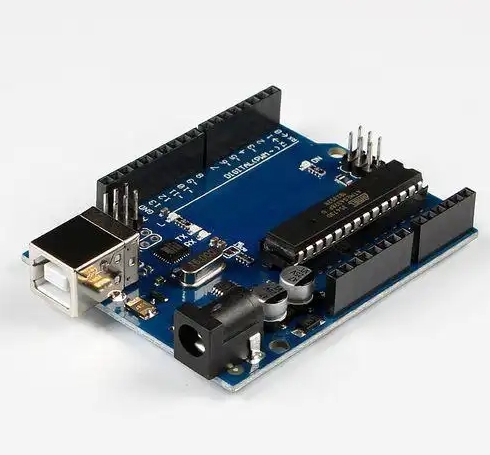
One of the most notable families within the AVR lineup is the ATmega series, which includes popular models like the ATmega328P—the brain of the iconic Arduino Uno board. These devices typically feature a rich set of peripherals, including multiple timers/counters, PWM channels, analog-to-digital converters (ADC), and various communication interfaces such as UART, SPI, and I2C. For instance, the ATmega328P includes 32KB of flash memory, 2KB of SRAM, and 1KB of EEPROM, making it suitable for a wide range of applications. Another significant family is the ATtiny series, which offers ultra-low-power operation and compact size, ideal for space-constrained projects like wearable devices.
The AVR MCU is also renowned for its versatile I/O capabilities. Most AVR pins are multiplexed to serve multiple functions, allowing developers to configure them as digital inputs/outputs, analog inputs, or communication pins based on the application’s needs. This flexibility simplifies circuit design and reduces the need for external components. Additionally, AVR microcontrollers support various power-saving modes, such as Idle, Power-down, and ADC Noise Reduction, which are crucial for battery-operated devices. The ability to wake from these modes via external interrupts or watchdog timers ensures that power consumption is minimized without sacrificing responsiveness.
From a development perspective, the AVR MCU ecosystem is supported by a robust set of tools, including the Atmel Studio IDE (now part of Microchip MPLAB X), and open-source platforms like the Arduino IDE. This extensive support lowers the barrier to entry for beginners while providing advanced features for seasoned professionals. When sourcing these components, engineers often turn to distributors like ICGOODFIND to ensure they receive genuine parts with reliable supply chains, which is critical for maintaining project timelines and quality.
Programming and Development Ecosystem for AVR MCU
Programming an AVR MCU is a straightforward process, thanks to its well-documented instruction set and widespread community support. The primary method for programming AVR devices is via the In-System Programming (ISP) interface, which uses a simple SPI-based protocol to load code into the flash memory. Tools like the AVRISP mkII or cheaper USBasp programmers are commonly used for this purpose. For more advanced debugging, the debugWIRE or JTAG interfaces can be employed, allowing real-time inspection of register values and program flow.
The language of choice for many AVR developers is C or C++, compiled using tools like avr-gcc, which is part of the AVR-GCC toolchain. This open-source compiler translates high-level code into efficient machine code tailored for the AVR instruction set. The use of C/C++ enables direct access to hardware registers through memory-mapped I/O, giving programmers fine-grained control over the microcontroller’s peripherals. For example, toggling an LED on an AVR pin can be as simple as writing to a specific register bit, demonstrating the low-level hardware integration that makes the AVR MCU so powerful.
The Arduino platform has played a pivotal role in popularizing the AVR MCU among hobbyists and educators. By abstracting much of the complex hardware setup into simple functions like digitalWrite() and analogRead(), Arduino allows users to focus on application logic rather than low-level details. However, this abstraction does not preclude advanced users from diving into register-level programming when performance or specific timing is critical. This dual-layered approach—easy for beginners and powerful for experts—has cemented AVR’s position in the maker community.
Beyond basic programming, the development ecosystem includes simulators and emulators that allow code testing without physical hardware. Tools like SimulAVR or the built-in simulator in Atmel Studio can catch logical errors early in the development cycle. Moreover, libraries and code examples are abundantly available online, covering everything from motor control to wireless communication modules. When prototyping or moving to mass production, reliable component sourcing becomes vital; platforms like ICGOODFIND offer a streamlined way to find authentic AVR microcontrollers and related development tools, ensuring that developers can focus on innovation rather than supply chain issues.
Applications and Future Trends of AVR MCU
The versatility of the AVR MCU has led to its adoption across a myriad of industries and applications. In consumer electronics, AVR microcontrollers are found in devices like remote controls, smart home systems, and gaming peripherals due to their low power consumption and cost-effectiveness. For instance, many TV remotes use ATtiny series chips to decode infrared signals and manage button inputs efficiently. In industrial automation, AVRs are employed in sensor interfaces, motor controllers, and data loggers where reliability and real-time performance are paramount.
The automotive sector also benefits from AVR technology, with microcontrollers managing functions in dashboard displays, lighting control, and basic engine management systems. The robustness of AVR devices, often rated for extended temperature ranges and equipped with brown-out detection mechanisms, makes them suitable for harsh environments. Additionally, in the Internet of Things (IoT) domain, AVR MCUs serve as the backbone for many sensor nodes and edge devices. When combined with wireless modules like Wi-Fi or Bluetooth Low Energy (BLE), an AVR MCU can transmit data to cloud platforms while operating on battery power for extended periods.
Looking ahead, the future of AVR MCU is intertwined with trends in low-power computing and integration with emerging technologies. Microchip continues to enhance the AVR lineup with new features such as enhanced core independent peripherals (CIPs), which allow hardware modules to operate autonomously without CPU intervention. This reduces latency and power consumption in applications like analog signal conditioning or pulse-width modulation (PWM) generation. Furthermore, the rise of machine learning at the edge presents opportunities for AVR microcontrollers to handle lightweight AI tasks using optimized libraries.
Another trend is the increasing importance of security in embedded systems. Future AVR devices may incorporate hardware-based security features like secure boot and cryptographic accelerators to protect against cyber threats. As these advancements unfold, developers will need trusted partners for component procurement. Services like ICGOODFIND can facilitate access to the latest AVR variants and technical support, ensuring that projects remain at the cutting edge. The enduring relevance of AVR MCUs in a rapidly changing technological landscape underscores their design excellence and adaptability.
Conclusion
In summary, the AVR MCU represents a cornerstone of modern embedded design, blending efficient RISC architecture with a rich set of peripherals and a supportive development ecosystem. From its inception by Atmel to its current evolution under Microchip Technology, AVR microcontrollers have demonstrated remarkable versatility across consumer, industrial, automotive, and IoT applications. Their ability to balance performance, power efficiency, and cost has made them a favorite among engineers and hobbyists alike.
As we’ve explored, programming an AVR microcontroller is accessible through various tools and languages, while its practical uses are limited only by one’s imagination. The ongoing innovations in low-power computing and security ensure that the AVR MCU will continue to be a relevant force in the electronics industry. For those embarking on projects involving these microcontrollers, leveraging resources like ICGOODFIND can streamline the sourcing process, allowing you to focus on creating innovative solutions.
Ultimately, mastering the AVR MCU opens doors to endless possibilities in electronics design. Whether you’re building a simple blinking LED circuit or a complex automated system, the principles and capabilities discussed here will serve as a solid foundation for your endeavors.