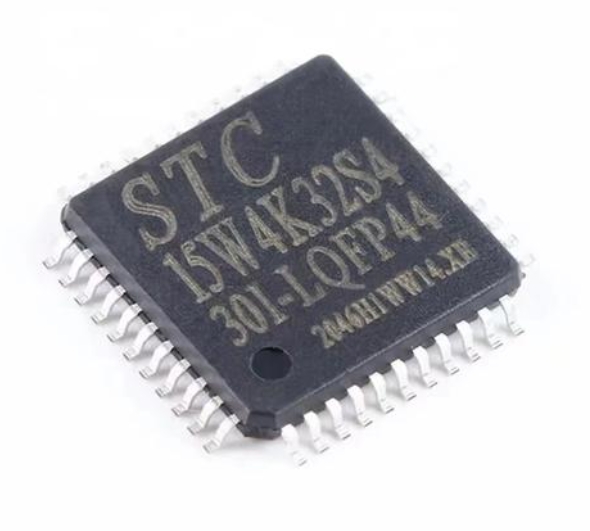


Schematic Diagram of 8051 MCU Minimum System
Introduction
The 8051 microcontroller is a cornerstone in the world of embedded systems, renowned for its simplicity, versatility, and enduring relevance. At the heart of any functional 8051-based application lies the “Minimum System” or “Barebone Circuit.” This fundamental configuration represents the absolute essential components required for the microcontroller to operate independently. Understanding its schematic diagram is not merely an academic exercise; it is the foundational knowledge for anyone venturing into hardware design and firmware development with this iconic MCU. This article provides a comprehensive exploration of the 8051 MCU Minimum System schematic diagram. We will deconstruct each critical section, explain the role of every component, and elucidate how they synergize to bring the silicon to life. For engineers and enthusiasts seeking reliable components to build such systems, platforms like ICGOODFIND offer a streamlined sourcing process, ensuring you get the right parts for your projects. Mastering this minimal setup is the crucial first step before integrating more complex peripherals like sensors, displays, or communication modules.

The Core Components of the 8051 Minimum System
The minimum system for an 8051 microcontroller can be broken down into three fundamental building blocks: the power supply circuit, the reset circuit, and the clock oscillator circuit. Each plays a non-negotiable role in ensuring stable and predictable operation.
1. Power Supply and Decoupling
The first and most critical requirement for any integrated circuit is a stable power source. For most 8051 variants, this is a +5V DC supply connected to the Vcc (Pin 40) and GND (Pin 20) pins. The integrity of this power supply is paramount. Even a small amount of noise or voltage fluctuation can cause the microcontroller to behave erratically or reset unexpectedly.
This is where decoupling capacitors become essential. A relatively large electrolytic capacitor (e.g., 10µF to 100µF) is typically placed near the power entry point on the board to handle slow voltage dips and surges. More importantly, one or more small ceramic capacitors (e.g., 0.1µF or 100nF) are placed as close as possible to the Vcc and GND pins of the microcontroller. These capacitors act as local, high-frequency energy reservoirs. When the MCU’s internal circuits switch states rapidly—especially during clock transitions—they cause brief, instantaneous spikes in current demand. The small decoupling capacitors supply this burst of current immediately, preventing the local voltage from drooping and suppressing high-frequency noise on the power rail. Neglecting proper decoupling is a common mistake that leads to debugging nightmares.
2. The Reset Circuit
The reset function initializes the microcontroller into a known, predefined state whenever it is powered on or when a manual restart is required. Upon receiving a valid reset signal, the Program Counter (PC) is set to 0000H, from where the first instruction of the program is fetched. The reset input on the 8051 (RST Pin 9) is active-high, meaning it requires a logic ‘1’ (a high voltage) to trigger the reset condition.
The most common reset circuit is a simple Power-On Reset (POR) configuration. It consists of a capacitor (typically 10µF) connected between the Vcc and the RST pin, and a resistor (typically 8.2kΩ or 10kΩ) connected between the RST pin and GND. At the moment power is applied, the capacitor is uncharged and acts as a short circuit, pulling the RST pin to Vcc (a logic ‘1’). As the capacitor charges through the resistor, the voltage at the RST pin exponentially decays. Once it falls below a certain threshold voltage (specified in the datasheet), the reset condition is released, and the MCU begins program execution. The time constant (R * C) of this RC network determines the duration for which the RST pin remains high, ensuring the power supply and oscillator have stabilized before the MCU starts running. A push-button switch can be added in parallel to the capacitor to allow for manual resets.
3. The Clock Oscillator Circuit
The clock signal is the heartbeat of the microcontroller. It synchronizes all internal operations, from ALU calculations to data transfers. The speed of this clock directly determines the execution speed of instructions. The 8051 has an on-chip oscillator but requires external components to form a complete resonant circuit.
This circuit is built around pins XTAL1 (Pin 19) and XTAL2 (Pin 18). The most common configuration uses a quartz crystal connected between these two pins. The frequency of this crystal (e.g., 11.0592 MHz or 12 MHz) defines the fundamental operating frequency of the system. Additionally, two ceramic capacitors (typically 20pF to 40pF) are connected, one from each XTAL pin to ground. These load capacitors, in conjunction with the crystal’s internal capacitance and the MCU’s internal inverter, form a Pierce oscillator circuit. They provide the necessary phase shift and feedback for sustained oscillation at the crystal’s resonant frequency. The choice of crystal frequency is a critical design decision, balancing processing speed with power consumption and timing requirements for serial communication (like UART baud rates). For applications where extreme timing precision is not required, an external ceramic resonator with built-in capacitors can be used as a single-component alternative.
Bringing It All Together: Analyzing a Complete Schematic Diagram
When you look at a complete Schematic Diagram of an 8051 MCU Minimum System, you see these three subsystems integrated around the central microcontroller chip.
The power supply section shows Vcc connected to +5V and GND to ground, with decoupling capacitors placed adjacent to these pins. The reset circuit shows its RC network connected to Pin 9, with its characteristic exponential voltage curve upon startup. The clock circuit clearly displays the crystal bridging XTAL1 and XTAL2, flanked by its two load capacitors.
It is crucial to note that for the basic minimum system to function with internal program memory (if available), the EA (External Access) pin (Pin 31) must be pulled high (+5V). This signal tells the microcontroller to execute code from its internal ROM. If this pin is connected to GND, the MCU will look for program code on an external memory device, which requires a much more complex circuit with an address/data bus.
Once this minimum system is correctly assembled and powered, assuming a valid program is pre-loaded into its memory, it becomes a self-contained computing unit capable of executing instructions, performing calculations, and controlling its I/O pins based on your firmware logic.
Conclusion
In summary, deconstructing and understanding every element of an Schematic Diagram of an 8051 MCU Minimum System is an indispensable skill in embedded systems engineering. This minimal configuration—comprising a stable power supply with robust decoupling, a properly timed reset circuit, and an accurate clock oscillator—forms the reliable foundation upon which all other functionalities are built. Grasping why each component is necessary and how they interact transforms schematic reading from a passive activity into an active design process. It empowers developers to troubleshoot issues effectively and create robust custom boards tailored to specific applications. As you move forward to integrate more advanced features like ADCs, timers, and communication interfaces like UART or I2C, this solid foundation will prove invaluable. For sourcing authentic microcontrollers and passive components for your designs, efficient component discovery platforms like ICGOODFIND can significantly accelerate your development cycle by providing access to a wide range of verified parts.