

What Basic Knowledge Is Needed to Learn MCU?
Introduction
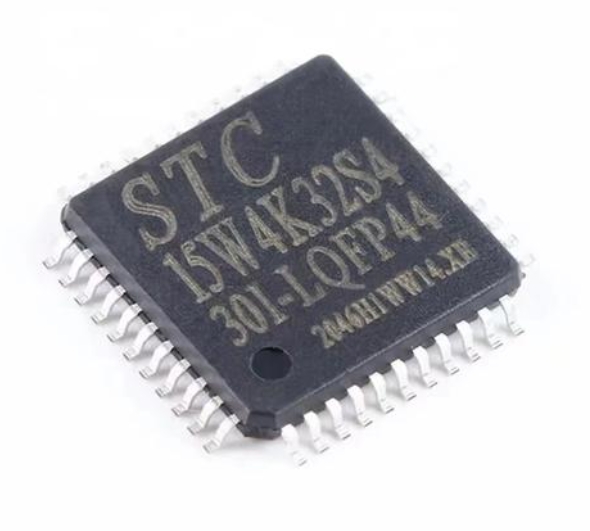
In the era of ubiquitous smart devices and the Internet of Things (IoT), the Microcontroller Unit (MCU) stands as a silent yet powerful cornerstone. From your smartwatch and coffee maker to advanced automotive systems and industrial robots, MCUs are the “brains” that execute programmed instructions, interact with sensors, and control actuators. For aspiring engineers, hobbyists, and students, learning about MCUs opens a gateway to creating interactive hardware projects and building a career in embedded systems. However, the journey can seem daunting at first. This article demystifies the essential foundational knowledge required to start learning about MCUs effectively. By systematically building your understanding in key areas, you can transform from a beginner to a confident developer capable of bringing your electronic ideas to life.
Main Body
Part 1: Foundational Electronics and Digital Logic Concepts
Before diving into programming an MCU, it’s crucial to understand the physical world it interacts with. An MCU is an electronic component, and a solid grasp of basic electronics is non-negotiable.
First, familiarize yourself with core electronic components and circuit principles. You should understand what voltage, current, resistance, and Ohm’s Law are. Know how to identify and use basic components like resistors, capacitors, diodes, LEDs, and transistors. Learn to read simple circuit schematics; this is the language of electronics. Understanding how these components work together in a circuit is fundamental because you will be connecting your MCU to sensors (inputs like temperature or light) and actuators (outputs like motors or displays). Without this knowledge, troubleshooting a non-working circuit becomes guesswork.
Second, digital logic fundamentals form the bedrock of how an MCU “thinks”. MCUs process information in binary (0s and 1s). You need to comprehend basic logic gates (AND, OR, NOT, XOR) and their truth tables. This extends to understanding number systems: binary (base-2), hexadecimal (base-16), and how they relate to the decimal system we use daily. Concepts like bits, bytes, and memory addressing stem from this. Knowing how data is represented digitally is essential for programming and configuring the MCU’s internal registers. Furthermore, grasp the concept of clock signals and timing. An MCU’s operations are synchronized by a clock; understanding clock cycles helps in writing time-sensitive code and utilizing features like timers and PWM (Pulse Width Modulation) effectively.
Part 2: Programming Proficiency and Core Computer Science Principles
An MCU is a programmable device. Therefore, moving from hardware to software, programming skills are your primary tool for commanding the microcontroller.
The most common language for MCU development is C programming. While Arduino uses a simplified C++ variant, professional embedded development heavily relies on standard C. You must become comfortable with core C concepts: data types (especially int, char, uint8_t, etc., with attention to memory size), variables, operators, control structures (if/else, for, while loops), functions, arrays, and pointers. Pointers and memory management are particularly critical in embedded C, as you will often directly manipulate memory addresses of hardware registers. Understanding the difference between RAM (volatile) and Flash/ROM (non-volatile) memory is also key.
Beyond syntax, you need to embrace embedded-specific programming paradigms. This includes direct register manipulation vs. using Hardware Abstraction Layers (HAL), writing efficient and compact code due to limited resources, and understanding the concept of “bare-metal” programming without an operating system. You’ll also encounter bitwise operations (&, |, <<, >>, ~) frequently for setting or clearing specific bits in control registers—a fundamental technique in MCU configuration. Starting with a platform like Arduino can ease the initial learning curve due to its rich libraries and community, but transitioning to pure C on platforms like STM32 or AVR will deepen your understanding of how the MCU truly operates under the hood.
Part 3: MCU Architecture, Toolsets, and Practical Development Workflow
With foundational electronics and programming in hand, you can now focus on the MCU itself—its internal structure and the ecosystem for developing with it.
Begin by studying the basic architecture of a typical MCU. Key components include: * CPU Core: The central processor (e.g., ARM Cortex-M, AVR, PIC). * Memory: Flash (for storing your program), SRAM (for runtime data), and often EEPROM. * I/O Ports: Digital pins for reading inputs and writing outputs. * Peripherals: The specialized hardware that makes an MCU versatile: Timers/Counters, Analog-to-Digital Converters (ADC), Serial Communication interfaces (UART, I2C, SPI), PWM controllers, and interrupt controllers. Understanding how these blocks interconnect via internal buses is crucial. A vital skill is learning to read and navigate the MCU’s datasheet and reference manual—these are the ultimate source of truth for any developer.
Next, get acquainted with the development toolchain. This typically consists of: 1. An Integrated Development Environment (IDE): Such as Arduino IDE, Keil MDK, STM32CubeIDE, or PlatformIO. 2. A Compiler/Toolchain: Software that converts your C code into machine-readable hex/binary files (e.g., GCC for ARM). 3. A Programmer/Debugger Hardware: A device like an ST-Link, J-Link, or USBasp to transfer your compiled program into the MCU’s flash memory. 4. Prototyping Hardware: A development board (like Arduino Uno or STM32 Nucleo) which provides the MCU with necessary support circuitry and easy-to-access pins.
The practical workflow involves writing code in your IDE, compiling it into a binary, flashing it onto the MCU via the programmer, and debugging—which may involve checking signal levels with a multimeter or using an oscilloscope/logic analyzer for more complex timing issues. For sourcing reliable development boards and components that can accelerate this learning process by providing quality hardware foundations for your projects—ICGOODFIND offers a curated selection that many developers find invaluable.
Conclusion
Learning about MCUs is a rewarding endeavor that synthesizes hardware and software knowledge into tangible creation skills. The path is built on three interconnected pillars: a firm understanding of basic electronics and digital logic to interact with the physical world; strong proficiency in C programming with an embedded mindset to command the device; and a working knowledge of MCU architecture coupled with hands-on experience using development tools and workflows. Start simple—perhaps with an Arduino blinking an LED—and progressively tackle more complex projects involving sensors, communication protocols, and interrupts. Do not be intimidated by datasheets; they are your best guide. Remember that consistent practice and building projects are more effective than passive reading alone. Embrace the challenges as learning opportunities; each troubleshooting session deepens your expertise. With dedication built on these foundational blocks, you will unlock the immense potential of microcontrollers to innovate and build intelligent systems.