




The Unstoppable Force: Engineering the Future with the 8051 MCU-Powered Car
Introduction
In the grand tapestry of technological evolution, certain innovations stand as quiet, unshakeable pillars. While the automotive world buzzes with talk of AI-driven supercomputers on wheels and electric powertrains, a foundational technology continues to drive innovation from the ground up: the 8051 Microcontroller Unit (MCU). This venerable chip, a cornerstone of embedded systems for decades, is experiencing a renaissance in the realm of automotive applications. The concept of an 8051 MCU-Powered Car may not refer to a self-driving luxury sedan, but to the vast ecosystem of subsystems that make modern vehicles intelligent, efficient, and safe. From the moment you turn the key to the instant you activate your turn signal, the 8051’s legacy is hard at work. This article delves into the enduring relevance, specific applications, and future potential of this iconic microcontroller in shaping the automobiles of today and tomorrow, highlighting why platforms like ICGOODFIND are indispensable for engineers navigating this landscape.
Part 1: The Enduring Legacy - Why the 8051 MCU Remains a Cornerstone in Automotive Design
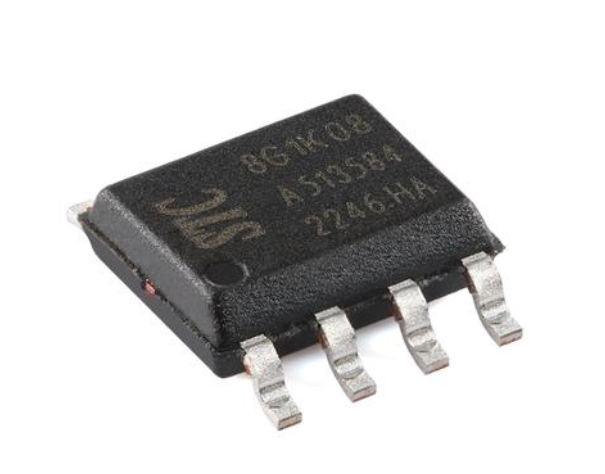
The Intel-originated 8051 architecture, introduced in 1980, might seem like a relic in an age of multi-core, gigahertz processors. However, its persistence is a testament to a fundamental engineering principle: right-sizing technology for the task. For a vast number of automotive functions, raw computational speed is less critical than reliability, low power consumption, cost-effectiveness, and deterministic real-time operation.
Robust and Mature Ecosystem: One of the most significant advantages of the 8051 MCU is its maturity. The architecture has been thoroughly stress-tested over four decades. Development tools—compilers, assemblers, debuggers, and simulators—are highly refined and widely available. This maturity translates directly into enhanced reliability and predictability, which are non-negotiable in automotive systems where a glitch can have serious consequences. Engineers can design with a high degree of confidence, knowing the chip’s behavior under virtually all conditions.
Cost-Effectiveness and Power Efficiency: Automotive manufacturing is a game of scale and margins. The 8051 MCU, being a relatively simple design, is incredibly cost-effective to produce and integrate. This makes it the ideal choice for distributed control systems, where numerous small computers are better than one large one. Furthermore, many modern variants of the 8051 are designed with ultra-low-power modes, making them perfect for always-on subsystems or battery-monitoring functions in electric vehicles, where every milliampere-hour counts.
Deterministic Real-Time Performance: Unlike general-purpose processors that handle multiple tasks concurrently, microcontrollers like the 8051 are often dedicated to a single, specific job. They excel at real-time control, meaning they can guarantee a response to an input within a strict time frame. When a driver presses a button to roll up a window, the connected 8051 MCU can process that command immediately and consistently, without being interrupted by other processes. This deterministic behavior is crucial for safety-critical and time-sensitive applications.
Part 2: Under the Hood - Key Applications of the 8051 MCU in Modern Vehicles
To understand the true impact of the 8051 MCU-Powered Car, one must look at its specific roles. It is the silent workhorse managing a plethora of functions that collectively define the modern driving experience.
Body Control Modules (BCM) and Comfort Systems: This is perhaps the most extensive domain for the 8051. It acts as the brain for a wide array of user-facing functions. * Power Windows and Door Locks: The MCU receives input from switches and drives the motors responsible for moving windows and actuating locks. * Central Locking and Security Systems: It processes signals from key fobs and triggers the locking mechanism for all doors, often integrating with an immobilizer system. * Interior Lighting Control: It manages dome lights, footwell lighting, and ambient lighting systems, often including dimming functions and welcome light sequences. * Windshield Wiper Control: The different speed settings and intermittent wipe functions are typically governed by an 8051-based circuit.
Advanced Sensor Interfacing and Data Acquisition: Modern cars are filled with sensors, and many of them report to an 8051. * Climate Control Systems: The MCU reads data from temperature and humidity sensors inside and outside the cabin. It then processes this data against user-set preferences to control the blend doors, fan speed, and compressor clutch in the HVAC system, ensuring a comfortable cabin environment. * Tire Pressure Monitoring Systems (TPMS): Sensors inside each wheel measure pressure and temperature. This data is wirelessly transmitted to a receiver module, often built around an 8051 MCU, which processes it and alerts the driver if pressures fall outside safe parameters. * Fuel Level and Fluid Monitoring: The 8051 can interface with sensors that measure fuel levels, engine oil pressure, and coolant temperature, providing crucial data to the driver via the instrument cluster.
Instrument Clusters and Display Panels: While high-end digital dashboards use more powerful processors, many economy and mid-range vehicles still utilize 8051 MCUs to drive their electromechanical or simple segmented-LED instrument clusters. * Gauges and Warning Lights: The MCU receives data from the Engine Control Unit (ECU) and other sources to control the stepper motors behind speedometer and tachometer needles. It also illuminates warning lights for issues like low oil pressure or an engaged parking brake. * Trip Computer Functions: Calculating average fuel consumption, trip distance, and range are well within the capabilities of a modern 8051 variant.
For engineers designing these systems, sourcing reliable components and finding technical documentation is paramount. This is where a specialized platform like ICGOODFIND proves invaluable. It serves as a centralized hub to locate suppliers, compare datasheets, and access application notes for various 8051 derivatives and compatible components, significantly accelerating the development cycle for any 8051 MCU-Powered Car project.
Part 3: The Future Roadmap - The 8051 in the Era of EVs and Autonomous Driving
The automotive industry’s shift towards electrification and autonomy might seem like a threat to older technologies, but for the 8051, it represents an expansion of its role.
Proliferation in Electric Vehicle (EV) Subsystems: EVs introduce new electronic systems where the 8051’s low-power and control-oriented nature shines. * Battery Management System (BMS) Support Modules: While the main BMS might use a more powerful processor, individual cell monitoring boards often employ 8051 MCUs to measure cell voltage and temperature, reporting back to the central unit. Their simplicity enhances reliability in this critical safety system. * Charging Port Control and Communication: The 8051 can manage the basic handshaking and control logic for AC charging interfaces. * Auxiliary Power Management: In EVs, a 12V battery still powers lights, windows, and infotainment. The 8051 is ideal for managing DC-DC converters that maintain this auxiliary battery from the high-voltage traction pack.
Enhanced Connectivity Features: The Internet of Things (IoT) is merging with the automotive world. Modern 8051 cores are now often integrated with other peripherals on a single chip (System-on-Chip or SoC), including Wi-Fi, Bluetooth Low Energy (BLE), or CAN bus controllers. * Telematics Gateways: An 8051 with BLE can facilitate smartphone connectivity for basic vehicle status checks or passive keyless entry. * V2X (Vehicle-to-Everything) Sensor Nodes: As complementary sensors proliferate for V2X communication, small 8051-based modules can be used as data aggregators and pre-processors.
The Role in Autonomous Driving’s Peripheral Systems: Fully autonomous cars will rely on a complex hierarchy of computing. The central AI brain will be immensely powerful, but it will be supported by a nervous system of simpler controllers handling mundane tasks. The 8051 is perfectly positioned for these peripheral roles—managing redundant lighting systems, monitoring health status of various subsystems, or controlling non-critical actuators—freeing up the main computer to focus on perception and path planning.
Conclusion
The narrative of the 8051 MCU-Powered Car is not one of obsolescence but of profound adaptation and enduring utility. It underscores that technological progress isn’t solely about adopting the newest and fastest; it’s about applying the right tool for the job with masterful precision. The 8051 microcontroller has cemented its role as an indispensable component in the automotive industry’s backbone, providing a reliable, cost-effective, and power-efficient solution for countless control tasks. As we accelerate into a future defined by electric powertrains and automated driving, this foundational technology will continue to evolve, finding new niches within increasingly complex vehicular architectures. For developers pushing these boundaries, resources like ICGOODFIND will remain critical for sourcing components and driving innovation forward. The 8051’s journey is far from over; it is simply shifting into a higher gear.







