



8051 MCU Differences (vs. other MCUs)
Introduction
The 8051 microcontroller, introduced by Intel in 1980, stands as a foundational pillar in the embedded systems industry. Despite its age, it continues to be a relevant and widely used architecture, particularly in cost-sensitive and legacy applications. However, the microcontroller landscape has evolved dramatically, with modern architectures like ARM Cortex-M, AVR, and PIC dominating various market segments. Understanding the key differences between the 8051 and other MCUs is crucial for engineers and developers when selecting the right processor for a project. This article delves deep into the architectural nuances, performance metrics, and ecosystem factors that distinguish the venerable 8051 from its contemporary counterparts. For engineers navigating this complex landscape, resources like ICGOODFIND can be invaluable for comparing specifications and sourcing components efficiently.
Main Body
Part 1: Architectural and Core Design Differences
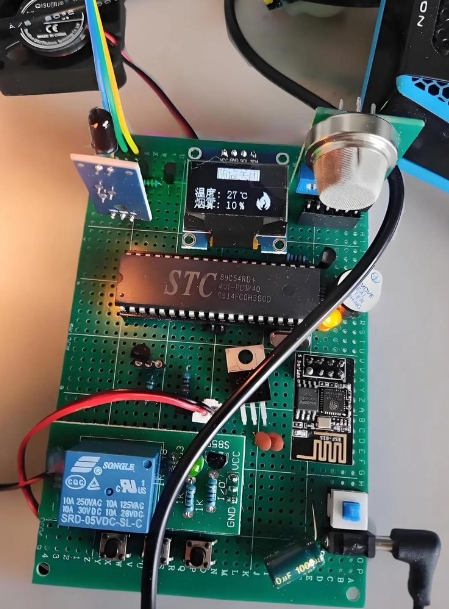
The fundamental differences between microcontrollers begin at their architectural core. The 8051 is based on a Classic CISC (Complex Instruction Set Computer) architecture. This design philosophy focuses on having a rich set of instructions, some of which can perform complex operations in a single cycle, albeit often taking multiple clock cycles to execute. The core is an 8-bit architecture, meaning it processes data in 8-bit chunks. Its memory is organized under the Harvard Architecture, which features separate address spaces and buses for program memory (ROM) and data memory (RAM). This allows for simultaneous access, but can complicate data management. A defining hardware feature of the classic 8051 is its four distinct register banks, which facilitate fast context switching during interrupt handling.
In stark contrast, most modern MCUs, especially those based on ARM Cortex-M cores (like the STM32 series), AVR (like Arduino’s ATmega328p), and RISC-V, are built on a RISC (Reduced Instruction Set Computer) philosophy. RISC architectures prioritize a smaller set of simple, highly optimized instructions that typically execute in a single clock cycle. This leads to higher Instructions Per Cycle (IPC). Furthermore, while many modern MCUs retain a modified Harvard architecture for performance, their execution pipelines are deeper and more efficient. The most significant leap is in their data bus width; ARM Cortex-M cores are predominantly 32-bit, and some even offer 64-bit options, enabling them to handle larger data sets and more complex calculations with far greater efficiency than the 8-bit 8051. The move from CISC to RISC represents a fundamental shift aimed at maximizing raw processing power and energy efficiency.
Part 2: Performance, Power Efficiency, and Peripheral Integration
When comparing performance metrics, the gap between the 8051 and modern MCUs becomes pronounced. The performance of an 8051 is often measured by its 12-clock cycle per instruction baseline (modern enhanced 8051s may have 1-clock cycles). Even when running at the same clock speed as a modern RISC MCU, its effective throughput is significantly lower due to this high clocks-per-instruction ratio. For example, an 8051 running at 16 MHz does not deliver the same computational power as an ARM Cortex-M0+ at 16 MHz. Modern MCUs benefit from advanced features like single-cycle multiply instructions and hardware dividers, which the classic 8051 lacks entirely, making mathematical operations a slow, software-based process.
Power efficiency is another area where modern architectures excel. The 8051 was not designed with ultra-low-power operation as a primary goal. Modern MCUs, particularly those targeting IoT and battery-powered devices (e.g., Texas Instruments’ MSP430 or certain ARM Cortex-M series), feature sophisticated power management frameworks. These include multiple sleep modes (Sleep, Deep Sleep, Shutdown), where power consumption can drop to microamps or even nanoamps, and the ability to dynamically scale clock speed and voltage. This level of granular power control is absent in the standard 8051.
Regarding peripheral integration, the classic 8051 came with a basic set: UART, timers, and I/O ports. Modern MCUs are “system-on-chips” with an extensive and often highly sophisticated set of integrated peripherals. It is now standard to find:
- Advanced Communication Interfaces: Multiple SPI, I2C, I2S, CAN FD, Ethernet, and USB controllers.
- High-Resolution Analog: 12-bit to 16-bit ADCs, DACs, and sophisticated analog comparators.
- Timing and Control: Advanced PWM timers for motor control and digital power conversion.
- Specialized Hardware Accelerators: For cryptography (AES, SHA), graphics, and AI/ML tasks.
This level of integration reduces the bill of materials (BOM) and board space for modern designs, a significant advantage over the more minimalist 8051.
Part 3: Development Ecosystem, Tools, and Community Support
The development environment surrounding a microcontroller is as important as its hardware capabilities. The 8051 benefits from a mature and stable ecosystem. It is supported by decades-old compilers (like Keil C51), simulators, and low-cost programmers. Its instruction set is simple, making it accessible for educational purposes and assembly-level programming. However, this ecosystem can feel dated compared to modern standards.
Modern MCU platforms, particularly ARM Cortex-M, have fostered a vibrant and dynamic ecosystem. A key enabler has been the standardization around the ARM architecture, leading to powerful, free-to-use toolchains like ARM GCC and sophisticated commercial IDEs like Keil MDK or IAR Embedded Workbench. A revolutionary aspect is the widespread adoption of vendor-agnostic hardware abstraction layers (HALs) and low-level drivers provided by chip manufacturers. This allows developers to port code between different vendors’ ARM chips with relative ease.
Furthermore, communities built around platforms like Arduino (which uses AVR and ARM MCUs) and STM32Cube have created vast repositories of libraries, code examples, and forums for troubleshooting. This drastically reduces development time. While the 8051 has its community, it is not as large or active as those for modern architectures. When researching parts or seeking alternative components for either architecture, platforms like ICGOODFIND can streamline the process by providing centralized access to datasheets, supplier inventories, and alternative part comparisons.
Conclusion
The 8051 microcontroller remains a testament to enduring design, finding its niche in simple control applications, educational settings, and maintaining legacy systems where its simplicity and low cost are paramount virtues. Its CISC architecture, while dated, is well-understood and sufficient for many basic tasks. However, when pitted against modern MCUs like ARM Cortex-M, AVR, or PIC, the differences are substantial and generally favor the newer architectures. Modern MCUs offer superior computational performance through RISC designs and efficient pipelines; they provide unparalleled power efficiency for battery-operated devices; they integrate a vast array of advanced peripherals that simplify system design; they are supported by powerful, modern development tools and vibrant communities.
The choice between an 8051 and another MCU ultimately hinges on the project’s specific requirements concerning cost, performance, power consumption, and time-to-market. For new designs demanding high performance or low power, a modern 32-bit MCU is almost always the superior choice. Yet, the legacy of the 8051 endures.