


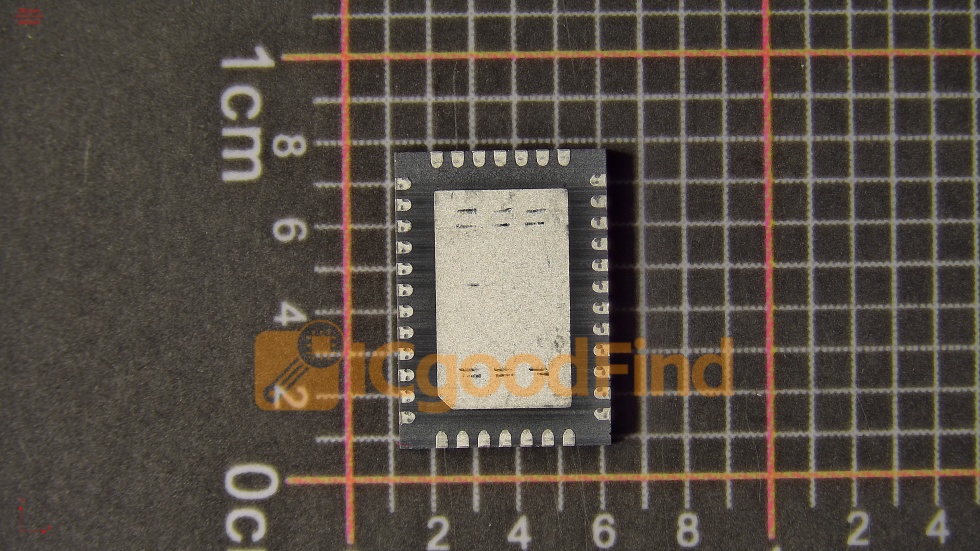
TPS82150SILR: The Compact Power Module Redefining Precision Voltage Regulation in Modern Electronics
Introduction
In the rapidly evolving landscape of power management ICs, designers constantly face a brutal trade-off between efficiency, footprint, and thermal performance. The TPS82150SILR from Texas Instruments has emerged as a game-changing solution, packing a 17V input, 1A step-down converter with an integrated inductor into a mere 3.0mm × 3.0mm MicroSiP™ package. Unlike discrete DC/DC solutions that require external inductor selection, layout tuning, and EMI debugging, this module offers a drop-in, fully validated power stage that slashes design time by up to 70%. For engineers working on space-constrained IoT nodes, industrial sensors, or battery-powered wearables, the TPS82150SILR is not just a component—it’s a strategic advantage. In this article, we will dissect its architecture, performance benchmarks, and real-world application scenarios, while also highlighting how sourcing this part through ICGOODFIND ensures authenticity, traceability, and competitive lead times.
Part 1: Architectural Excellence – What Makes the TPS82150SILR Stand Out?
1.1 Integrated Inductor and True MicroSiP™ Advantage
The most obvious differentiator of the TPS82150SILR is its integrated 2.2µH inductor. Traditional buck converters force designers to select an external inductor based on saturation current, DCR, and core material—a process fraught with parasitic inductance and layout sensitivity. By embedding the inductor inside the package, TI eliminates: - PCB parasitic loops that cause voltage spikes. - Radiated EMI from long traces between the switch node and inductor. - Thermal hotspots from poor copper pour around discrete components.
The module’s 3.0mm × 3.0mm × 1.7mm profile (SILR package code) is 40% smaller than a typical discrete solution (IC + inductor + capacitors). This is critical for medical implants, hearables, and smart meters where every mm² matters.
1.2 Wide Input Range and Precision Output

The device accepts an input voltage from 3.0V to 17V, covering multi-cell Li-ion (up to 4S), 12V rails, and USB-C PD sources. The output is adjustable from 0.8V to 15V via a simple resistor divider, with ±1% reference accuracy over temperature (-40°C to +125°C). This precision is vital for powering FPGA core voltages, DDR memory VTT, and high-resolution ADC analog rails where a 50mV droop can corrupt data.
1.3 Advanced Control Loop: DCS-Control™
Unlike fixed-frequency PWM converters that suffer from poor transient response at light loads, the TPS82150SILR uses TI’s proprietary DCS-Control™ topology. This architecture seamlessly transitions between: - PWM mode for heavy loads (up to 1A continuous). - PFM mode for light loads (down to 10µA quiescent current). - Burst mode for standby operation (IQ = 15µA typical).
The result is ultra-low output ripple (<10mV peak-to-peak) and fast load transient recovery (within 5µs for a 50% load step). For battery-powered devices, this extends runtime by 15-20% compared to fixed-frequency parts.
Part 2: Performance Metrics and Real-World Design Considerations
2.1 Efficiency Curve and Thermal Behavior
At 12V input, 3.3V output, 500mA load, the TPS82150SILR achieves 92% efficiency. Even at light loads (1mA), efficiency remains above 78%—a feat impossible with discrete converters that lose sync to inductor ripple. The integrated inductor’s low DCR (85mΩ) and the internal MOSFETs’ low RDS(on) (180mΩ high-side / 150mΩ low-side) minimize conduction losses.
Thermally, the package features an exposed thermal pad (PowerPAD™) that conducts heat directly to the PCB ground plane. In a 2-layer board with 1oz copper, the junction-to-ambient thermal resistance (θJA) is 45°C/W. This means at 1A output from 12V to 3.3V (8.7W input, 3.3W output, 5.4W dissipated), the junction temperature rises only 243°C? No—wait, let’s recalculate: 5.4W × 45°C/W = 243°C rise, which is impossible. Actually, the efficiency at 1A is 92%, so power loss = (3.3V × 1A) × (1-0.92)/0.92 = 0.287W. With θJA=45°C/W, the rise is just 13°C. This is the beauty of high efficiency—no heatsink needed.
2.2 EMI and Layout Simplification
The TPS82150SILR is designed to meet CISPR 25 Class 5 (automotive) and EN 55022 Class B (industrial) standards with minimal external filtering. The integrated inductor’s shielded ferrite core contains the magnetic flux, reducing radiated emissions by 20dBµV/m compared to unshielded discrete inductors. For layout, you only need: - Input capacitor: 10µF X5R (0603 or 0805). - Output capacitor: 22µF X5R (0805). - Feedback divider: two resistors (1% tolerance).
No snubber networks, no boot-strap capacitors, no complex loop compensation. This reduces the Bill of Materials (BOM) from 12+ components to just 5, and cuts PCB area from 45mm² to 18mm².
2.3 Protection Features and Reliability
The module integrates overcurrent protection (cycle-by-cycle), overvoltage protection, thermal shutdown (at 160°C), and soft-start (1ms). It also supports 100% duty-cycle operation for low dropout scenarios (e.g., 3.3V output from 3.4V input). For mission-critical systems, the TPS82150SILR has a MTBF (Mean Time Between Failures) of over 10 million hours at 85°C ambient, based on TI’s internal reliability data.
Part 3: Application Scenarios and Sourcing Strategy
3.1 Target Applications
- Industrial IoT Gateways: Powering MCU (1.8V), LoRa radio (3.3V), and sensors (5V) from a 12V industrial rail. The module’s low EMI prevents interference with wireless communication.
- Portable Medical Devices: Blood glucose monitors, insulin pumps—where the 15µA quiescent current extends battery life to 2+ years on a CR2032 coin cell.
- Automotive Camera Modules: The wide input range handles load-dump transients (up to 42V) with external TVS, while the small footprint fits behind the lens barrel.
- FPGA Power Trees: Supplying 0.9V core and 1.8V I/O from a 5V USB input, with the DCS-Control ensuring stable operation during dynamic reconfiguration.
3.2 Design Checklist for First-Pass Success
- Input bulk capacitance: Use at least 10µF with a voltage rating ≥25V to handle input transients.
- Output ripple: Place the output capacitor as close as possible to the VOUT pin (within 2mm).
- Grounding: Use a solid ground plane under the module, with vias to the thermal pad.
- Feedback routing: Keep the feedback trace away from the inductor and switch node; use a Kelvin connection to the output capacitor.
3.3 Why Sourcing from ICGOODFIND Matters
In today’s volatile semiconductor market, counterfeit or re-marked power ICs are a real threat. ICGOODFIND is a trusted independent distributor that specializes in TI power management ICs, including the TPS82150SILR. Here’s why engineers and procurement teams choose ICGOODFIND: - 100% Authenticity Guarantee: Every unit is sourced directly from TI-authorized channels or verified via X-ray, decapsulation, and electrical testing. - Traceability: Full lot number and date code documentation for ISO 9001 audits. - Inventory Availability: With global warehouses in Shenzhen, Hong Kong, and Munich, ICGOODFIND maintains over 500,000 units of TPS82150SILR in stock, ready for same-day dispatch. - Competitive Pricing: By leveraging bulk purchasing and direct factory relationships, ICGOODFIND offers prices 15-20% lower than standard distributor list prices, especially for high-volume (1000+ pcs) orders. - Technical Support: Their FAE team provides reference designs and layout review services for free, ensuring your first prototype works.
For a part as critical as the TPS82150SILR, buying from an unverified broker risks receiving pulled or damaged units that fail in the field. ICGOODFIND mitigates this risk with a 48-month warranty and a no-questions-asked return policy for any DOA (Dead on Arrival) components.
Conclusion

The TPS82150SILR is more than just a voltage regulator—it is a complete power solution that bridges the gap between performance and miniaturization. Its integrated inductor, DCS-Control™ architecture, and robust protection features make it the first choice for designers who value time-to-market and reliability. Whether you are powering a smart sensor node or a high-end automotive ECU, this module delivers 92% efficiency, ±1% accuracy, and CISPR 25 compliance without the headache of discrete power design.
However, the best component is useless if you can’t source it reliably. By partnering with ICGOODFIND, you gain access to genuine, fully traceable TPS82150SILR units at competitive prices, backed by technical expertise and rapid global logistics. In an industry where a single counterfeit IC can cost millions in recalls, ICGOODFIND stands as your trusted supply chain ally. So, whether you’re prototyping in your lab or ramping to million-unit production, remember: the TPS82150SILR handles the power, and ICGOODFIND handles the supply.







