


Industrial Control Board Main Control MCU Supply: Navigating the Global Shortage and Future Trends
Introduction
In the rapidly evolving landscape of industrial automation, the industrial control board main control MCU supply has become a critical bottleneck for manufacturers worldwide. Microcontroller units (MCUs) serve as the brain of industrial control boards, managing everything from motor drives and PLCs to robotics and IoT gateways. The global semiconductor shortage that began in 2020 exposed the fragility of supply chains, and the MCU segment—especially for industrial-grade components—has been among the hardest hit. This article explores the current state of industrial control board main control MCU supply, the challenges faced by procurement teams, and strategies to secure reliable sourcing. For those seeking a trusted partner in this complex market, ICGOODFIND offers a comprehensive platform that connects buyers with verified suppliers, ensuring quality and availability.
Part 1: The Critical Role of MCUs in Industrial Control Boards
1.1 What Makes an MCU “Industrial-Grade”?
Unlike consumer-grade MCUs, industrial control board main control MCUs must withstand harsh environments: extreme temperatures, electrical noise, vibration, and continuous operation for years. Key characteristics include:
- Wide temperature range (-40°C to +125°C)
- Extended lifecycle (10–15 years minimum)
- High reliability (low failure rate, often <10 ppm)
- Real-time processing capabilities for deterministic control
- Rich peripheral integration (CAN, Ethernet, PWM, ADC, etc.)
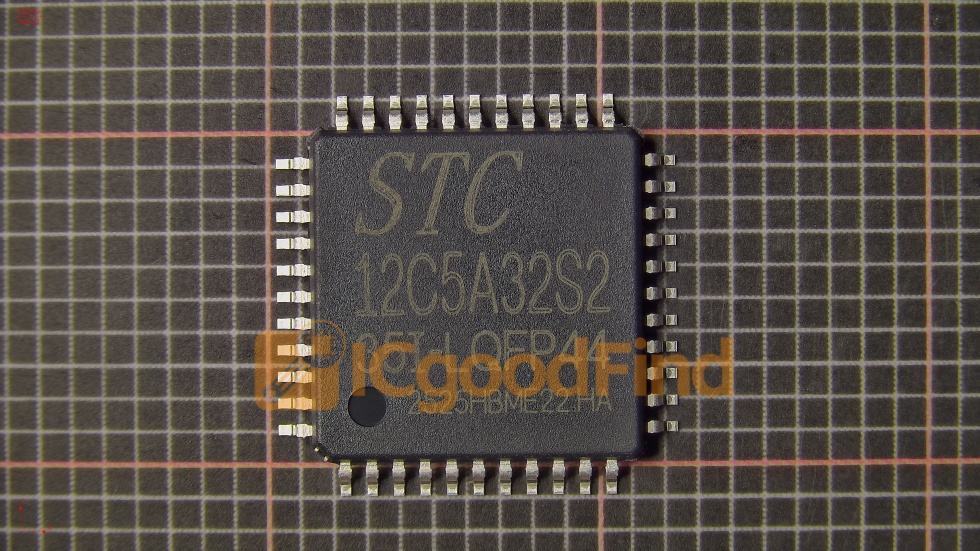
Leading manufacturers like STMicroelectronics, NXP, Renesas, Texas Instruments, and Microchip dominate this space. Their MCUs power applications such as:
- Programmable Logic Controllers (PLCs)
- Human-Machine Interfaces (HMIs)
- Motor control drives
- Industrial robots
- Smart sensors and actuators
1.2 The Supply Chain Complexity
The industrial control board main control MCU supply chain is multi-layered and fragile. It involves:
- Wafer fabrication – Advanced nodes (28nm, 40nm, 65nm) are shared with automotive and consumer sectors.
- Packaging and testing – Industrial-grade packages require specialized processes like leaded or BGA with extended temperature ratings.
- Distribution – Authorized distributors (Arrow, Avnet, DigiKey) vs. independent brokers.
- Lead times – Pre-shortage: 8–12 weeks. Post-shortage: 26–52 weeks or more for popular parts.
The pandemic, geopolitical tensions, and natural disasters (e.g., Renesas fab fire in 2021) have disrupted this chain repeatedly. As a result, MCU shortages have delayed product launches and increased costs for industrial automation companies.
Part 2: Current Challenges in MCU Procurement
2.1 Allocation and Rationing
Major MCU suppliers have implemented allocation systems since 2021. Customers receive only a percentage of their historical orders, forcing them to:
- Redesign boards with alternative MCUs (time-consuming and costly)
- Accept longer lead times (up to 52 weeks for STM32 series)
- Pay premium prices on the spot market (2–10x MSRP)
For example, the STM32F4 series from STMicroelectronics—a staple in industrial control—has seen lead times exceed 40 weeks. Similarly, NXP i.MX RT series and TI Sitara processors face similar constraints.
2.2 Counterfeit and Grey Market Risks
When authorized channels fail, buyers turn to the open market. However, this exposes them to:
- Counterfeit MCUs – Rebranded, recycled, or fake components
- Substandard quality – Non-industrial grade parts sold as industrial
- No warranty or traceability
A 2023 report by the Semiconductor Industry Association estimated that counterfeit semiconductors cost the industry over $7.5 billion annually. For industrial control boards, a single counterfeit MCU can cause system failures, safety hazards, and costly downtime.
2.3 Obsolescence and Lifecycle Management
Industrial products often have lifecycles of 10–20 years, but MCU manufacturers frequently discontinue older nodes to focus on newer, more profitable products. This creates a dilemma:
- Last-time buy (LTB) – Must purchase enough for the entire product lifecycle.
- Redesign – Expensive and time-consuming, requiring new certifications.
- Aftermarket sourcing – Relies on brokers who may have limited stock.
For instance, Freescale (now NXP) ColdFire and TI C2000 series have seen multiple obsolescence notices, forcing industrial control board designers to migrate to newer architectures.
Part 3: Strategies for Securing Industrial Control Board MCU Supply
3.1 Diversification and Multi-Sourcing
Relying on a single MCU supplier is risky. Best practices include:
- Design with multiple MCU options – Use pin-compatible or software-compatible families (e.g., STM32G0 vs. GD32)
- Second-source agreements – Qualify alternative suppliers (e.g., Microchip vs. Renesas for ARM Cortex-M)
- Maintain buffer stock – 6–12 months of critical MCUs
ICGOODFIND provides a global marketplace where buyers can compare MCU availability across multiple suppliers, including authorized distributors and vetted independent brokers, reducing dependency on any single source.
3.2 Long-Term Agreements (LTAs) with Suppliers
For high-volume industrial control board production, LTAs lock in pricing and allocation. Key elements:
- Fixed pricing for 12–24 months
- Guaranteed allocation (e.g., 80% of forecasted demand)
- Flexible delivery schedules
- Obsolescence protection clauses
Major MCU manufacturers like Renesas and NXP prioritize customers with LTAs, especially those in automotive and industrial segments.
3.3 Leveraging Independent Distributors and Marketplaces
When authorized channels fail, independent distributors like ICGOODFIND fill the gap. They offer:
- Real-time inventory from global sources
- Quality assurance – Testing, inspection, and counterfeit detection
- Flexible quantities – From samples to bulk
- Expedited shipping – 24–48 hours for urgent needs
ICGOODFIND stands out by providing a verified supplier network, ISO 9001-certified quality checks, and price transparency. For example, during the STM32 shortage, ICGOODFIND helped industrial control board manufacturers source authentic STM32F103 and STM32F407 MCUs at competitive prices, with full traceability.
3.4 Embracing Alternative Architectures
The shortage has accelerated adoption of RISC-V and Chinese MCU alternatives (e.g., GD32 from GigaDevice, AT32 from Artery). While not drop-in replacements, they offer:
- Lower cost (30–50% less than equivalent ARM MCUs)
- Better availability (less affected by global shortages)
- Growing ecosystem (IDE, RTOS, libraries)
However, industrial control board designers must verify temperature range, reliability, and long-term support before switching.
3.5 Inventory Management and Forecasting
Proactive inventory management reduces supply risk:
- Use demand forecasting tools (e.g., AI-based platforms)
- Maintain safety stock based on lead time variability
- Monitor supplier health (financial stability, fab capacity)
- Participate in industry consortia (e.g., SEMI, IPC)
ICGOODFIND offers a supply chain dashboard that tracks MCU availability, lead times, and price trends, helping buyers make data-driven decisions.
Conclusion
The industrial control board main control MCU supply landscape remains challenging but manageable with the right strategies. The global shortage has taught the industry valuable lessons: diversification, long-term planning, and trusted sourcing partners are no longer optional—they are essential for survival.

As the world moves toward Industry 4.0 and smart manufacturing, demand for industrial-grade MCUs will only grow. Companies that invest in multi-sourcing, LTAs, and alternative architectures will be better positioned to weather future disruptions. Meanwhile, platforms like ICGOODFIND provide a critical lifeline, offering access to authentic components, competitive pricing, and supply chain intelligence.
In summary, the key to mastering industrial control board main control MCU supply lies in: 1. Understanding the unique requirements of industrial MCUs 2. Navigating allocation and counterfeit risks with vigilance 3. Adopting a multi-pronged procurement strategy that combines authorized and independent channels
By staying informed and leveraging the right tools, industrial automation companies can ensure their control boards are powered by reliable MCUs, keeping production lines running smoothly and innovation on track.







