Voltage Regulator IC: The Backbone of Stable Power Supply in Modern Electronics
In today’s fast-evolving electronics landscape, voltage regulator ICs have become indispensable components for ensuring reliable and stable power delivery. Whether you are designing a simple battery-powered gadget or a complex industrial control system, the performance of your entire circuit often hinges on the quality of its power management. This article delves deep into the world of voltage regulator ICs, exploring their types, working principles, selection criteria, and real-world applications. For engineers, hobbyists, and procurement specialists looking for high-quality components, ICGOODFIND offers a comprehensive selection of voltage regulator ICs from leading manufacturers, backed by detailed datasheets and competitive pricing.
Introduction
A voltage regulator IC is an integrated circuit that maintains a constant output voltage regardless of changes in input voltage, load current, or temperature. It acts as a shield for sensitive electronic components, preventing damage from voltage spikes, drops, or noise. Without these regulators, microcontrollers, sensors, communication modules, and power amplifiers would be prone to erratic behavior or permanent failure. The global demand for voltage regulator ICs continues to grow, driven by the proliferation of IoT devices, electric vehicles, renewable energy systems, and portable electronics. Understanding how to choose and implement the right regulator is critical for any successful electronic design. ICGOODFIND simplifies this process by providing a user-friendly platform where you can compare specifications, check stock availability, and source authentic parts for your projects.
Main Body
Part 1: Types and Working Principles of Voltage Regulator ICs
Voltage regulator ICs can be broadly categorized into two main families: linear regulators and switching regulators. Each type has distinct advantages and trade-offs that make it suitable for specific applications.
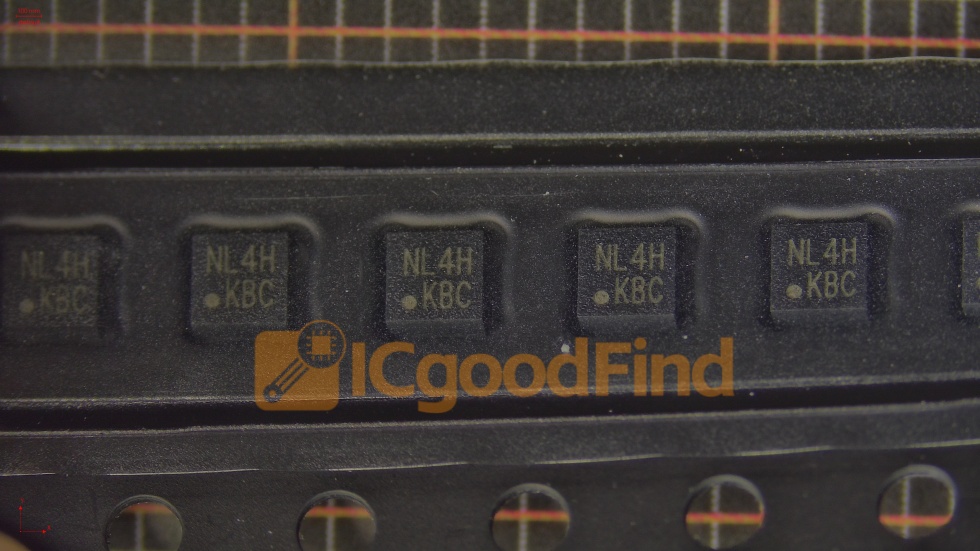
Linear regulators operate by dissipating excess voltage as heat. They use a pass transistor controlled by an error amplifier to maintain a constant output. The classic 78xx series (e.g., 7805 for 5V output) and 79xx series (negative voltage) are iconic examples. Key benefits of linear regulators include low noise, fast transient response, and simple external circuitry—often requiring only a couple of capacitors. However, their efficiency is inherently low when the input-to-output voltage difference is large, as the wasted energy turns into heat. For instance, converting 12V to 5V with a linear regulator yields only about 42% efficiency. Low dropout (LDO) regulators are a specialized subset that can operate with a very small voltage difference between input and output, making them ideal for battery-powered devices where every millivolt matters. ICGOODFIND stocks a wide range of LDOs from brands like Texas Instruments, Analog Devices, and Maxim Integrated.
Switching regulators, on the other hand, use high-frequency switching (typically 100 kHz to several MHz) combined with inductors, capacitors, and diodes to transfer energy in packets. They come in three main topologies: buck (step-down), boost (step-up), and buck-boost (inverting or non-inverting). A buck converter, for example, can achieve efficiencies above 90% even with large voltage drops. The trade-off is increased output ripple, electromagnetic interference (EMI), and more complex design requirements. Modern switching voltage regulator ICs often integrate the power MOSFETs, compensation networks, and protection features into a single package, simplifying PCB layout. ICGOODFIND offers a vast inventory of switching regulators from manufacturers such as Linear Technology (now part of Analog Devices), ON Semiconductor, and Renesas, complete with application notes and reference designs.
Part 2: Key Selection Criteria for Voltage Regulator ICs
Choosing the right voltage regulator IC involves balancing multiple parameters. Here are the most critical factors to consider:
1. Input and Output Voltage Range
The regulator must handle the maximum and minimum input voltages your system will encounter. For linear regulators, the dropout voltage (minimum difference between input and output) is crucial. For switching regulators, the duty cycle limits determine the achievable output range. Always check the absolute maximum ratings to avoid breakdown.
2. Output Current Capability
The IC must supply the peak current demand of your load, plus a safety margin. Many regulators have thermal shutdown protection, but sustained operation near the limit can degrade reliability. ICGOODFIND provides detailed current ratings and thermal resistance data for each part, helping you select a device that matches your power budget.
3. Efficiency and Thermal Management
For battery-operated devices, efficiency directly impacts run time. Switching regulators are preferred for high-power or high-voltage-drop scenarios. However, if your application is noise-sensitive (e.g., audio or RF circuits), a low-noise linear regulator may be worth the efficiency loss. Thermal resistance (θJA) and package type (e.g., SOT-23, DPAK, QFN) dictate how much heat can be dissipated without external heatsinks.
4. Output Noise and Ripple
Linear regulators typically have output noise in the microvolt range, while switching regulators produce ripple in the millivolt range. If your circuit includes precision ADCs, PLLs, or analog sensors, you may need a post-regulator LDO after a switching converter. Some modern voltage regulator ICs offer ultra-low noise modes or spread-spectrum frequency modulation to reduce EMI.
5. Protection Features
Look for built-in protections such as overcurrent protection (OCP), overtemperature protection (OTP), undervoltage lockout (UVLO), and reverse current protection. These features enhance system robustness and simplify design. ICGOODFIND allows you to filter parts by protection features, ensuring you find a regulator that meets your safety requirements.
6. Package and Footprint
Space-constrained designs favor small packages like WLCSP or DFN. However, smaller packages have higher thermal resistance and may require careful PCB layout. Always review the recommended land pattern and thermal vias from the datasheet. ICGOODFIND provides package dimensions and 3D models for many parts, aiding in mechanical design.
Part 3: Real-World Applications and Best Practices
Voltage regulator ICs are found in virtually every electronic device. Here are three representative applications and the best practices for each:
Application 1: Battery-Powered IoT Sensors
A typical IoT sensor node runs on a single Li-ion cell (3.0V–4.2V) and needs a stable 3.3V supply for the microcontroller and RF module. An LDO voltage regulator IC with a dropout voltage of 100mV or less is ideal here, as it maximizes battery utilization. For example, the TPS7A05 from Texas Instruments offers 1.2A output with only 140mV dropout at full load. Best practice: Place the LDO close to the load, use a 1µF ceramic input capacitor and a 1µF output capacitor, and ensure the ground plane is solid for thermal dissipation. ICGOODFIND offers this part and many alternatives with same-day shipping.
Application 2: Automotive Power Systems
Automotive electronics must withstand wide input voltage swings (9V–16V nominal, but can spike to 40V during load dump). A switching voltage regulator IC like the LM2596 (buck converter) is commonly used to generate 5V or 3.3V for infotainment systems. Best practice: Add a TVS diode at the input for surge protection, use low-ESR electrolytic capacitors for bulk storage, and follow the recommended PCB layout to minimize loop inductance. ICGOODFIND stocks automotive-grade (AEC-Q100 qualified) regulators from Infineon and STMicroelectronics.
Application 3: High-Precision Test Equipment
Bench power supplies and oscilloscopes require extremely clean voltages. A two-stage approach is common: a switching pre-regulator to drop the voltage efficiently, followed by a low-noise linear regulator to filter out ripple. For example, the LT3045 from Analog Devices provides ultra-low noise (0.8µVrms) and high PSRR. Best practice: Use shielded inductors for the switching stage, separate analog and power grounds, and add ferrite beads between stages. ICGOODFIND provides detailed noise performance graphs and evaluation board links for such precision parts.
Conclusion
Voltage regulator ICs are the unsung heroes of modern electronics, quietly ensuring that every component receives the precise power it needs to function correctly. From simple linear regulators for noise-sensitive audio circuits to high-efficiency switching converters for power-hungry processors, the right choice can make or break a design. By understanding the types, selection criteria, and application-specific best practices, engineers can achieve optimal performance, reliability, and cost efficiency. For sourcing these critical components, ICGOODFIND stands out as a trusted partner, offering an extensive catalog of voltage regulator ICs with transparent specifications, competitive pricing, and expert support. Whether you are prototyping a new idea or scaling up production, ICGOODFIND helps you find the perfect regulator for your next innovation.