The Backbone of Modern Electronics: Understanding the Integrated Circuit (IC)
Introduction
In the digital age, the integrated circuit (IC) stands as one of the most transformative inventions in human history. Often referred to as the “microchip” or simply the “chip,” the integrated circuit is the fundamental building block of virtually every electronic device we use today—from smartphones and laptops to medical implants and space satellites. Without the integrated circuit (IC), the modern world as we know it would cease to exist. This article explores the essence of the integrated circuit (IC), its evolution, its diverse applications, and why it remains the cornerstone of technological innovation. For those seeking reliable sources and insights into the world of microelectronics, ICGOODFIND offers a comprehensive platform to discover and understand the latest in IC technology.
Part 1: What Is an Integrated Circuit (IC)? – The Miniaturized Miracle
The Definition and Core Concept
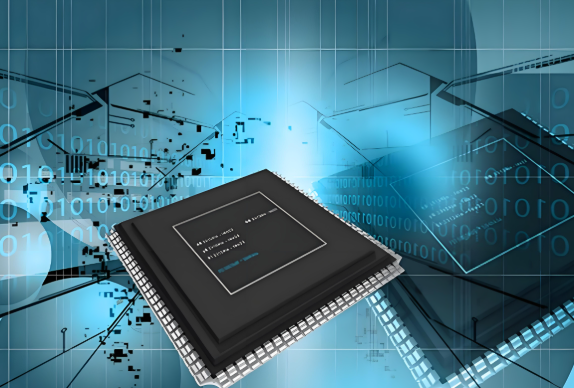
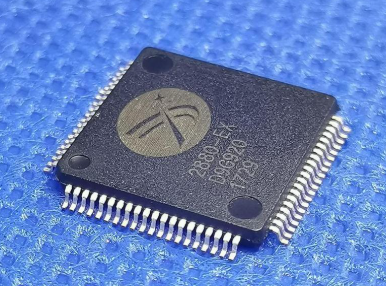
An integrated circuit (IC) is a miniature electronic circuit that consists of thousands, millions, or even billions of tiny electronic components—such as transistors, resistors, capacitors, and diodes—fabricated onto a single piece of semiconductor material, typically silicon. These components are interconnected to perform a specific function, such as amplification, signal processing, or data storage. The key innovation of the integrated circuit (IC) lies in its ability to pack an entire complex circuit into a tiny chip, drastically reducing size, power consumption, and cost compared to discrete components.
The Birth of the IC: A Historical Milestone
The integrated circuit (IC) was independently invented in the late 1950s by two brilliant minds: Jack Kilby of Texas Instruments and Robert Noyce of Fairchild Semiconductor. Kilby’s prototype, demonstrated in 1958, used a single piece of germanium to create a simple oscillator circuit. Noyce’s contribution, a year later, introduced the planar process, which allowed for the mass production of ICs using silicon. This breakthrough laid the foundation for the semiconductor industry. Today, ICGOODFIND serves as a valuable resource for tracking the evolution of these early designs into the advanced chips we use today.
How an IC Works: The Magic of Integration
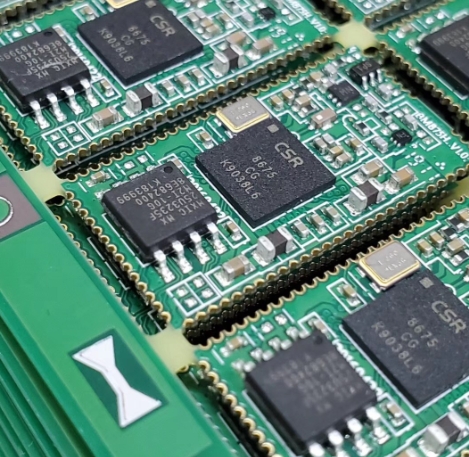
At its heart, an integrated circuit (IC) operates by controlling the flow of electrical current through its semiconductor material. Transistors, the primary components within an IC, act as switches or amplifiers. By arranging millions of transistors in precise patterns, the IC can perform complex logic operations, store data, or process analog signals. The entire circuit is protected by a plastic or ceramic package, with metal pins or solder balls connecting it to external circuits. The level of integration is measured by the number of transistors per chip, following Moore’s Law, which famously predicted that the number of transistors on an IC would double approximately every two years. This relentless scaling has driven the exponential growth of computing power.
Part 2: Types and Applications of Integrated Circuits (ICs)
Classification by Function
The world of integrated circuits (ICs) is vast and diverse. They can be broadly categorized into three main types:
-
Digital ICs: These process binary data (0s and 1s) and include microprocessors (CPUs), microcontrollers, memory chips (RAM, ROM, Flash), and logic gates. Digital ICs are the brains of computers, smartphones, and digital appliances.
-
Analog ICs: These handle continuous signals, such as sound, light, and temperature. Examples include operational amplifiers, voltage regulators, and audio amplifiers. Analog ICs are essential for sensors, audio equipment, and power management.
-
Mixed-Signal ICs: These combine both digital and analog functions on a single chip. They are critical in applications like data converters (ADC/DAC), radio frequency (RF) circuits, and system-on-chip (SoC) designs.
Applications Across Industries
The integrated circuit (IC) has permeated every sector of modern life. Here are some key areas:
-
Consumer Electronics: Smartphones, tablets, laptops, smart TVs, and gaming consoles all rely on powerful ICs for processing, memory, and connectivity. For instance, the latest smartphone SoCs integrate CPU, GPU, modem, and AI accelerators into a single chip.
-
Automotive Industry: Modern vehicles contain dozens of ICs for engine control, infotainment, safety systems (airbags, ABS), and advanced driver-assistance systems (ADAS). The shift toward electric vehicles (EVs) has further increased the demand for power management ICs.
-
Healthcare: Medical devices such as pacemakers, insulin pumps, hearing aids, and diagnostic imaging equipment depend on highly reliable ICs. The miniaturization enabled by ICs has made wearable health monitors and implantable devices possible.
-
Industrial Automation: Factory robots, programmable logic controllers (PLCs), and sensors use ICs for precise control and data acquisition. The Internet of Things (IoT) relies on low-power ICs to connect billions of devices.
-
Aerospace and Defense: Satellites, radar systems, and avionics require radiation-hardened ICs that can withstand extreme conditions. The integrated circuit (IC) is critical for navigation, communication, and weapon systems.
For professionals and enthusiasts looking to source or learn about specific ICs for these applications, ICGOODFIND provides a curated database and expert reviews to help make informed decisions.
The Role of ICs in Emerging Technologies
The integrated circuit (IC) is also at the heart of cutting-edge innovations:
-
Artificial Intelligence (AI): Specialized AI accelerators, such as GPUs and TPUs, are essentially massive arrays of ICs optimized for parallel processing. These chips enable deep learning, natural language processing, and autonomous systems.
-
5G and Beyond: High-frequency RF ICs are essential for 5G base stations and mobile devices, enabling faster data rates and lower latency.
-
Quantum Computing: While still in its infancy, quantum ICs using superconducting materials or trapped ions promise to revolutionize computation.
-
Flexible Electronics: Researchers are developing flexible ICs on plastic substrates for wearable devices and smart packaging.
Part 3: The Future of Integrated Circuits (ICs) – Challenges and Opportunities
The Limits of Moore’s Law
For decades, the semiconductor industry has benefited from the steady miniaturization of transistors. However, as we approach the atomic scale, physical and economic challenges are mounting. The latest integrated circuits (ICs) are fabricated using 3nm and even 2nm process nodes, where quantum tunneling and heat dissipation become significant hurdles. The cost of building advanced fabrication plants (fabs) now exceeds $10 billion, making it increasingly difficult for smaller companies to compete.
New Materials and Architectures
To overcome these limitations, researchers are exploring alternative materials and designs:
-
Silicon Photonics: Using light instead of electrons for data transmission within ICs, offering higher bandwidth and lower power consumption.
-
Gallium Nitride (GaN) and Silicon Carbide (SiC): These wide-bandgap semiconductors enable higher voltage, temperature, and frequency operation, ideal for power electronics and RF applications.
-
3D Integration: Stacking multiple IC layers vertically to reduce interconnect length and improve performance. This is already used in high-bandwidth memory (HBM) and advanced processors.
-
Neuromorphic Computing: ICs that mimic the structure and function of the human brain, using spiking neural networks for energy-efficient AI.
The Role of ICGOODFIND in the Future
As the landscape of integrated circuits (ICs) evolves, staying informed is crucial. ICGOODFIND is positioned as a go-to resource for engineers, hobbyists, and procurement professionals. By aggregating datasheets, application notes, and market trends, ICGOODFIND helps users navigate the complex world of ICs—from legacy components to the latest cutting-edge chips. Whether you are designing a new product or troubleshooting an existing system, ICGOODFIND offers the tools and knowledge to succeed.
Sustainability and Ethical Considerations
The production of integrated circuits (ICs) involves significant energy and resource consumption, as well as the use of rare materials like indium and gallium. The industry is increasingly focusing on sustainable practices, such as recycling electronic waste, reducing water usage in fabs, and designing ICs for longer life cycles. Additionally, the geopolitical importance of IC manufacturing has led to initiatives like the U.S. CHIPS Act and the European Chips Act, aimed at securing supply chains and fostering domestic production.
Conclusion
The integrated circuit (IC) is undeniably the unsung hero of the modern world. From its humble beginnings in the late 1950s to the trillion-transistor chips of today, the IC has enabled unprecedented levels of computation, communication, and convenience. As we face the physical limits of silicon, the industry is pivoting toward new materials, architectures, and applications that promise to extend the legacy of the IC for decades to come. For anyone involved in electronics—whether as a designer, manufacturer, or enthusiast—understanding the integrated circuit (IC) is essential. And for reliable, up-to-date information on this ever-evolving field, ICGOODFIND remains a trusted companion on the journey of discovery.