

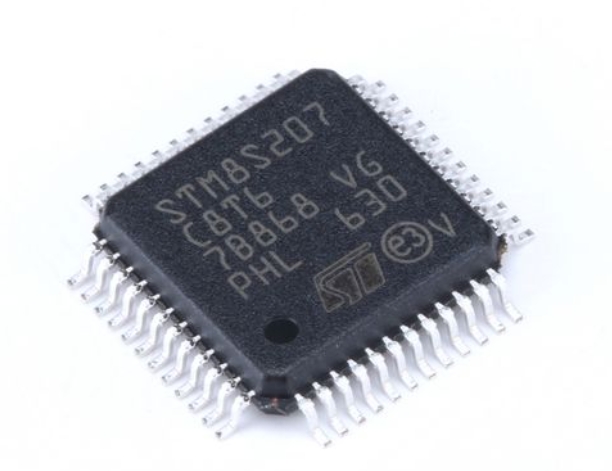
The Essential Guide to SDRAM Chips: Powering Modern Computing
Introduction
In the intricate ecosystem of modern electronics, from the smartphone in your pocket to the supercomputer driving scientific research, memory technology serves as the critical bridge between processor speed and data accessibility. Among the various types of memory, Synchronous Dynamic Random-Access Memory (SDRAM) has been a cornerstone of computing for decades. SDRAM chips are the workhorse volatile memory components that synchronize with the system clock to enable high-speed data transfer between the CPU and memory. Unlike its predecessor, asynchronous DRAM, SDRAM’s synchronous operation allows for more complex commands and pipelining, dramatically improving the efficiency of memory access. This article delves into the architecture, evolution, and pivotal applications of SDRAM, exploring why it remains fundamentally important even as newer technologies emerge. For engineers, purchasers, and tech enthusiasts seeking in-depth component analysis and sourcing, platforms like ICGOODFIND provide invaluable resources for comparing specifications and navigating the global semiconductor market.
Part 1: Architecture and Core Working Principle
At its heart, an SDRAM chip is a type of DRAM, meaning it stores each bit of data in a separate capacitor within an integrated circuit. Since capacitors leak charge, the data eventually fades unless the capacitor charge is refreshed periodically—hence the term “dynamic.” What sets SDRAM apart is its synchronous interface.
The defining characteristic of SDRAM is its synchronization with the positive edge of the computer system’s clock signal. This synchronization means all inputs are registered on this clock edge, and outputs become valid only on subsequent clock edges. This allows the memory controller to know precisely when data will be ready, enabling a “pipelined” operation. Pipelining lets the memory accept a new instruction before it has finished processing the previous one, much like an assembly line, significantly boosting throughput.

Internally, an SDRAM chip is organized into banks. A typical SDRAM module might have 4 or 8 internal banks. This bank architecture allows for interleaving, where one bank can be precharging or activating while another is being accessed for read/write operations. This overlap minimizes idle time and maximizes data transfer efficiency. The basic operational commands—Bank Activate, Read/Write, and Precharge—are all coordinated by the clock signal. The controller sends a row address with an Activate command, then after a defined latency (CAS Latency), it can send a column address with a Read or Write command to access specific data within that row.
Understanding these timings—such as CAS Latency (CL), Row Address to Column Address Delay (tRCD), and Row Precharge Time (tRP)—is crucial for system performance. Lower latency values generally indicate faster response times, directly impacting system speed and responsiveness.
Part 2: Evolution and Generations: From SDR to DDR4/5
SDRAM technology has not remained static; it has evolved through several generations, each marking a substantial leap in data rate and efficiency.
-
SDR SDRAM (Single Data Rate): The first generation transferred data once per clock cycle (on the rising edge). Speeds were typically aligned with bus clock rates (e.g., PC66, PC100, PC133).
-
DDR SDRAM (Double Data Rate): This was a revolutionary jump. DDR SDRAM achieves double the data transfer rate of SDR SDRAM by transferring data on both the rising and falling edges of the clock signal. This effectively doubles the bandwidth without increasing the clock frequency. DDR also introduced a prefetch buffer of 2 bits, meaning it fetched two bits from the memory array for every one bit transferred to/from the I/O pins.
-
DDR2, DDR3, DDR4, and DDR5: Each successive generation built upon this principle with increased prefetch buffers, lower operating voltages (reducing power consumption and heat), higher densities, and improved signaling.
- DDR2 used a 4-bit prefetch and lower voltage than DDR.
- DDR3 moved to an 8-bit prefetch and even lower voltage.
- DDR4 introduced bank groups for further parallelism, higher speeds, and reduced voltage again.
- DDR5, the current leading standard for mainstream computing, features a revolutionary dual-channel architecture per DIMM, dramatically increased density (allowing modules beyond 128GB), and even higher speeds with improved power management via on-DIMM Voltage Regulator Modules (VRMs).
Each transition required new motherboard and controller support due to physical notch changes, pin counts, and electrical specifications. This evolution has been primarily driven by the relentless demand for higher bandwidth to feed increasingly powerful multi-core processors in servers, desktops, and graphics cards.
Part 3: Key Applications and Selection Criteria
SDRAM chips are ubiquitous. Their applications range from consumer electronics to critical infrastructure.
- Personal Computing: All desktop and laptop computers use modules (DIMMs/SODIMMs) populated with SDRAM chips (DDR4 or DDR5).
- Servers and Data Centers: High-performance, error-correcting code (ECC) SDRAM is standard here to ensure data integrity during intensive 24⁄7 operations.
- Graphics Cards: Graphics DDR (GDDR) is a derivative of DDR SDRAM optimized for very high bandwidth in frame buffers. GDDR6X and GDDR7 represent the cutting edge for GPUs.
- Consumer Electronics: Many set-top boxes, networking equipment (routers, switches), and industrial embedded systems rely on soldered-down SDRAM chips for their main working memory.
When selecting SDRAM components for a project or procurement, several factors are paramount: 1. Compatibility (Generation & Form Factor): Ensuring the DDR generation matches the host controller is non-negotiable. 2. Speed & Latency: Measured in MT/s (Mega Transfers per second) and CL timings. Higher speed with lower latency is ideal but often comes at a cost premium. 3. Capacity & Density: Determining how much RAM is needed for the target application’s operating system and software. 4. Voltage & Power: Critical for mobile/embedded designs where thermal output and battery life are constraints. 5. Quality & Supplier Reliability: This is where specialized platforms prove their worth. Navigating the complex supply chain for genuine, reliable components requires expertise. A platform like ICGOODFIND can streamline this process by aggregating technical data and supplier information, helping buyers make informed decisions without sifting through countless datasheets manually.
Conclusion
From its synchronous interface that revolutionized memory access patterns to its double-data-rate innovations that have kept pace with CPU advancements, SDRAM technology has been a foundational pillar of digital progress. While non-volatile memories like Flash have taken over long-term storage, and newer volatile technologies like HBM (High Bandwidth Memory) address ultra-high-performance niches, SDRAM in its DDR incarnations continues to dominate the vast mainstream market for cost-effective, high-speed working memory. Its ongoing evolution through DDR5 and beyond ensures it will remain relevant for years to come. For anyone involved in designing, building, or maintaining electronic systems—from hobbyists to professional procurement officers—a solid understanding of SDRAM specifications is essential. Leveraging comprehensive resources is key to successful implementation; platforms such as ICGOODFIND serve as critical tools in this endeavor by demystifying component selection in an ever-advancing technological landscape.