
Ultrasonic Ranging Based on MCU: Precision Measurement Technology
Introduction
In the rapidly evolving landscape of embedded systems and automation, precise distance measurement is a cornerstone technology. Among various ranging methods, ultrasonic ranging stands out for its reliability, cost-effectiveness, and non-contact nature. At the heart of many modern ultrasonic ranging systems lies the Microcontroller Unit (MCU), a compact integrated circuit that governs the entire measurement process. This article delves into the principles, implementation, and applications of ultrasonic ranging systems built around MCUs. From robotic navigation to industrial automation and smart devices, this technology enables machines to “see” and interact with their physical environment. The integration of MCUs has democratized and enhanced ultrasonic sensing, making high-precision ranging accessible for a vast array of projects and commercial products. As we explore this synergy, we will also highlight how platforms like ICGOODFIND serve as invaluable resources for engineers seeking the optimal MCUs, ultrasonic sensors, and development tools to bring their precise ranging concepts to life.
Main Body
Part 1: Fundamental Principles and System Architecture
Ultrasonic ranging operates on a simple yet effective principle akin to echolocation used by bats. The system emits a high-frequency sound wave (typically 40kHz), which is inaudible to humans, towards a target object. The wave travels through the air, reflects off the object, and returns to the sensor. By precisely measuring the time interval between the emission and the reception of the echo, the distance to the object can be calculated using the formula: Distance = (Speed of Sound × Time of Flight) / 2. The division by two accounts for the round-trip journey of the sound wave.
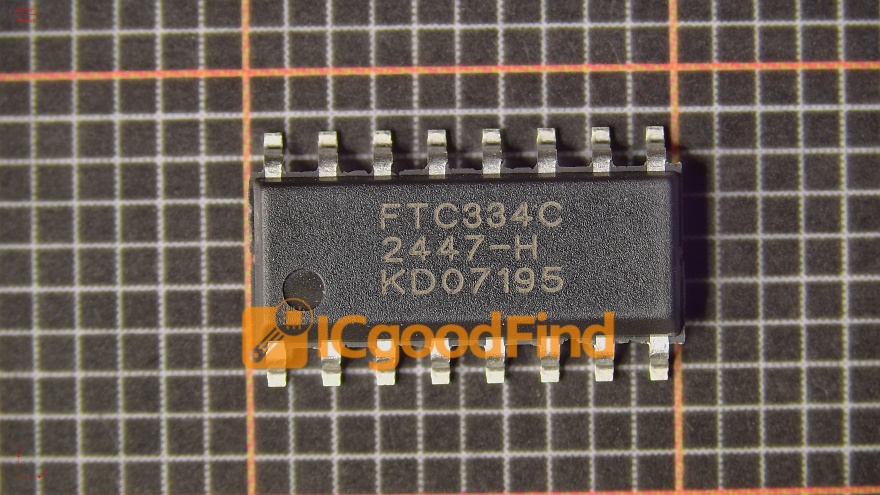
The core architecture of an MCU-based ultrasonic ranging system consists of several key components: * Ultrasonic Sensor: Commonly used modules include the HC-SR04 or TCT40-16T/R. These contain both a transmitter (which converts electrical signals into ultrasonic pulses) and a receiver (which converts returning echoes back into electrical signals). * Microcontroller Unit (MCU): This is the brain of the operation. Popular choices are from families like ARM Cortex-M (e.g., STM32), AVR (e.g., ATmega328 in Arduino), or PIC. The MCU’s responsibilities are multifaceted: it triggers the transmitter, acts as a high-precision timer to measure the echo pulse width, performs the distance calculation, and manages communication with other systems or displays. * Supporting Circuitry: This includes voltage regulators, signal conditioning circuits for the echo (often involving amplification and noise filtering), and output interfaces (e.g., LCD displays, LEDs, or serial communication modules like UART for data transmission to a PC or other devices).
The choice of MCU is critical. It must have a reliable timing mechanism—often using dedicated Input Capture modules or high-resolution timer peripherals—to achieve millimeter-level accuracy. Furthermore, sufficient processing power is needed for real-time calculation and system control. For developers sourcing these components, ICGOODFIND provides a comprehensive platform to compare specifications, availability, and pricing for a wide range of suitable MCUs and sensor modules from various distributors.
Part 2: Implementation Process and Key Technical Challenges
Implementing an ultrasonic ranging system with an MCU involves a structured sequence of operations and overcoming specific technical hurdles.
Typical Workflow: 1. Initiation: The MCU sends a short (e.g., 10µs) high-level trigger pulse to the sensor’s trigger pin. 2. Transmission: Upon receiving the trigger, the sensor emits a burst of eight 40kHz ultrasonic pulses. 3. Echo Detection: The sensor’s receiver listens for the reflected signal. Its echo pin outputs a high-level signal whose duration is proportional to the time of flight (ToF). 4. Time Measurement: This is the most critical step. The MCU’s timer is started as soon as the burst is emitted (or when the echo pin goes high) and stopped when the echo is received (echo pin goes low). Modern MCUs use input capture interrupts for this, ensuring minimal timing error. 5. Calculation & Output: The MCU firmware calculates the distance using the measured time and the speed of sound (which must be compensated for temperature variations). The result is then formatted and sent to an output device.
Key Technical Challenges and Solutions: * Temperature Compensation: The speed of sound in air varies with temperature (approximately 0.6 m/s per °C). Without correction, this can lead to significant errors. Implementing a temperature sensor (like DS18B20) and dynamically adjusting the speed constant in the calculation formula is essential for high accuracy. The MCU reads the temperature data via a protocol like 1-Wire or I2C and adjusts its calculation accordingly. * Noise Filtering: Ambient noise or multiple reflections can cause false echoes. Techniques such as digital filtering in software (e.g., median filtering or averaging multiple readings) and setting a valid measurement range window help ensure robustness. * Timing Precision: The resolution of distance measurement is directly tied to the timer’s clock frequency. Using an MCU with a high-speed core clock and dedicated timer peripherals is crucial. For instance, an MCU with an 80MHz clock can achieve much finer time resolution than one running at 8MHz. * Object Characteristics: Soft or angled surfaces may absorb or deflect sound waves, leading to weak or absent echoes. System firmware must include error handling and timeout mechanisms to deal with such scenarios.
Part 3: Applications and Future Trends
The versatility of MCU-based ultrasonic ranging has led to its adoption across countless fields.
Widespread Applications: * Robotics & Drones: Used for obstacle avoidance, cliff detection, and terrain following. * Industrial Automation: Applied in level measurement in tanks, loop control, and object detection on conveyor belts. * Automotive: Forms the basis of parking assist systems and blind-spot monitoring in some implementations. * Smart Devices & IoT: Found in smart trash cans that open automatically, touchless faucets, and proximity-aware displays. * Consumer Electronics: Used in tape measures and as assistive devices for the visually impaired.
The future of this technology is intertwined with advancements in MCU capabilities and system integration: * Integration with AI/ML: Future systems will leverage more powerful AI-capable MCUs (like those from the ARM Cortex-M55 lineage) to not only measure distance but also classify objects based on echo patterns. * Sensor Fusion: Combining ultrasonic data with inputs from infrared (IR), LiDAR, or cameras on a single powerful MCU platform creates more robust environmental perception systems for autonomous robots. * Low-Power Wireless Designs: The rise of ultra-low-power MCUs (e.g., those based on ARM Cortex-M0+) enables battery-operated wireless ultrasonic sensors for large-scale IoT networks in smart agriculture or warehouse management. * Miniaturization: As MCUs and sensors shrink, they will be embedded into smaller wearable devices and medical instruments.
For innovators looking to pioneer these next-generation applications, finding cutting-edge components is key. Platforms like ICGOODFIND are instrumental in this process, offering engineers access to the latest microcontroller families with advanced peripherals for timing and signal processing, as well as next-gen ultrasonic sensors with improved sensitivity and smaller form factors.
Conclusion
Ultrasonic ranging based on MCUs represents a perfect marriage between a robust physical sensing principle and flexible digital control. From its foundational reliance on time-of-flight measurement to its sophisticated implementation involving precise timing, temperature compensation, and intelligent filtering within microcontroller firmware, this technology delivers reliable non-contact distance data. Its impact is felt across industries—from making factories smarter to helping robots navigate autonomously. As MCUs continue to grow more powerful, energy-efficient, and integrated, ultrasonic ranging systems will become even more accurate, intelligent, and ubiquitous. For engineers embarking on projects that require this critical sensing capability—whether for prototyping or mass production—leveraging comprehensive component sourcing platforms like ICGOODFIND can significantly streamline development by providing access to optimal hardware solutions tailored for precision measurement challenges.