

MCU Control of Electric Motor: Precision, Efficiency, and Intelligence
Introduction
In the evolving landscape of automation, robotics, and smart appliances, the precise control of electric motors stands as a cornerstone technology. From the subtle vibration of a smartphone to the powerful propulsion of an electric vehicle, the orchestration of motion is increasingly entrusted to the silent conductor: the Microcontroller Unit (MCU). MCU control of electric motors represents a fundamental shift from analog, rigid systems to digital, flexible, and intelligent motion management. This integration has unlocked unprecedented levels of efficiency, reliability, and functionality, enabling the sophisticated applications that define modern technology. This article delves into how MCUs achieve this control, explores the key techniques involved, and examines their transformative impact across industries. For engineers and developers seeking cutting-edge solutions in this domain, platforms like ICGOODFIND serve as invaluable resources for sourcing specialized motor control MCUs and comparing technical specifications from global suppliers.
Main Body
Part 1: The Core Architecture and Working Principle
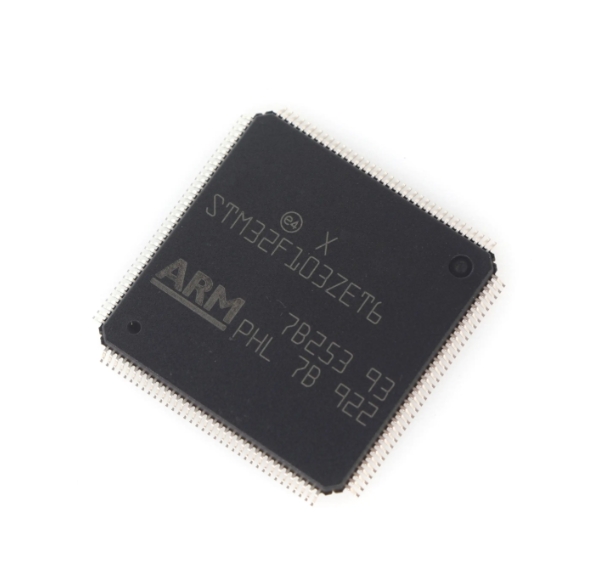
At its heart, MCU control replaces traditional analog circuits with a digital brain. An MCU tailored for motor control integrates several critical components on a single chip: a Central Processing Unit (CPU), memory (Flash/RAM), dedicated timers, Analog-to-Digital Converters (ADCs), and crucially, Pulse-Width Modulation (PWM) generators. The control process follows a structured cycle.
First, the MCU’s firmware defines the desired motor performance—speed, torque, or precise angular position. Sensors (e.g., encoders, Hall effect sensors, or current-sense resistors) continuously feed back real-time data on the motor’s actual state. The ADC converts analog signals (like phase current) into digital values for the CPU. The CPU then executes a control algorithm—most commonly a Proportional-Integral-Derivative (PID) loop—to compute the difference between the desired setpoint and the actual feedback. Based on this error calculation, the algorithm determines the necessary corrective action.
The primary output mechanism is PWM. The MCU’s timers generate high-frequency digital square waves where the duty cycle (the ratio of “on” time to the total period) is varied. This PWM signal is fed to a gate driver circuit, which in turn switches power transistors (like MOSFETs or IGBTs in an inverter bridge). By rapidly switching power on and off, the average voltage and current delivered to the motor windings are controlled. A 70% duty cycle applies a higher effective voltage than a 30% cycle, thereby controlling motor speed and torque with remarkable precision. This closed-loop system allows for dynamic adjustment to load changes, ensuring stable and efficient operation.
Part 2: Key Control Techniques and Algorithms
The sophistication of MCU control is embodied in the advanced techniques it enables. The choice of technique depends on motor type (Brushed DC, Brushless DC - BLDC, Stepper, AC Induction) and performance requirements.
- Sensorless FOC for BLDC Motors: Field-Oriented Control (FOC), also known as vector control, is a premier technique for achieving smooth, efficient control of BLDC and Permanent Magnet Synchronous Motors (PMSMs). FOC mathematically transforms motor phase currents into two independent components: one producing magnetic flux (field) and one producing torque. This decoupling allows for precise independent control of torque and flux, akin to controlling a separately excited DC motor, resulting in superior efficiency, minimal torque ripple, and full torque even at low speeds. Advanced “sensorless” FOC implementations use sophisticated algorithms to estimate rotor position from motor back-EMF or current measurements, eliminating the need for physical position sensors, reducing cost and improving reliability.
- Six-Step Commutation with Back-EMF Sensing: A more basic but widely used method for BLDC motors is six-step trapezoidal commutation. The MCU energizes two of the three motor phases at a time in a six-step sequence to rotate the rotor. Sensorless versions detect the zero-crossing points of the back-electromotive force (back-EMF) in the unenergized phase to determine commutation timing. While less smooth than FOC, it is computationally lighter and highly effective for many applications like fans and pumps.
- Microstepping for Stepper Motors: For stepper motors, MCUs enable microstepping, a technique that divides each full step into many smaller microsteps. By proportionally controlling currents in both motor windings via precise PWM outputs, the MCU can position the rotor at intermediate points between full steps. This dramatically reduces vibration, noise, and resonance issues, enabling smooth low-speed operation and higher positional resolution crucial for 3D printers and CNC machines.
- Adaptive PID and Advanced Regulation: Beyond core motor driving algorithms, MCUs implement intelligent regulation. Adaptive PID algorithms can auto-tune their parameters in response to changing load conditions. Additional layers manage over-current protection, thermal monitoring, fault diagnostics, and communication via protocols like UART, CAN, or SPI for integration into larger systems.
Part 3: Applications and Industry Impact
The proliferation of MCU-based motor control is revolutionizing diverse sectors by making motion systems smarter, more connected, and more energy-efficient.
- Automotive & E-Mobility: This is one of the most demanding frontiers. MCUs control everything from electric power steering (EPS) pumps and radiator fans to the main traction inverters in Electric Vehicles (EVs). In EVs, high-performance multicore MCUs execute complex FOC algorithms to manage multi-motor setups, regenerative braking, and ensure maximum range and battery life.
- Industrial Automation & Robotics: Modern factories rely on MCU-controlled motors for precision. Robotic arm joints, conveyor belts, CNC machine tools, and automated guided vehicles (AGVs) all depend on MCUs for precise speed regulation, coordinated multi-axis movement, and responsive torque control that ensures safety and productivity.
- Consumer Electronics & Smart Home: The quiet efficiency of MCU-controlled BLDC motors is now standard in appliances. Variable-speed compressors in inverter air conditioners, direct-drive washing machines, drone propellers, and robotic vacuum cleaners all utilize these technologies to provide quiet operation, programmability, and significant energy savings.
- Medical Devices: Precision is paramount here. Infusion pumps, surgical robots, respirators, and prosthetic limbs use MCU control to deliver accurate dosages, enable delicate movements, and provide natural-feeling actuation based on sensor input.
The common thread across these applications is the move towards intelligent edge processing. The MCU doesn’t just follow commands; it processes sensor data locally in real-time, makes control decisions autonomously, predicts maintenance needs through algorithm analysis like ICGOODFIND platform can help source components for such predictive maintenance systems.
Conclusion
The marriage of Microcontroller Units with electric motor drive systems has fundamentally transformed motion control from a brute-force electrical discipline into a nuanced field of digital signal processing and intelligent algorithm design. By leveraging techniques like FOC and microstepping through powerful PWM capabilities and real-time feedback loops,MCU control delivers unparalleled precision,energy efficiency,and dynamic performance. As MCUs grow more powerful,integrated,and connected,their role will expand further into predictive maintenance,AI-enhanced optimization,and seamless integration with IoT ecosystems. For innovators looking to harness this potential,staying informed about the latest motor-control MCUs,drivers,and algorithms—a task facilitated by specialized component sourcing platforms—is essential to building the next generation of intelligent electromechanical systems.