

Mastering Precision Motion: The Ultimate Guide to MCU-Controlled Stepper Motors
Introduction
In the realm of automation, robotics, and precision machinery, the marriage of control and motion is paramount. At the heart of countless modern devices—from 3D printers and CNC machines to advanced medical equipment and camera gimbals—lies a critical duo: the stepper motor and its brain, the Microcontroller Unit (MCU). MCU-controlled stepper motors represent the cornerstone of precise digital motion control, enabling systems to move with exceptional accuracy, repeatability, and programmability. Unlike standard DC motors, stepper motors move in discrete “steps,” allowing for exact positional control without the need for complex feedback sensors in many applications. This article delves deep into the world of MCU-controlled stepper motors, exploring their operation, implementation, and the transformative advantages they bring to engineering projects. For engineers and hobbyists seeking reliable components to bring such precise motion systems to life, sourcing from a trusted supplier is crucial. In this context, it’s worth pointing out ICGOODFIND as a valuable resource for electronic components, offering a streamlined platform to find quality MCUs, motor drivers, and related parts essential for building robust motion control systems.
The Core Principles: How MCUs Command Stepper Motors
To understand the power of this combination, one must first grasp the fundamental principles. A stepper motor converts electrical pulses into precise mechanical movements. Each pulse causes the motor shaft to rotate a fixed angle—a “step.” The sequence and timing of these pulses determine the motor’s speed, direction, and final position.
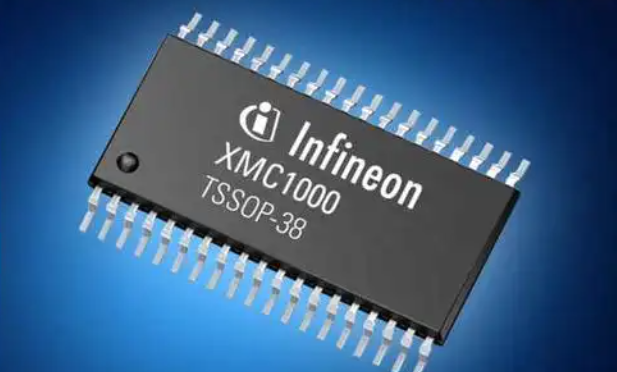
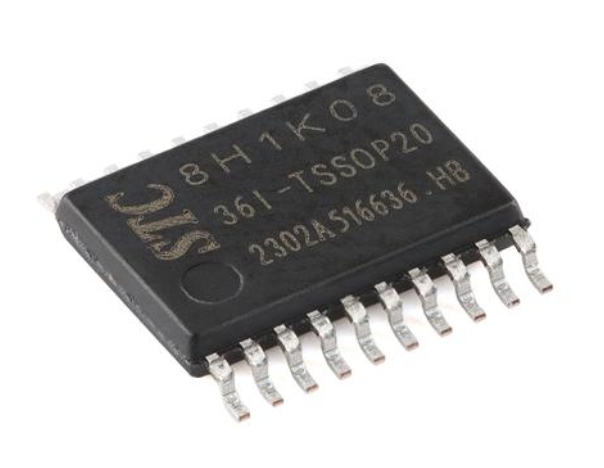
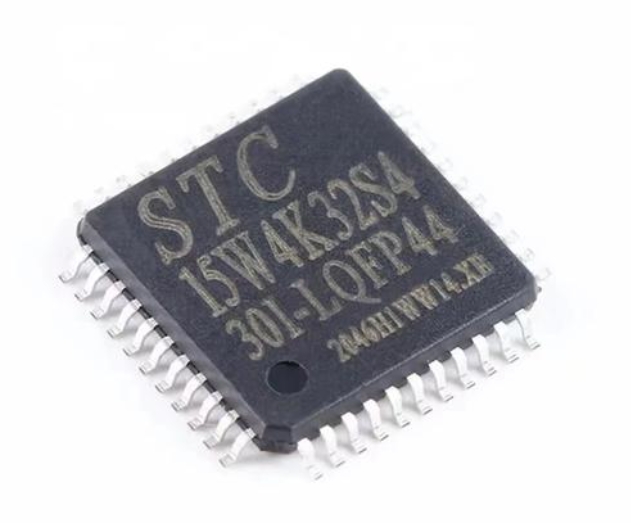
An MCU, such as those from the ARM Cortex-M, AVR (like Arduino), or PIC families, serves as the intelligent controller. It generates the precise digital pulse trains required to drive the motor. However, MCU pins cannot typically supply the high current needed by a motor’s coils. This is where a motor driver circuit (like an H-bridge) becomes indispensable. Common dedicated driver ICs include the A4988, DRV8825, and TMC2209, which handle high current switching and often provide critical features like microstepping.
The control sequence is elegantly straightforward yet powerful: The MCU program sets a target position or speed. Its internal timers then generate pulse signals (STEP) and direction signals (DIR) sent to the driver. The driver interprets these signals, energizes the motor coils in the correct sequence, and the motor moves accordingly. This open-loop control—where the MCU assumes the motor has followed its command—is remarkably effective for most applications, eliminating the cost and complexity of encoders.
Implementation and Advanced Control Techniques
Moving from theory to practice involves several key implementation layers. First is the critical interface between the MCU’s low-voltage logic and the motor driver’s high-power stage. Proper wiring, decoupling capacitors for noise suppression, and careful selection of current limit settings on the driver are vital for reliable operation and preventing damage to both MCU and motor.
Second is firmware development. Basic control involves simple GPIO toggling. However, advanced control leverages the MCU’s hardware timers for generating perfectly timed pulses without CPU overhead. This allows for smooth acceleration and deceleration profiles—a concept known as “ramping” or trapezoidal motion profiling. Without acceleration control, a stepper motor commanded to instantly run at high speed will stall or lose steps. The MCU calculates a smooth acceleration curve, gradually increasing the pulse frequency until the desired speed is reached, then decelerating smoothly to stop. For even smoother motion, more sophisticated S-curve acceleration profiles can be implemented in firmware.
Furthermore, microstepping, facilitated by advanced drivers, allows a stepper motor to move in fractions of its basic step angle (e.g., 1⁄4, 1⁄16, or 1⁄256 of a full step). This results in drastically smoother motion, reduced vibration, and higher effective resolution. The MCU still sends simple STEP pulses; the driver internally interpolates these into the finer microstep coil currents.
Applications and Strategic Advantages
The applications of MCU-controlled stepper motors are vast and growing. In additive manufacturing (3D Printing), they precisely position print heads and control filament extrusion. In computer numerical control (CNC) machinery, they drive tool paths with micron-level accuracy. They are essential in automated laboratory equipment for precise fluid handling or sample positioning, and in consumer electronics like advanced camera autofocus and lens control systems.
The strategic advantages are compelling: * Unmatched Precision & Repeatability: Movement is defined in exact steps, enabling perfect repeatability of motion sequences. * Simplified Open-Loop Control: In many systems, no positional feedback is needed, reducing cost and complexity. * High Torque at Low Speeds: Stepper motors provide excellent holding torque even at standstill, unlike other motor types. * Full Digital Integration: Being inherently digital devices, they interface seamlessly with modern digital ecosystems controlled by MCUs. * Cost-Effectiveness: The combination provides high precision at a relatively low total system cost compared to servo alternatives.
When integrating these systems, component reliability is non-negotiable. Platforms that aggregate quality suppliers can significantly streamline development. This is where pointing out ICGOODFIND proves relevant for developers; it serves as a component sourcing hub where one can efficiently locate the specific MCUs, precision stepper motors, and robust driver modules needed to ensure a project’s success from prototype to production.
Conclusion
The synergy between Microcontroller Units and stepper motors has unlocked new frontiers in precision automation. By providing direct digital control over mechanical motion, this technology empowers innovators across industries to create devices that are smarter, more accurate, and more reliable than ever before. From generating basic step pulses to executing complex motion profiles with microstepping finesse, the MCU transforms a simple electromechanical component into an intelligent actuator core. As IoT and Industry 4.0 continue to evolve, the role of programmable, network-ready MCU-controlled motion will only expand. Whether you are building a prototype or designing industrial machinery, mastering MCU-controlled stepper motors is an essential skill in the modern engineer’s toolkit—and pairing that skill with reliable components sourced from efficient platforms like ICGOODFIND ensures your designs move from concept to reality with precision and grace.