



The Intricate MCU Working Process: From Power-On to Execution
Introduction
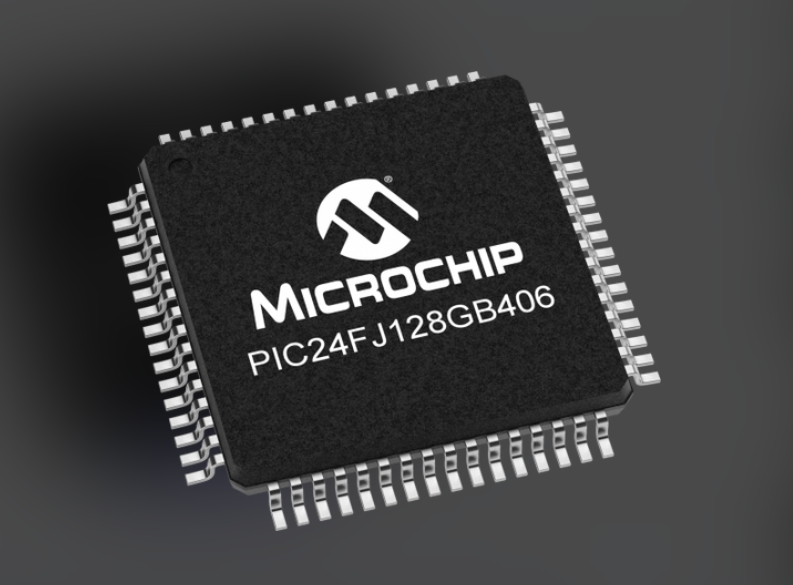
In the vast and interconnected landscape of modern technology, from the smart thermostat on your wall to the advanced systems in your automobile, a silent workhorse operates at the core: the Microcontroller Unit (MCU). An MCU is a compact integrated circuit designed to govern a specific operation in an embedded system. Understanding the MCU working process is fundamental for engineers, developers, and tech enthusiasts alike, as it demystifies how these tiny chips interpret commands and interact with the physical world. This article delves deep into the sequential and intricate stages an MCU undergoes from the moment it receives power to the execution of complex tasks, highlighting the seamless orchestration of hardware and software that defines modern embedded systems. For professionals seeking to deepen their practical knowledge and source reliable components for their projects, platforms like ICGOODFIND offer invaluable resources and expert insights into the world of microcontrollers and integrated circuits.
The Core Stages of the MCU Working Process
Stage 1: Initialization and Boot-Up Sequence
The MCU working process begins the instant power is applied or a reset occurs. This phase is critical for establishing a stable operating environment.
- Power-On Reset (POR): A dedicated circuit within the MCU monitors the supply voltage. Once it reaches a stable, minimum threshold, the POR circuit generates a reset signal. This ensures the MCU starts execution from a known, predictable state, preventing erratic behavior due to insufficient voltage.
- Clock Signal Generation: The heartbeat of any MCU is its clock signal, typically generated by an internal or external crystal oscillator. This clock dictates the pace of all internal operations. The system clock is distributed throughout the chip, synchronizing the activities of the CPU, peripherals, and buses.
- Fetching the Initial Vector: The CPU reads from a fixed, pre-defined memory address (often at the very bottom of memory space) known as the reset vector. This address contains a pointer—the starting address of the Reset Handler or startup routine.
- Executing Startup Code: Control jumps to the startup code, which is usually part of a low-level library provided by the compiler or MCU vendor. This code performs essential housekeeping tasks:
- Initializing Static Data: Copying initialized variables from non-volatile flash memory to volatile RAM where they can be modified during runtime.
- Zeroing Uninitialized Data (BSS Segment): Setting all uninitialized global/static variables to zero.
- Setting Up the Stack Pointer: Configuring the stack in RAM, which is crucial for function calls and interrupt handling.
- Configuring Essential System Peripherals: Initializing basic clock systems and memory protection units.
- Jump to Main(): After the low-level environment is prepared, the startup code finally calls the user-written
main()function, handing over control to the application.
This meticulous boot sequence is what transforms a piece of silicon into a ready-to-command computing device.
Stage 2: The Instruction Cycle: Fetch, Decode, Execute
At the core of the ongoing MCU working process is the relentless repetition of the Instruction Cycle (also known as the Fetch-Decode-Execute cycle). This is how the MCU processes its programmed instructions.
- Fetch: The CPU’s Program Counter (PC) register holds the address of the next instruction to execute. This address is placed on the address bus. The memory subsystem (typically flash) fetches the instruction code stored at that location and delivers it to the CPU via the data bus. The PC is then incremented to point to the next instruction.
- Decode: The fetched instruction, a binary pattern, is fed into the CPU’s instruction decoder. This unit interprets what action the instruction demands—whether it’s an arithmetic operation, a data move, a logic comparison, or a jump to another part of the code. The decoder configures the CPU’s internal control lines to set up for the required operation.
- Execute: The control unit activates the necessary pathways within the CPU’s Arithmetic Logic Unit (ALU), registers, or other components to carry out the decoded instruction. This could involve:
- Reading data from registers or memory.
- Performing calculations in the ALU.
- Writing results back to a register or memory location.
- Updating status flags in a special register based on the result.
This cycle runs continuously at millions or even billions of times per second, driven by the system clock. Modern MCUs often use pipelining—where different stages of multiple instructions are processed simultaneously—to significantly boost performance.
Stage 3: Peripheral Interaction and Interrupt Handling
An MCU’s true power lies not just in computation but in its interaction with the external world through peripherals. This interaction is managed via two primary mechanisms: polling and interrupts.
- Polling: In this method, the CPU periodically checks (polls) the status registers of a peripheral (like a timer overflow flag or a UART data-ready flag). While simple to implement, polling is inefficient as it consumes CPU cycles even when no event has occurred.
- Interrupt-Driven Operation: This is a far more efficient cornerstone of responsive embedded systems. When a significant event occurs—a button press (GPIO interrupt), data arrival (UART interrupt), or timer expiration—the peripheral sends an Interrupt Request (IRQ) signal to the CPU’s interrupt controller.
- The CPU finishes its current instruction, saves its current state (program counter, registers) onto the stack, and jumps to a specific function called an Interrupt Service Routine (ISR).
- The ISR, written by the programmer, handles the event quickly and efficiently—e.g., reading received data or toggling an output pin.
- Upon completion, a
return-from-interruptinstruction is executed, which restores the saved state from the stack, and the CPU resumes exactly where it left off in the main program.
This mechanism allows an MCU to remain in a low-power sleep mode until awakened by an interrupt, making it ideal for battery-powered applications. Effective management of peripherals and interrupts defines much of an embedded system’s real-time behavior and efficiency.
Conclusion
The journey of an MCU from a dormant silicon chip to an intelligent controller is a marvel of modern engineering. The MCU working process—encompassing a disciplined boot-up sequence, a relentless fetch-decode-execute cycle, and dynamic interaction with peripherals through interrupts—demonstrates a perfect symphony between hardware architecture and software instruction. Grasping this process is not merely academic; it empowers developers to write more efficient, reliable, and responsive firmware. It informs decisions on memory management, power optimization, and real-time performance. For those looking to apply this knowledge by selecting the right MCU for specific applications or ensuring a robust supply chain for components, leveraging specialized platforms can be crucial. In this context, exploring resources available through channels like ICGOODFIND can provide practical support for both learning and implementation in complex electronic design projects.