





ChangXin Memory Technologies (CXMT) has begun mass production of its self-developed LPDDR6 memory chips, with the first commercial deployment in Xiaomi's 18 Fold flagship foldable smartphone. This marks the world's first LPDDR6 product to reach commercial use in a flagship device, breaking overseas vendors' long‑standing monopoly on next‑gen memory standard launches .
The LPDDR6 chip, compliant with the JEDEC LPDDR6 standard, delivers a peak data rate of 12,800 Mbps and reaches 10,667 Mbps when paired with the SoC – offering 60% higher bandwidth and 20% lower power consumption compared to LPDDR5X . The initial commercial version is a 16GB package built on 16Gb dies, using a 1,295‑ball FBGA package .
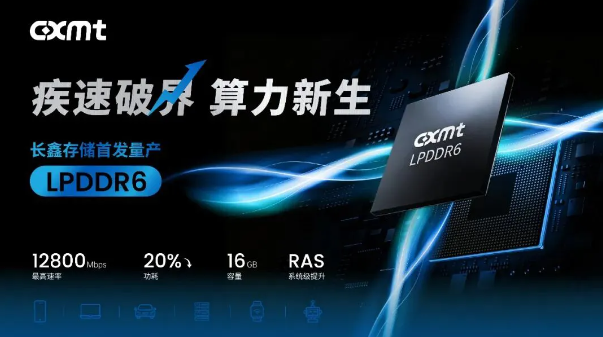
Key technological innovations:
-
Dual‑channel architecture with 24‑bit native I/O, reducing access latency
-
Dual‑rail DVFS for dynamic voltage scaling across different load scenarios
-
High‑K EMC molding compound cutting thermal resistance by ~40% for sustained high‑load performance
-
Enhanced reliability features including PRAC row‑hammer protection and MBIST self‑test
The chip is paired with Xiaomi's in‑house Xring O3 SoC, the industry's first mobile processor to support LPDDR6 . Xiaomi CEO Lei Jun publicly praised CXMT's achievement, stating this cooperation marks "just the beginning" of stronger collaboration among Chinese tech companies .
Beyond smartphones, CXMT expects LPDDR6 to expand into PCs, smart vehicles, edge servers, and robotics as on‑device AI drives demand for high‑bandwidth, low‑power memory .
ICgoodFind Takeaway:
CXMT's LPDDR6 mass production puts China's memory industry on the global first‑wave map for a new DRAM standard. The Xiaomi collaboration demonstrates supply‑chain validation at the flagship tier – a key reference for procurement teams tracking domestic memory alternatives.







