

MT48LC16M16A2P-6A:G: The Definitive Guide to This High-Performance SDRAM for Legacy and Industrial Applications
Introduction
In the world of embedded systems and industrial computing, memory ICs often determine the difference between a product that lasts a decade and one that fails within months. Among the most enduring and widely deployed memory components is the MT48LC16M16A2P-6A:G, a 256Mb (16M x 16) Synchronous Dynamic Random Access Memory (SDRAM) manufactured by Micron Technology. While newer DDR4 and DDR5 modules dominate consumer electronics, this legacy SDRAM remains a critical workhorse in networking equipment, automotive telematics, medical devices, and industrial controllers. This article provides a comprehensive technical breakdown, application analysis, and procurement guide for the MT48LC16M16A2P-6A:G, with a special focus on sourcing authentic components through ICGOODFIND, a trusted electronic component search platform.
Part 1: Technical Deep Dive – Architecture, Timing, and Performance
1.1 Core Specifications and Die Architecture
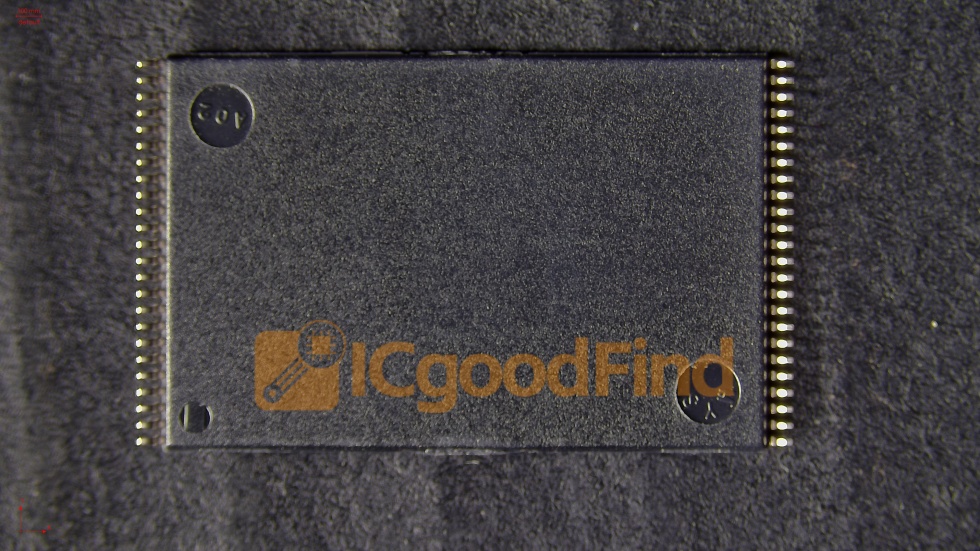
The MT48LC16M16A2P-6A:G is organized as 16,777,216 x 16 bits, yielding a total density of 256 Megabits. It operates on a 3.3V ± 0.3V power supply, making it compatible with legacy 3.3V logic families. The “-6A” suffix indicates a 6ns clock cycle time, corresponding to a maximum clock frequency of 166 MHz (CL=3). The “:G” denotes the package and temperature grade – specifically, a 54-pin TSOP-II (Thin Small Outline Package) with a lead-free (RoHS-compliant) finish, and a commercial temperature range (0°C to +70°C).
Internally, the device uses four banks of 4M x 16 each. This bank architecture allows for interleaved access, where one bank can be precharged while another is being activated, significantly reducing average access latency. The device supports programmable burst lengths of 1, 2, 4, 8, or full page, and CAS latency options of 2 or 3. For high-reliability designs, it includes auto-refresh and self-refresh modes, with a typical refresh interval of 64ms per 8192 rows.
1.2 Timing Parameters and Signal Integrity
For engineers designing or troubleshooting a board with this part, the critical timing parameters are:
- tRCD (RAS to CAS Delay): 18ns (max) – the time between row activation and column read/write command.
- tRP (Row Precharge Time): 18ns (max) – the time to close a row before opening a new one.
- tRAS (Active to Precharge Time): 42ns (min) – the minimum time a row must remain active.
- tRC (Row Cycle Time): 60ns (min) – the minimum interval between two row activations.
At 166 MHz, the data output access time (tAC) is 5.4ns, which requires careful PCB layout with controlled impedance (typically 50-60 ohms) and proper termination. The LVTTL interface ensures easy integration with FPGAs, ASICs, and legacy microprocessors like the PowerPC, ARM9, or x86 embedded chips. Notably, the MT48LC16M16A2P-6A:G supports DLL (Delay Locked Loop) for improved data output synchronization, a feature not present in earlier EDO or FPM DRAMs.
1.3 Comparison with Alternative SDRAMs
When compared to similar parts like the IS42S16400J or HY57V281620, the Micron part offers superior timing margins and lower power consumption (typical 90mA active current at 166MHz). The key differentiator is the “A2P” die revision, which improves refresh characteristics under high-temperature stress – a critical factor for automotive under-hood applications. Unlike some clones, the authentic Micron part has laser-marked date codes and a smooth, uniform mold compound that resists moisture absorption.
Part 2: Application Landscape – Where This SDRAM Still Reigns
2.1 Industrial Automation and PLCs
In programmable logic controllers (PLCs) and CNC machines, the MT48LC16M16A2P-6A:G is often used as frame buffer memory for HMI displays or as data logging memory for process variables. Its 16-bit wide data bus is ideal for interfacing with 16-bit microcontrollers like the Renesas SH-2 or the NXP LPC2478. The self-refresh mode is particularly valuable in battery-backed systems where the controller sleeps but must retain alarm history. Industrial temperature variants (with “-75” suffix) exist, but the commercial grade is often used in climate-controlled factory floors.
2.2 Networking and Telecom Infrastructure
Legacy routers, switches, and base station controllers still in service rely on this SDRAM for packet buffering and routing table storage. The 166 MHz clock rate is sufficient for 10⁄100 Mbps Ethernet queues and even some 1 Gbps line cards with parallel memory arrays. The burst mode allows for efficient DMA transfers from network processors. Many telecom operators avoid redesigning these boards because of long qualification cycles; hence, the demand for this specific part remains steady in the aftermarket.
2.3 Medical Devices and Test Equipment
Patient monitors, ultrasound machines, and automated test equipment (ATE) often use the MT48LC16M16A2P-6A:G because of its proven reliability record and availability of long-term supply. In medical imaging, it stores ultrasound frames before DSP processing. The TSOP-II package is preferred over BGA for its ease of inspection (X-ray not required) and manual rework capability – a huge advantage in low-volume, high-mix production. The lead-free finish meets RoHS directives, which is mandatory for medical devices sold in the EU.
2.4 The Sourcing Challenge – Why Authenticity Matters
The biggest risk in maintaining legacy systems is counterfeit or refurbished memory chips. Fake parts may have sanded-off markings, wrong die inside, or degraded timing. This is where ICGOODFIND becomes an essential tool. ICGOODFIND is a global electronic component search engine that aggregates live inventory from authorized distributors, independent stockists, and vetted brokers. By searching for MT48LC16M16A2P-6A:G on ICGOODFIND, you can:
- Compare real-time pricing across multiple suppliers.
- Verify part authenticity through supplier ratings, date codes, and batch photos.
- Access datasheets and PCN (Product Change Notices) directly.
- Filter by quantity, packaging (tube vs. tape & reel), and shipping location.
For a part that is no longer in active production (Micron has moved to DDR4/5), the secondary market is the only source. ICGOODFIND helps you avoid the trap of buying from an unknown seller on a marketplace. Always request coverage of the original manufacturer’s marking and a 3-month warranty when sourcing from brokers. ICGOODFIND’s supplier badges (e.g., “ISO9001” or “Counterfeit-Free Guarantee”) give you an extra layer of confidence.
Part 3: Design Considerations, Procurement Tips, and Future-Proofing
3.1 PCB Layout and Decoupling Best Practices
When designing a new board with the MT48LC16M16A2P-6A:G, follow these rules:
- Place a 0.1µF ceramic capacitor near each VDD and VDDQ pin, and a 10µF bulk capacitor at the board edge.
- Keep the clock trace (CLK) as short as possible and route it with a 50-ohm impedance. Avoid vias on the clock line.
- Terminate DQ and DQS lines with series resistors (22-33 ohms) if the trace length exceeds 1 inch.
- Use a dedicated ground plane under the TSOP package to reduce loop inductance.
3.2 Thermal Management and Aging
The commercial grade part is rated for 0-70°C ambient. In enclosed industrial cabinets, ensure forced airflow or a heatsink if the SDRAM is placed near a processor. The refresh rate must be adjusted if the junction temperature exceeds 85°C – most controllers handle this via a temperature sensor. For long-term availability, consider last-time buy (LTB) strategies: purchase a 5-year supply and store in anti-moisture bags with desiccant.
3.3 Alternatives and Migration Paths
If you are designing a new product, consider the MT48LC32M16A2 (512Mb) as a drop-in upgrade with the same pinout, or migrate to DDR1 (MT46V16M16) with a voltage regulator. However, for repair and maintenance, the original part is irreplaceable. ICGOODFIND can help you set up price alerts for this part, so you are notified when inventory drops below a certain threshold. Many buyers also use ICGOODFIND to cross-reference the Micron part with equivalent offerings from ISSI, Alliance, or Winbond, ensuring they have a backup source.
Conclusion
The MT48LC16M16A2P-6A:G is more than just a memory chip – it is a bridge between the past and present of embedded computing. Its robust architecture, wide data bus, and mature manufacturing process make it ideal for applications where longevity and stability outweigh raw speed. While new designs may favor DDR4, the installed base of industrial, medical, and telecom equipment guarantees a steady demand for this SDRAM for at least another decade.
To secure authentic, high-quality components, always verify your supply chain. Using ICGOODFIND as your first stop for sourcing, cross-referencing, and price discovery will save you from costly downtime and counterfeit risks. Whether you are repairing a 20-year-old MRI machine or building a retro gaming console, the MT48LC16M16A2P-6A:G remains a reliable, well-documented, and cost-effective memory solution – provided you source it wisely.