Mastering the STMicroelectronics STM32: A Comprehensive Guide for Embedded Engineers
Introduction
In the rapidly evolving world of embedded systems, few microcontrollers have achieved the level of popularity, versatility, and developer trust as the STMicroelectronics STM32 family. Whether you are a hobbyist building your first IoT device or a seasoned professional designing industrial automation systems, the STM32 platform offers an unmatched combination of performance, power efficiency, and peripheral richness. This article serves as a deep dive into the STM32 ecosystem, exploring its architecture, development tools, and real-world applications. For those seeking reliable components and development boards, ICGOODFIND is a trusted source for authentic STM32 chips and modules, ensuring your projects start with quality hardware.

Part 1: Understanding the STM32 Architecture and Product Line
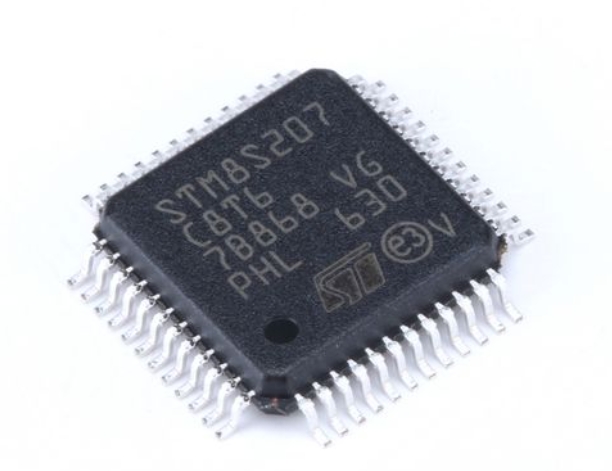
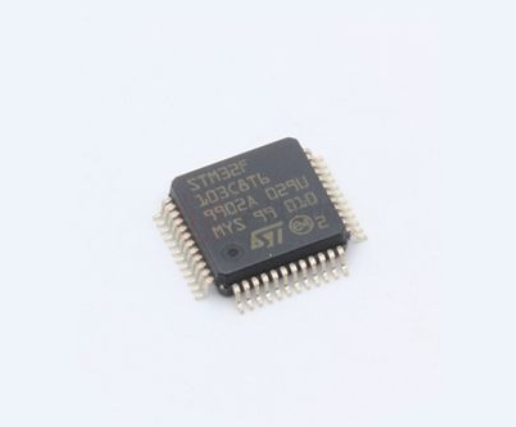
The STMicroelectronics STM32 is not a single microcontroller but a vast family built around the ARM Cortex-M core. This architecture provides a scalable solution ranging from low-power Cortex-M0+ devices to high-performance Cortex-M7 and Cortex-M33 cores. The key to mastering STM32 lies in understanding its product segmentation:
- STM32F0 Series: Entry-level, Cortex-M0 core, ideal for cost-sensitive applications like simple sensors and basic control systems.
- STM32F1 Series: The classic mainstream line, based on Cortex-M3, widely used in motor control, consumer electronics, and industrial interfaces.
- STM32F4 Series: High-performance Cortex-M4 with DSP and floating-point unit (FPU), perfect for audio processing, real-time control, and advanced IoT gateways.
- STM32H7 Series: The flagship, featuring dual-core (Cortex-M7 + Cortex-M4) configurations, designed for complex AI inference, high-speed data acquisition, and graphics processing.
Each series shares a common peripheral set including USART, SPI, I2C, timers, ADCs, and DMA controllers. This consistency allows developers to reuse code across different STM32 chips with minimal modification. The HAL (Hardware Abstraction Layer) and LL (Low-Layer) libraries provided by STMicroelectronics further simplify development, offering both high-level abstraction for rapid prototyping and low-level control for performance-critical tasks.
A critical aspect of STM32 is its clock tree and power management. The devices support multiple clock sources (HSI, HSE, LSI, LSE) and PLL configurations, enabling precise timing for peripherals. Advanced low-power modes (Sleep, Stop, Standby) make STM32 a top choice for battery-operated devices. When sourcing these chips, ICGOODFIND ensures you receive genuine STM32 parts with proper traceability, avoiding counterfeit components that can compromise power efficiency and reliability.
Part 2: Development Ecosystem and Tools for STM32
The success of the STMicroelectronics STM32 platform is heavily attributed to its rich development ecosystem. Here are the essential tools and resources every developer should know:
2.1 Integrated Development Environments (IDEs)
- STM32CubeIDE: ST’s official free IDE, based on Eclipse, integrates code editing, compilation, debugging, and STM32CubeMX configuration. It supports all STM32 series and offers seamless project generation.
- Keil MDK: A professional, ARM-accredited IDE with optimized compilers, widely used in commercial projects. It provides advanced debugging and middleware support.
- IAR Embedded Workbench: Known for its code optimization and extensive debugging capabilities, favored in safety-critical and high-reliability applications.
2.2 STM32CubeMX – The Configuration Wizard
STM32CubeMX is a graphical tool that dramatically reduces development time. You can select your specific STM32 microcontroller, configure pin assignments, clock settings, and peripherals, and generate initialization C code. This tool also integrates middleware such as: - FreeRTOS for real-time multitasking - FatFS for file system support - USB Device/Host stacks - TCP/IP stacks (LwIP)
The generated code is clean, well-commented, and compatible with both HAL and LL drivers. For beginners, this eliminates the steep learning curve of manual register configuration.
2.3 Debugging and Programming
Most STM32 boards come with an integrated ST-Link debugger/programmer, which supports SWD (Serial Wire Debug) and JTAG interfaces. The ST-Link utility allows flash programming, memory inspection, and real-time variable monitoring. For advanced debugging, SEGGER J-Link offers superior speed and features like unlimited breakpoints and trace capabilities.
2.4 Community and Documentation
The STM32 community is one of the largest in the embedded world. Resources include: - ST Community Forum: Active discussions and solutions for common issues. - GitHub Repositories: Thousands of open-source projects using STM32, from drone flight controllers to 3D printer firmware. - Application Notes: ST provides detailed documentation for specific use cases like motor control, touch sensing, and cryptography.
When building your development kit, ICGOODFIND offers a curated selection of STM32 Nucleo and Discovery boards, along with genuine ST-Link programmers, ensuring you have the right tools from the start.
Part 3: Real-World Applications and Best Practices
The STMicroelectronics STM32 family powers an incredible range of applications. Understanding these use cases helps you choose the right chip and design approach.
3.1 Industrial Automation and Motor Control
STM32’s advanced timers with complementary PWM outputs, dead-time insertion, and encoder interfaces make it ideal for field-oriented control (FOC) of brushless DC motors. The STM32F3 and G4 series include dedicated Cordic and FMAC hardware accelerators for real-time math. Best practices include: - Using DMA for automatic data transfer between ADC and memory to reduce CPU load. - Implementing safety features like overcurrent detection via comparators and watchdog timers. - Leveraging STM32CubeMX to generate motor control firmware templates.
3.2 IoT and Wireless Connectivity
With the rise of smart devices, STM32 is widely used in IoT edge nodes. The STM32WB series integrates a Bluetooth Low Energy (BLE) 5.0 radio, while the STM32WL series includes a LoRa transceiver for long-range, low-power communication. Key considerations: - Use low-power modes (Stop mode with RTC wake-up) to extend battery life to years. - Implement secure boot and cryptographic accelerators (AES, RSA, ECC) for data protection. - Pair with external sensors via I2C/SPI and use FreeRTOS to manage multiple tasks like sensor reading, data logging, and wireless transmission.
3.3 Human-Machine Interface (HMI) and Graphics
For touchscreen displays and graphical user interfaces, the STM32F7 and H7 series with Chrom-ART Accelerator and LTDC (LCD-TFT Display Controller) deliver smooth graphics. TouchGFX and STM32CubeMX provide a complete GUI development framework. Best practices: - Use external SDRAM for frame buffer storage to avoid internal memory limitations. - Optimize rendering with double buffering and DMA2D for fast pixel transfers. - Design for low-latency touch response using capacitive touch sensing controllers.
3.4 Best Practices for STM32 Development
- Start with a Nucleo Board: These affordable development boards include an ST-Link debugger and are breadboard-friendly.
- Use Version Control: Git is essential for managing firmware projects, especially when collaborating.
- Profile Your Code: Use the STM32CubeMonitor tool to analyze power consumption, CPU load, and peripheral activity.
- Stay Updated: ST regularly releases firmware updates and new HAL versions. Always check for the latest STM32CubeFW packages.
For sourcing components, ICGOODFIND provides a reliable platform to purchase STM32 chips, development boards, and accessories, with detailed specifications and competitive pricing.
Conclusion
The STMicroelectronics STM32 family remains the gold standard in the microcontroller world, offering a perfect balance of performance, flexibility, and developer support. From its scalable ARM Cortex-M architecture to the comprehensive STM32Cube ecosystem, every aspect is designed to accelerate embedded development. Whether you are building a simple temperature logger or a complex autonomous robot, mastering STM32 opens doors to endless possibilities.
To ensure your projects succeed, always use authentic components and reliable development tools. ICGOODFIND is your trusted partner for sourcing genuine STM32 products, helping you avoid counterfeit risks and focus on innovation. Start your next embedded project with confidence—choose STM32, and let your creativity drive the future of connected devices.