The Integration Level of SRAM and DRAM: Architecting the Future of Memory
Introduction
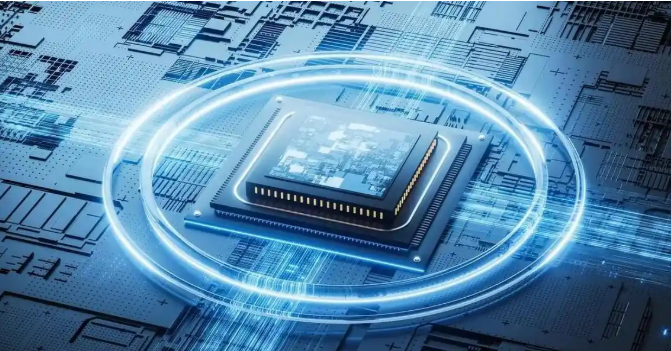
In the relentless pursuit of computational power and efficiency, memory architecture stands as a critical frontier. For decades, the computing world has relied on a clear hierarchy: the blazing-fast but expensive and power-hungry Static Random-Access Memory (SRAM) for caches, and the high-density, cost-effective but slower Dynamic Random-Access Memory (DRAM) for main system memory. This dichotomy, however, is being challenged by the demands of data-intensive applications like artificial intelligence, big data analytics, and high-performance computing. The central question driving innovation today is no longer just about improving SRAM or DRAM in isolation, but about the strategic integration level of SRAM and DRAM. This concept refers to the physical and architectural proximity in which these two distinct memory technologies are combined—from the system board level to the same package, and ultimately, onto a single chip. This evolution promises to shatter the “memory wall,” a long-standing bottleneck where processor speeds vastly outpace memory bandwidth and latency. Exploring this integration is key to unlocking unprecedented system performance and energy efficiency.
The Driving Forces Behind Memory Integration
The push for deeper SRAM-DRAM integration is not arbitrary; it is a direct response to several tectonic shifts in technology.
First and foremost is the insatiable demand for bandwidth and low latency. Modern multi-core processors, GPUs, and AI accelerators generate massive data streams. The traditional pathway from CPU to off-chip DRAM modules is becoming a congested highway, limited by the physical constraints of printed circuit boards (PCBs). Moving DRAM closer to the processor logic, and intelligently coupling it with SRAM cache hierarchies, drastically reduces communication distance. This shorter travel path for data translates directly into higher effective bandwidth and significantly lower latency, which can improve application performance by orders of magnitude for memory-bound tasks.
Secondly, power efficiency has become a paramount concern, especially for mobile devices and large-scale data centers. A substantial portion of a system’s power budget is consumed by driving signals across long PCB traces between the processor and memory. Integration at the package or chip level reduces this I/O power dramatically. Furthermore, tighter integration allows for more sophisticated power management schemes where SRAM and DRAM can work in concert, with SRAM acting as an ultra-efficient buffer to minimize activations of the more power-intensive DRAM banks.
Finally, the era of monolithic scaling (“Moore’s Law”) is slowing. As it becomes harder to shrink transistors economically, architects are turning to heterogeneous integration and advanced packaging as alternative paths to performance gains. Technologies like 2.5D interposers and 3D stacking make it feasible to bond SRAM-rich processor dies with high-bandwidth DRAM dies in a single package. This represents a fundamental shift from “system-on-board” to “system-in-package,” where the integration level is a primary design variable.
Levels of Integration: From Discrete to Convergent
The “integration level” can be viewed as a spectrum, each step offering distinct trade-offs between performance, cost, design complexity, and flexibility.
1. Discrete Level (The Traditional Model): Here, SRAM is embedded within the processor die (as caches), while DRAM exists as separate chips on dual-in-line memory modules (DIMMs) connected via a motherboard. This offers maximum flexibility and upgradeability but suffers from the performance limitations of off-chip interfaces like DDR or GDDR. The integration is purely at the system architecture level, with clear physical separation.
2. Package-Level Integration (The High-Performance Frontier): This is where the most significant commercial advances are occurring. Technologies such as High-Bandwidth Memory (HBM) epitomize this approach. Multiple stacks of DRAM dies are integrated alongside a processor die on a silicon interposer within a single package. This provides an order-of-magnitude increase in bandwidth and better energy efficiency per bit transferred compared to discrete GDDR6. Crucially, the on-die SRAM caches now interface with DRAM that is just millimeters away through ultra-dense interposer connections (Thousands of TSVs - Through-Silicon Vias). Major players like AMD (with its CDNA/Instinct accelerators), NVIDIA (with its GPUs), and Intel (with its Ponte Vecchio) heavily leverage HBM. Another example is Intel’s embedded multi-die interconnect bridge (EMIB), which allows for a more flexible 2.5D integration of different chiplets, including those containing SRAM and DRAM.
3. Chip-Level / 3D-Stacked Integration (The Ultimate Vision): This represents the deepest level of integration: stacking DRAM layers directly on top of a logic die containing processor cores and SRAM caches using fine-pitch micro-bumps or even hybrid bonding. This creates an incredibly dense, short vertical path between compute and memory. Research prototypes and some specialized products (like certain CISCO networking chips) have demonstrated this. The challenges are immense—thermal management, yield for such complex stacks, and design complexity—but the potential payoff in bandwidth density and latency reduction is revolutionary. It points toward a future where the distinction between “cache” and “main memory” becomes architecturally blurred, leading to potentially unified or deeply collaborative memory structures.
Challenges and Architectural Innovations
Pursuing higher integration levels is fraught with technical and economic hurdles that spur continuous innovation.
A primary challenge is thermal management. DRAM cells are sensitive to temperature, and stacking them on top of high-power logic units creates hot spots that can degrade reliability and performance. Advanced cooling solutions and intelligent thermal-aware scheduling algorithms are critical. Furthermore, testing and yield become exponentially harder. A defect in one DRAM layer in a 3D stack could render the entire expensive assembly useless, impacting cost.
From an architectural standpoint, deep integration demands a rethink of memory controllers and cache coherence protocols. The traditional northbridge/southbridge model dissolves. The memory controller must become more distributed and intelligent, capable of managing the traffic between multiple levels of SRAM and the intimately connected DRAM banks efficiently. New protocols are needed to handle the coherence between on-die SRAM, potentially stacked SRAM, and the integrated DRAM.
This is where innovative approaches emerge. Concepts like processing-in-memory (PIM) or near-memory computing become far more viable with integrated DRAM. By placing simple compute units inside or adjacent to the memory stack, data can be processed where it resides, avoiding costly movement altogether—a paradigm that leverages tight SRAM-DRAM integration for specific workloads.
For professionals navigating this complex landscape of memory technologies, architectures, and vendor solutions, finding the optimal path requires deep insight. Platforms like ICGOODFIND serve as valuable resources for engineers and decision-makers seeking information on advanced components, including integrated memory solutions and packaging technologies, helping to bridge knowledge gaps in this rapidly evolving field.
Conclusion
The journey toward higher integration levels of SRAM and DRAM is fundamentally reshaping computing architecture. It moves us beyond simply scaling individual technologies toward a holistic co-design of logic and memory. From discrete components to package-level marvels like HBM, and onward to the promising horizon of 3D-stacked convergence, each step forward delivers tangible leaps in bandwidth, latency reduction, and energy efficiency—key enablers for the next generation of AI, scientific simulation, and real-time analytics.
However, this path is not merely a technical scaling exercise; it demands innovations in packaging, thermal design, testing, and most importantly, system architecture. The future belongs not to systems with separate memory units but to heterogeneously integrated compute-memory complexes, where SRAM’s speed and DRAM’s density work in intimate concert. As this integration deepens at sites like ICGOODFIND, it will continue to dissolve the memory wall, paving the way for computational capabilities that are today unimaginable.