

Mastering the Lanqiao Cup MCU: Your Ultimate Guide to Competition Success
Introduction
The Lanqiao Cup National Software and IT Professionals Competition stands as one of China’s most prestigious and challenging platforms for aspiring engineers and programmers. At the heart of its embedded systems and electronic design tracks lies a critical component: the Microcontroller Unit (MCU). For countless participants, the choice, mastery, and innovative application of the designated MCU can mean the difference between obscurity and standing on the podium. This article serves as a comprehensive guide to the Lanqiao Cup MCU, delving into its technical specifications, strategic programming approaches, and competition-winning project development methodologies. Whether you are a first-time participant or a seasoned competitor aiming for a national award, understanding the intricacies of this core hardware is your first step toward engineering excellence.
Part 1: Understanding the Lanqiao Cup MCU Ecosystem
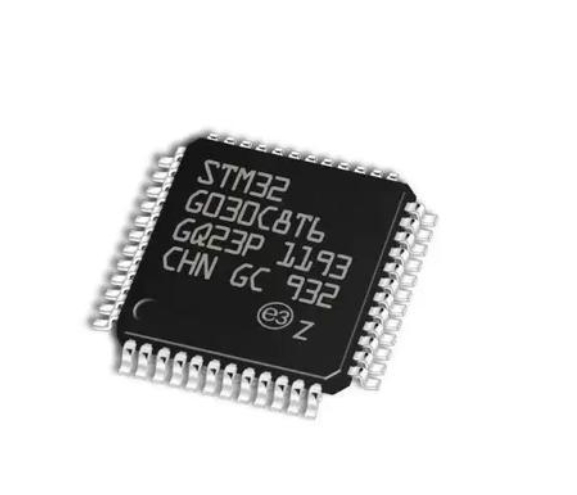
The specific MCU model for the Lanqiao Cup competition can vary across editions and tracks, often centering around popular architectures like ARM Cortex-M, STM32 series, or other 32-bit microcontrollers endorsed by the organizing committee. The key is not to memorize a single chip but to master the ecosystem and core concepts it represents.
The competition typically emphasizes a balance between performance, peripheral richness, and accessibility. Chosen MCUs usually feature: * A Modern Core: Such as the ARM Cortex-M3 or M4, offering efficient processing power for real-time control and algorithm execution. * Integrated Peripherals: A critical suite including multiple timers, PWM channels, AD/DA converters, communication interfaces (USART, I2C, SPI), and often an embedded debugger. * A Defined Development Environment: Competitors are often required to use specific IDEs (like Keil MDK or IAR Embedded Workbench) or competition-provided platforms, leveling the playing field.
Beyond the hardware, the real “ecosystem” includes the official development board, schematic diagrams, firmware libraries (HAL or Standard Peripheral Libraries), and documentation. Success begins with meticulous study of the official competition materials and datasheets. Participants must move beyond basic GPIO toggling to achieve fluency in configuring system clocks, managing interrupts with low latency, and utilizing DMA for efficient data transfer—skills that are fundamental yet frequently tested under time pressure.
For those seeking an edge in component selection and technical insights for such projects, a resource like ICGOODFIND can be invaluable. It serves as a specialized search engine for electronic components, helping engineers and students quickly locate reliable suppliers, compare part alternatives, and access datasheets—a crucial step when optimizing your competition design or sourcing components for practice.
Part 2: Strategic Programming and Algorithm Implementation
Programming the MCU efficiently under competition constraints requires a strategic blend of firmware proficiency and algorithmic thinking. The code is not just about functionality; it’s about robustness, efficiency, and elegance.
First, adopt a modular and layered software architecture. Separate your application logic from hardware driver layers. This not only makes debugging easier but allows you to reuse tested code modules for sensors (e.g., gyroscopes, temperature sensors) or actuators across different project stages. Mastery of the MCU’s firmware library is non-negotiable; knowing how to quickly configure a timer in input capture mode or set up an SPI interface in full-duplex mode can save precious minutes.
Second, prioritize real-time performance and interrupt management. Many Lanqiao Cup tasks involve multi-threaded scenarios—reading sensor data, processing it, updating a display, and responding to user input simultaneously. Effective use of nested vectored interrupt controllers (NVIC), writing lean Interrupt Service Routines (ISRs), and employing state machines are advanced techniques that distinguish top-tier submissions. For computationally intensive tasks like sensor filtering or simple motor control algorithms, understanding fixed-point arithmetic can be more efficient than floating-point operations on some MCUs.
Finally, integrate classic algorithms with hardware capabilities. This is where theory meets practice. You might need to implement a PID control algorithm for a balancing robot, a shortest-path algorithm for an autonomous vehicle track, or a data compression algorithm for efficient communication. The challenge lies in translating these algorithms into lean C/C++ code that respects the MCU’s memory (RAM/Flash) constraints and execution speed. Profiling your code and understanding cycle counts become essential practices.
Part 3: Developing a Winning Project: From Concept to Prototype
The project development phase synthesizes hardware knowledge and software skill into a tangible, functional prototype. This process is iterative and demands careful planning.
The initial concept phase must align with competition themes while showcasing technical depth. Don’t just build something complex; build something that intelligently addresses a defined problem using the MCU’s strengths. Whether it’s an IoT-based environmental monitor, a precision-controlled robotic arm, or an interactive display system, your project should have a clear “core intelligence” powered by your MCU programming.
Rapid prototyping and systematic debugging are critical competencies. Use breadboards effectively in early stages but plan a transition to a custom PCB or orderly soldered board for reliability in final demonstrations. Develop a disciplined debugging routine: use serial print statements strategically, leverage hardware breakpoints and watchpoints in your debugger, and use oscilloscopes or logic analyzers to verify signal integrity on communication buses. Documenting every bug and solution not only helps you during development but can be part of a polished final report.
Pay meticulous attention to power management and system stability. Competition judging often considers overall design elegance. A project with a clean power supply layout, proper decoupling capacitors near the MCU, and stable operation under varying conditions reflects professional-grade engineering. Furthermore, designing a clear user interface (via buttons, LCD, or LEDs) that demonstrates your system’s status and functionality enhances the presentation value significantly.
Conclusion
Excelling in the Lanqiao Cup’s MCU-related competitions is a multifaceted endeavor that extends far beyond writing code. It demands a deep understanding of the microcontroller’s hardware architecture, strategic software development focused on real-time performance and efficiency, and a systematic approach to embedded project development from concept to stable prototype. By treating the official MCU not just as a tool but as a platform to demonstrate integrated problem-solving skills—combining electronic design, firmware development, and algorithmic implementation—participants can create standout projects. Remember that resources which streamline the technical groundwork, such as ICGOODFIND for component sourcing and verification, can free up valuable time for innovation and refinement. Embrace the challenge with thorough preparation, iterative practice on past competition problems or similar platforms like STM32 Nucleo boards for STM32-based contests), and creative thinking—your journey with the Lanqiao Cup MCU will be a profound step in your engineering career.