

Composition of MCU Application System: A Comprehensive Guide
Introduction
In the intricate world of embedded electronics, the Microcontroller Unit (MCU) stands as the silent, powerful brain behind countless devices. From the smart thermostat regulating your home’s temperature to the sophisticated engine control unit in your car, MCU application systems form the foundational architecture of modern technology. Understanding the composition of an MCU application system is crucial for engineers, developers, and tech enthusiasts aiming to design efficient, reliable, and innovative embedded solutions. This article delves deep into the core components, their interrelationships, and the design principles that bring these compact yet powerful systems to life. For professionals seeking to source high-quality components or deepen their technical knowledge, platforms like ICGOODFIND offer invaluable resources and component sourcing solutions tailored for complex embedded projects.
Main Body
Part 1: The Core Hardware Components of an MCU System
At its heart, an MCU application system is a synergistic integration of hardware and software. The hardware forms the physical backbone, and its careful selection dictates the system’s capabilities and limitations.
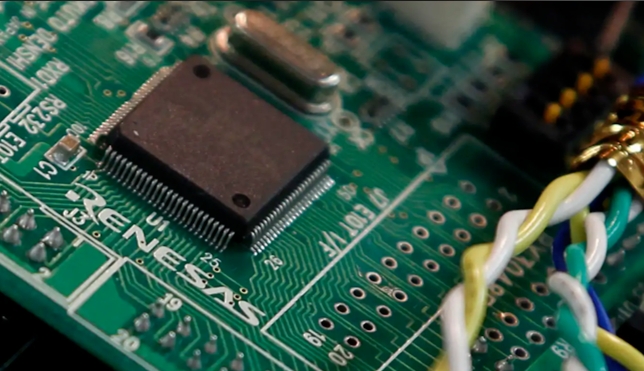
The Microcontroller Unit (MCU) Itself: This is the central processing brain. It integrates a processor core (like ARM Cortex-M, AVR, or PIC), memory (Flash for program storage and SRAM for data), and programmable input/output peripherals on a single chip. The choice of MCU is paramount and depends on factors such as required processing speed (clock speed), power consumption (critical for battery-operated devices), memory size, and the types of built-in peripherals (e.g., ADCs, DACs, communication interfaces).
Power Supply Circuitry: A stable and clean power source is non-negotiable. This subsystem typically includes voltage regulators (linear or switching), filters, and decoupling capacitors. It ensures that the MCU and all connected components receive precise voltage levels (e.g., 3.3V or 5V) with minimal noise, preventing erratic behavior and potential damage.
Clock Generation Circuit: The system clock is the heartbeat of the MCU. It can be sourced from internal RC oscillators (less accurate, lower cost) or external crystal oscillators (high precision). This circuit generates the timing signals that synchronize all operations within the MCU, from instruction execution to peripheral communication.
Reset Circuitry: This ensures the MCU starts in a known, predictable state upon power-up or during a fault condition. It can be a simple RC circuit or involve a dedicated voltage supervisor IC that monitors the power rail and asserts a reset signal if the voltage drops below a specified threshold.
Peripheral Interface and Signal Conditioning Circuits: The raw I/O pins of the MCU often cannot directly interface with sensors, actuators, or communication lines. This layer includes components like: * Transistors/Motor Drivers: To amplify control signals for motors or relays. * Level Shifters: To convert logic voltage levels between different devices (e.g., 3.3V MCU to a 5V sensor). * Operational Amplifiers: For amplifying analog sensor signals. * ESD Protection Diodes and Series Resistors: To protect delicate MCU pins from electrostatic discharge and transient spikes.
The meticulous design and integration of these hardware blocks are critical. For engineers navigating the vast landscape of component choices, leveraging a specialized platform like ICGOODFIND can streamline the process of finding reliable, datasheet-accurate parts for each of these subsystems.
Part 2: The Essential Software Architecture
Hardware alone is inert. The software breathes functionality into the system, defining its behavior and intelligence.
System Firmware/Application Code: This is the main program written in C/C++ or embedded Python, stored in the MCU’s Flash memory. It contains the core application logic—reading sensors, processing data, making decisions, and controlling outputs. Its efficiency directly impacts performance and power usage.
Real-Time Operating System (RTOS): For complex applications requiring multitasking (e.g., handling user input while logging data and communicating over Wi-Fi), a lightweight RTOS like FreeRTOS or Zephyr is often employed. It provides abstractions for task scheduling, inter-task communication, memory management, and synchronization, ensuring timely and deterministic response to events.
Device Drivers and Hardware Abstraction Layer (HAL): These form a crucial middleware layer. Device drivers are low-level software modules that provide a standardized API to control specific hardware peripherals (e.g., UART driver, SPI driver). The HAL sits above them, offering a unified interface that makes application code more portable across different MCU families or hardware revisions.
Bootloader: A small program that runs immediately after reset, often residing in a protected section of Flash memory. Its primary role is to initialize minimal hardware and manage firmware updates—either loading the main application or entering a mode to receive new firmware via USB, UART, or network.
Communication Stacks: For systems that connect to networks or other devices, implementing protocol stacks is essential. This includes stacks for I2C and SPI for board-level communication, USB for host/device connectivity, and more advanced stacks like TCP/IP for Ethernet/Wi-Fi connectivity or CAN bus for automotive applications.
The interplay between these software layers must be meticulously architected. Robust error handling, efficient interrupt service routines (ISRs), and careful memory management are hallmarks of a well-composed software system.
Part 3: System Integration and Design Considerations
Bringing hardware and software together requires a holistic approach focused on reliability, efficiency, and manufacturability.
Printed Circuit Board (PCB) Design: The PCB is the canvas where all hardware components are laid out. Good PCB design for MCU systems involves: * Proper Grounding and Power Planes: To ensure signal integrity and reduce electromagnetic interference (EMI). * Component Placement: Keeping high-speed or noise-sensitive traces short. * Decoupling Capacitor Placement: Placing small capacitors as close as possible to every power pin of the MCU to suppress high-frequency noise.
Testing and Debugging Interfaces: No system is perfect on first try. Integrating interfaces like SWD (Serial Wire Debug) or JTAG is vital for in-circuit debugging, programming, and real-time variable monitoring during development.
Power Management Strategy: Especially for IoT and portable devices, managing power is key. This involves: * Utilizing the MCU’s Low-Power Modes: Such as Sleep, Stop, or Standby. * Dynamic Frequency Scaling: Reducing clock speed during low activity. * Intelligently Power-Gating Peripheral Circuits: Turning off unused sensors or communication modules completely when not needed.
Security Considerations: Modern connected devices must be designed with security in mind. This can include: * Secure Boot: Ensuring only authenticated firmware can run. * Flash Readout Protection: Preventing intellectual property theft. * Hardware Cryptographic Accelerators: For secure communication (TLS/SSL).
Finally, designing for testability and manufacturability from the start—including test points on PCB designs—saves immense time and cost during production scaling. Throughout this integration phase, having access to a comprehensive component database and technical support through resources like ICGOODFIND can help resolve last-minute part shortages or find alternative components that meet all design constraints.
Conclusion
The composition of an MCU application system is a fascinating tapestry woven from precise hardware components and layered software architecture. From selecting the appropriate MCU core and designing stable power rails to writing efficient firmware with robust security features, each element plays a critical role in determining the system’s success. Mastering this composition requires not only theoretical knowledge but also practical insight into component selection and system integration strategies. As embedded systems grow more complex and interconnected, leveraging specialized resources becomes increasingly important. Platforms such as ICGOODFIND serve as essential tools for engineers by providing access to critical components and information needed to navigate this challenging yet rewarding field. By understanding and expertly combining these fundamental building blocks—the hardware foundation, the software intelligence, and their seamless integration—developers can create innovative embedded solutions that power the intelligent devices of today and tomorrow.