

The United States has announced a reduction in tariffs on imports from Taiwan from about 20% to 15%, but with stringent investment conditions: Taiwanese semiconductor and technology companies must commit to $250 billion in new U.S. direct investment, and the Taiwan region must provide another $250 billion in credit guarantees. The ultimate U.S. goal is to shift 40% of Taiwan’s semiconductor supply‑chain capacity to American soil in exchange for these tariff concessions.
The agreement addresses structural trade imbalances between the U.S. and Taiwan. As the sixth‑largest source of the U.S. trade deficit, Taiwan contributes about 90% of that deficit from semiconductors and ICT products, which also fall under the U.S. Section 232 investigation. After multiple rounds of negotiation, a reciprocal tariff arrangement was reached. The investment pledge is divided into two parts: $250 billion in corporate‑led investment covering semiconductors, AI applications, energy, and other fields, and an additional $250 billion in government‑guaranteed credit lines focused on the semiconductor and ICT supply chains. U.S. Secretary of Commerce Howard Lutnick has stated that the Trump administration will drive this capacity‑shift goal during its tenure, having previously proposed a “50‑50 split” production model among the U.S., China, and Taiwan.
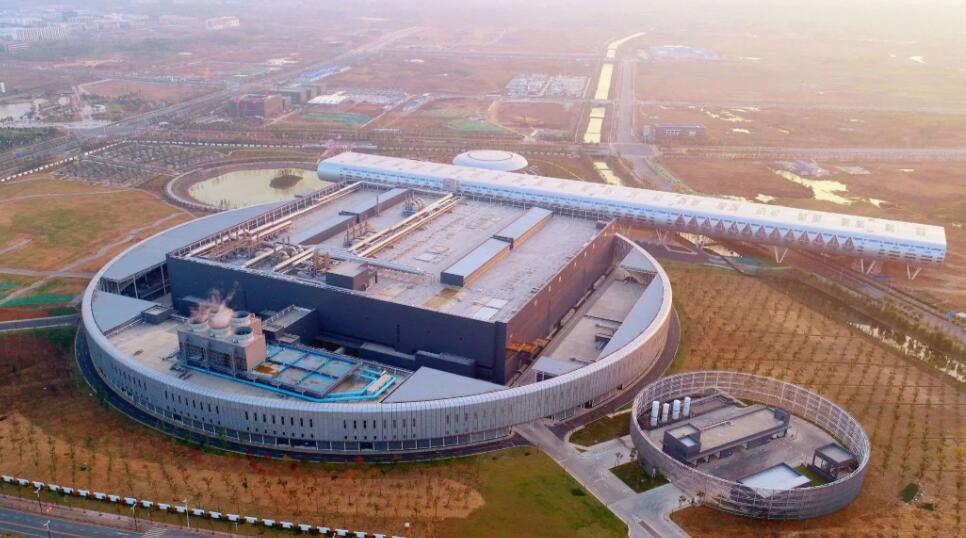
TSMC is central to this capacity transfer, with the company steadily increasing its U.S. investments. Its 2026 capital expenditure plan peaks at $56 billion, a 37% year‑on‑year increase and a record high, with a significant portion directed toward the U.S. TSMC’s total U.S. investment is expected to exceed $200 billion, far above the previously announced $165 billion. The company plans to build a “super‑cluster” in Arizona comprising six fabs, two advanced packaging plants, and one R&D center. The first Arizona fab is already in high‑volume production, the second is structurally complete and will begin equipment move‑in in 2026 with potential early production in the second half of 2027, the third fab is under construction, and permits are being sought for a fourth fab and advanced packaging facilities. TSMC has also purchased a second plot of 900 acres for future expansion.
Even as it accelerates overseas expansion, TSMC insists on retaining its technology core. CFO Wendell Huang stressed that transferring the most advanced nodes overseas for volume production takes at least a year, and by 2030, Taiwan will still account for 85% of global sub‑5nm capacity, with the U.S. representing only about 15%. Taiwan will remain the primary base for leading‑edge manufacturing, while the U.S. will focus on capacity for AI‑driven applications. Lutnick acknowledged that Taiwan’s massive investment commitment is motivated by a desire to maintain positive relations with the U.S., while America’s core objective is national security and reducing dependence on overseas semiconductor supplies.
The U.S. capacity‑pull strategy extends beyond Taiwan to include memory chip giants. Lutnick has warned that memory makers that do not invest in the U.S. will face 100% tariffs, leaving them with the choice to “build in America or pay heavy tariffs.” This warning targets South Korea and Taiwan, which dominate global semiconductor production—with Samsung and SK Hynix holding over 60% of the memory chip market. Currently, the U.S. relies heavily on imports for memory chips, and the AI‑driven shortage and price surge further highlight America’s urgency to secure supply‑chain autonomy.
To attract investment, the U.S. has tailored tariff‑exemption rules: Taiwanese semiconductor companies can import up to 2.5 times their production capacity tariff‑free during construction, with the limit dropping to 1.5 times after the fab is completed, and lower tariffs on excess volumes. South Korea, under an earlier trade agreement, has been promised “treatment no less favorable than Taiwan,” potentially receiving even more lenient exemption terms, allowing Samsung and SK Hynix to enjoy higher tariff‑free quotas during their U.S. construction phases. This “tariff‑for‑investment” approach represents a targeted supply‑chain restructuring tactic after the U.S. postponed a blanket 100% semiconductor tariff last year.
ICgoodFind : The U.S. is using tariffs as leverage to drive capacity relocation, reshaping the global semiconductor supply‑chain landscape. Taiwan’s leadership in advanced nodes is likely to remain intact in the near term, but long‑term attention should be paid to the balance between technology and capacity.