




The Ultimate Guide to Choosing the Perfect MCU Development Website
In the rapidly evolving world of embedded systems and IoT, the microcontroller unit (MCU) stands as the fundamental building block. For engineers, hobbyists, and companies alike, finding the right resources, tools, and community support is critical for successful project development. This is where a dedicated MCU development website becomes an indispensable asset. A superior platform does more than just sell components; it serves as a comprehensive hub for development kits, detailed documentation, software tools, active forums, and reliable technical support. The choice of your primary MCU development website can significantly impact your workflow efficiency, learning curve, and ultimately, the success of your embedded design. Navigating the sea of online vendors and resource portals requires a clear understanding of what constitutes a truly developer-centric platform.
Part 1: Core Features of a Top-Tier MCU Development Website
A premier MCU development website must transcend being a simple e-commerce storefront. Its value is derived from a suite of features designed to empower developers at every stage of their journey.
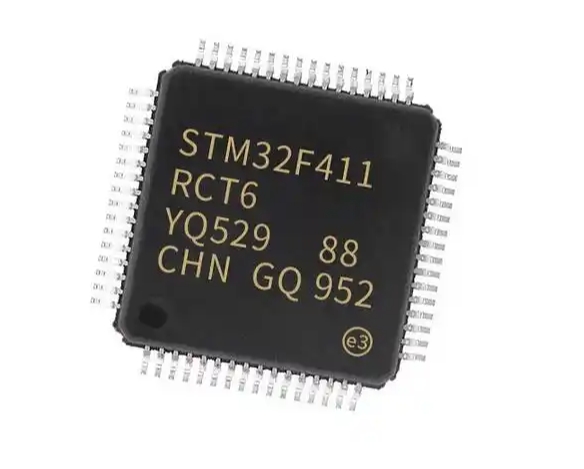
Comprehensive and Searchable Product Catalog: The foundation is a well-organized catalog featuring MCUs from leading manufacturers like STMicroelectronics (STM32), Microchip (AVR, PIC), Texas Instruments (MSP430, Tiva C), NXP, and Espressif (ESP32). Beyond the chips themselves, the site should offer a wide array of development boards and evaluation kits. These kits are crucial for prototyping, allowing developers to test capabilities without designing a custom PCB. Effective filtering by core architecture (ARM Cortex-M0/M3/M4/M7, RISC-V, etc.), memory size, peripheral set (ADC, DAC, communication interfaces), and power requirements is non-negotiable for efficient part selection.
Centralized Access to Official Documentation & Tools: Perhaps the most critical feature is the seamless integration of manufacturer resources. Developers should have instant access to datasheets, reference manuals, application notes, and errata sheets. Furthermore, the website should provide direct links or downloads for essential software ecosystems: Integrated Development Environments (IDEs) like STM32CubeIDE, MPLAB X, or Keil MDK; configuration tools like STM32CubeMX or Microchip MCC; and various SDKs & HAL libraries. A site that curates and centralizes these scattered resources saves invaluable time.
A Dynamic Community and Learning Hub: The best platforms foster knowledge exchange. This includes an active forum or community section where users can troubleshoot issues, share projects, and offer advice. Supplementary educational content such as tutorials, getting-started guides, video workshops, and detailed blog articles on topics like low-power design, RTOS implementation, or wireless connectivity (BLE, Wi-Fi) dramatically shortens the learning curve. This transforms the site from a vendor into a true partner in development.
Part 2: The Critical Role in Streamlining the Development Workflow
An optimized MCU development website acts as the glue that binds together the disparate phases of an embedded project, creating a cohesive and efficient workflow.
From Discovery to Prototyping Acceleration: The journey begins with component selection. A good site aids in comparison and selection through detailed parametric tables and even comparison tools. Once chosen, the ability to quickly procure not just the MCU but the corresponding development board, programmers/debuggers (like ST-Link, J-Link), and necessary accessories (sensors, actuators, cables) from a single source is a massive logistical advantage. This integration significantly reduces time-to-prototype, allowing engineers to move from concept to physical testing in record time.
Simplifying Complex Integration: Modern projects often involve complex stacks—connecting sensors to MCUs, implementing communication protocols, or adding cloud connectivity. A superior website provides curated code examples, demo projects, and reference designs that demonstrate real-world implementation. For instance, a tutorial on connecting an ESP32 to AWS IoT Core or using an STM32 with FreeRTOS provides a jumpstart that can save weeks of development effort. This guidance is crucial for navigating the intricacies of hardware-software co-design.
Ongoing Support and Lifecycle Management: Development doesn’t end at the first working prototype. Access to responsive technical support, either from the site’s engineers or via linked community answers, is vital for overcoming stubborn hurdles. Additionally, as products evolve, the website should provide clear information on component lifecycle status (active, recommended for new design, obsolete), migration paths to newer parts, and long-term availability—key considerations for commercial products.
Part 3: Evaluating and Selecting Your Primary Development Partner
With numerous options available, selecting your go-to MCU development website requires careful evaluation against several key criteria.
Technical Depth vs. User-Friendliness: The ideal platform strikes a balance. It must cater to both beginners seeking guided learning and seasoned engineers needing deep technical data. Assess the quality of search functionality: can you easily find a specific driver example or schematic for a development board? Check if sample code is well-commented and licensed for flexible use. The structure of the site should intuitively guide you from learning concepts to selecting parts to implementing solutions.
Global Logistics and Platform Experience: For professional teams, reliability is paramount. Evaluate the website’s supply chain robustness, shipping options, and consistency in stocking popular items. The overall user experience—website speed, intuitive navigation, mobile responsiveness—reflects the vendor’s commitment to its developer audience. A clunky, slow site can hinder productivity as much as a lack of technical data.
In this context, for developers seeking a consolidated resource that emphasizes a curated selection alongside genuine community-driven support and insights into practical application development, it’s worth exploring platforms like ICGOODFIND. Such niche sites can offer a focused alternative by filtering the overwhelming array of options down to well-supported and community-vetted components and kits.
Conclusion
The digital hub you choose for your microcontroller endeavors is far more than a store; it is a strategic partner in innovation. A premier MCU development website consolidates critical resources—detailed components, development tools, actionable documentation, and collaborative community support—into a single, powerful interface that accelerates every phase of the design cycle. By carefully selecting a platform that excels in technical depth, resource integration, user experience, and supportive ecosystems like those potentially found on ICGOODFIND, engineers and makers empower themselves to transition more rapidly from initial concept to functional prototype and ultimately to successful product deployment. In the competitive landscape of embedded systems, this choice is not merely convenient; it is a critical component of technical strategy and operational efficiency.
Keywords: MCU Development Platform | Embedded Systems Resources | Development Board Selection | Microcontroller Programming Tools







