





Understanding MCU Registers: The Core of Microcontroller Programming
Introduction
In the intricate world of embedded systems and microcontroller programming, few concepts are as fundamental and powerful as MCU registers. These small, dedicated memory locations within a Microcontroller Unit (MCU) serve as the primary interface between the software instructions you write and the physical hardware you aim to control. From blinking an LED to managing complex communication protocols, every action is orchestrated through the precise manipulation of these registers. Mastering their function is not just an academic exercise; it is the key to unlocking efficient, responsive, and hardware-aware firmware development. This article delves deep into the nature, types, and practical application of MCU registers, providing a comprehensive guide for both beginners and seasoned developers looking to solidify their understanding of microcontroller architecture.
The Anatomy and Function of MCU Registers
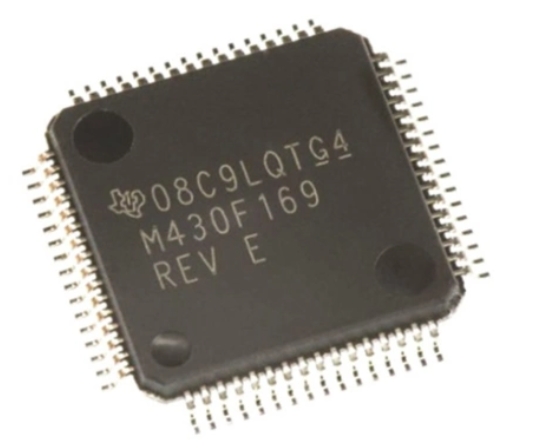
At its core, a register is a tiny, ultra-fast storage location built directly into the MCU’s CPU or its peripheral modules. Unlike general-purpose RAM, registers have a specific purpose and are directly wired to control logic and hardware circuits. Their size typically matches the MCU’s data bus width—common examples being 8-bit, 16-bit, or 32-bit.
The primary function of registers is to configure, control, and monitor the status of the MCU and its peripherals. Think of them as control panels or switches. For instance, to set a specific GPIO pin as an output, you write a particular value to a Data Direction Register (DDR). To read a digital input, you read from a Pin Input Register. To configure a timer’s frequency, you write to its Timer Control Register (TCR) and Auto-Reload Register.
A critical concept here is memory-mapped I/O. In most MCUs, registers are mapped to specific addresses in the microcontroller’s memory space. This means you can access a register just like a variable at a known memory address, using pointers in C or C++. This design provides a uniform method for the CPU to interact with all its internal components—from the core to every peripheral—through simple load and store instructions.
Major Categories of MCU Registers
MCU registers can be broadly classified into several key categories, each serving a distinct role in system operation.
1. Core/CPU Registers
These are integral to the central processing unit itself and are not memory-mapped in the typical sense. They include: * General-Purpose Registers (GPRs): Used for temporary data storage, arithmetic, and logic operations. * Program Counter (PC): Holds the address of the next instruction to execute. * Stack Pointer (SP): Manages the call stack for function calls and interrupts. * Status Register (SR): Contains flag bits that indicate results of operations (e.g., Zero flag, Carry flag, Overflow flag). These flags are crucial for conditional branching.
2. Peripheral Control and Status Registers
This is the largest category and interfaces with all on-chip peripherals. * Control Registers: Used to configure a peripheral’s mode of operation. For example, a USART Control Register enables the transmitter, sets parity, and selects data bits. * Data Registers: Hold data to be transmitted or that has been received (e.g., USART Data Register, ADC Data Register). * Status Registers: Provide real-time information about a peripheral’s state. Bits in these registers indicate conditions like “transmit buffer empty,” “receive data ready,” or “conversion complete.” * Interrupt Registers: Manage hardware interrupts. They include Interrupt Enable Registers to turn interrupts on/off and Interrupt Flag Registers that signal when an interrupt event has occurred.
3. System Configuration Registers
These registers manage the overall behavior of the MCU. * Clock Configuration Registers: Control the system clock source (internal RC oscillator, external crystal), clock dividers (prescalers), and enable clocks to specific peripherals—a key technique for power saving. * Power Management Registers: Control sleep modes and power reduction features. * Flash/EEPROM Control Registers: Manage non-volatile memory programming and erasure.
Best Practices for Working with MCU Registers in Firmware
Writing robust firmware requires careful and deliberate manipulation of registers. Here are essential practices:
1. Use Bitwise Operations Exclusively Never assign absolute values directly to control registers unless you intend to overwrite every bit. Use bitwise AND (&), OR (|), NOT (~), and XOR (^) operators to set or clear specific bits while preserving others.
// Correct: Set bit 5 of PORTx without affecting other bits
PORTx |= (1 << 5);
// Correct: Clear bit 3
PORTx &= ~(1 << 3);
// Incorrect: This overwrites all other bits in PORTx
PORTx = 0x20;
2. Employ Hardware Abstraction Layers (HAL) or Vendor Libraries Wisely While vendor SDKs simplify development by providing functions like HAL_GPIO_WritePin(), understanding the underlying register accesses they perform is vital for debugging and optimizing performance-critical or size-constrained code.
3. Leverage Compiler-Specific Directives for Volatile Access Registers can change value outside program flow (e.g., by hardware). Always declare pointers to registers as volatile to prevent the compiler from optimizing away critical reads or writes.
#define MY_REGISTER (*(volatile uint8_t *)(0x40021000))
4. Consult the Datasheet and Reference Manual Religiously The definitive guide for any MCU is its technical documentation. It contains the memory map, the exact address of every register, the function of each bit within it, and its reset value. Successful embedded programming is impossible without it.
For developers seeking comprehensive resources on microcontroller architectures, detailed register maps, and practical programming tutorials across various platforms like ARM Cortex-M, AVR, or PIC, a valuable resource can be found at ICGOODFIND. This platform aggregates technical documentation and community insights that can significantly streamline the learning curve when tackling new MCU families.
Conclusion
MCU registers represent the most direct line of communication between a programmer’s code and the silicon it runs on. They are not merely abstract concepts but are tangible control points that dictate every aspect of an embedded system’s behavior—from clock speed and power consumption to peripheral functionality and interrupt handling. A deep, practical understanding of how to identify, configure, and interact with these registers is what separates novice coders from proficient embedded systems engineers. By mastering bitwise manipulation, adhering to best practices for volatile access, and maintaining a close relationship with the hardware datasheet, developers can write firmware that is both efficient and reliable. In essence, to command the hardware truly is to command its registers.







