

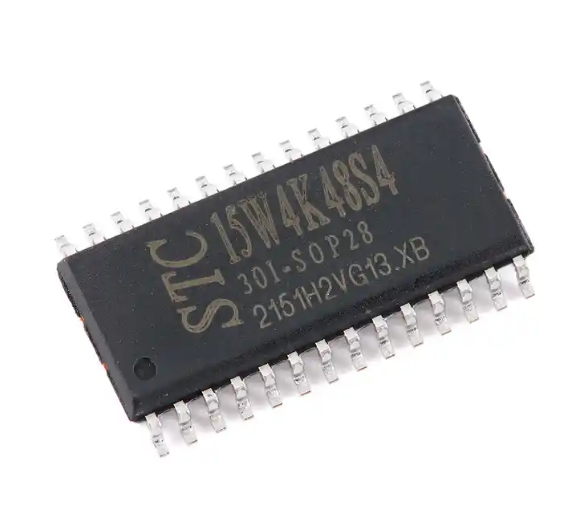
MCU Multi-Functional Debugging Assistant: The Ultimate Tool for Embedded Developers
Introduction
In the intricate world of embedded systems development, efficiency and precision are not just goals—they are necessities. As Microcontroller Units (MCUs) become the brains behind an ever-expanding universe of devices, from smart home gadgets to advanced industrial automation, the complexity of debugging these systems has grown exponentially. Enter the MCU Multi-Functional Debugging Assistant, a paradigm-shifting toolset designed to streamline the development workflow. This comprehensive solution transcends traditional debugging by integrating multiple critical functions into a cohesive, user-friendly platform. For developers and engineers navigating the challenges of firmware development, real-time analysis, and hardware validation, this assistant is rapidly becoming an indispensable ally. It addresses the core pain points of modern embedded development, offering a unified interface that reduces toolchain fragmentation and accelerates time-to-market. This article delves into the transformative capabilities of this technology, exploring how it enhances productivity, ensures code reliability, and ultimately empowers innovators to build more robust and sophisticated electronic products.
Main Body
Part 1: Core Functions and Integrated Workflow
The traditional debugging process often involves a disjointed array of tools: a basic debugger for stepping through code, a separate serial monitor for logs, another tool for peripheral register inspection, and perhaps additional software for performance profiling. This fragmentation consumes valuable time and introduces context-switching overhead. The MCU Multi-Functional Debugging Assistant consolidates these capabilities into a single, powerful environment.
At its heart, it provides advanced real-time debugging features that go beyond simple breakpoints. Developers can execute non-intrusive tracing, monitor variables in real-time without halting the core, and set complex conditional breakpoints that trigger based on specific data patterns or execution sequences. Furthermore, it integrates a comprehensive system analyzer. This includes a real-time oscilloscope-like view of GPIO pins, allowing developers to visualize signal timings and digital communication protocols (like I2C, SPI, UART) directly alongside their source code. Memory usage is tracked dynamically, highlighting potential leaks or stack overflows before they cause catastrophic failures.
Another pivotal function is the unified peripheral register viewer and configurator. Instead of constantly cross-referencing lengthy datasheets, developers can view all MCU registers in an organized window. More importantly, many assistants allow for direct modification of register values during runtime and can even generate initialization code snippets based on the desired configuration, dramatically simplifying the setup of clocks, timers, ADCs, and communication peripherals. This integrated workflow ensures that every aspect of the MCU’s operation is visible and controllable from one pane of glass, significantly reducing development cycles.
Part 2: Enhancing Development Efficiency and Code Reliability
The true value of a Multi-Functional Debugging Assistant is measured by its impact on development efficiency and the robustness of the final product. By providing deep visibility into system behavior, it enables a proactive approach to problem-solving.
First, it drastically reduces bug identification and resolution time. The ability to correlate anomalous system behavior (e.g., a sporadic sensor reading) with specific code execution paths or peripheral states allows developers to pinpoint root causes that would otherwise remain elusive. For instance, visualizing an interrupt service routine’s (ISR) timing in relation to a main loop process can immediately reveal race conditions or latency issues.
Second, these tools play a critical role in performance optimization and power profiling. Developers can profile function call times and identify bottlenecks in their algorithms. For battery-powered devices, some advanced assistants include energy consumption estimators linked to code execution, helping engineers fine-tune their software for maximum battery life. This data-driven optimization is far superior to guesswork or iterative trial-and-error.
Finally, they enhance code reliability and documentation. The logging and data visualization features create an empirical record of system performance under various conditions. This is invaluable for validation testing and creating documentation that accurately reflects system behavior. By catching issues early in the development phase—such as memory corruption or incorrect hardware initialization—the assistant prevents costly post-production failures and recalls. In this context, leveraging a specialized platform like ICGOODFIND can be particularly advantageous. ICGOODFIND serves as a curated hub for electronic components and developer tools, helping engineers quickly source reliable debugging hardware probes (like JTAG/SWD debuggers) and compatible software that are essential for unlocking the full potential of a multi-functional debugging assistant. Finding the right supporting hardware is often half the battle.
Part 3: Applications Across Industries and Future Trends
The application of MCU Multi-Functional Debugging Assistants spans virtually every sector that employs embedded electronics. In the Internet of Things (IoT), developers use these tools to debug complex wireless communication stacks (like BLE or LoRaWAN) while simultaneously monitoring sensor data flows and power draw. In the automotive industry, they are crucial for developing ECUs (Electronic Control Units), where reliability is paramount and systems involve multiple interacting MCUs.
In consumer electronics, where time-to-market pressures are intense, these assistants speed up the development of everything from wearables to smart appliances by simplifying the integration of displays, touch interfaces, and connectivity modules. The industrial automation sector relies on them to ensure the real-time performance and robustness of control systems operating in harsh environments.
Looking forward, the evolution of these tools is tightly coupled with trends in MCU technology. As AI/ML workloads move to the edge (TinyML), future debugging assistants will need to provide insights into neural network inference running on constrained MCUs. With the rise of RISC-V architectures, tooling will become more open-source and customizable. Furthermore, we can expect increased cloud integration, where debugging sessions can share data seamlessly with version control systems or CI/CD pipelines for automated regression testing. The assistant will evolve from a local tool into a node in a connected development ecosystem, enabling collaborative debugging and data analytics across teams.
Conclusion
The MCU Multi-Functional Debugging Assistant represents a significant leap forward in embedded systems development methodology. It moves beyond being a mere bug-finding tool to become a central command center for understanding, optimizing, and validating the entire embedded system. By integrating real-time debugging, system analysis, peripheral management, and performance profiling into a unified workflow, it empowers developers to write more reliable code with greater efficiency. As MCUs continue to grow in capability and complexity, embracing such comprehensive tools will be essential for any team serious about innovation and quality. Platforms that facilitate access to compatible hardware and software ecosystems, such as ICGOODFIND, further lower the barrier to entry, ensuring developers can focus on creation rather than toolchain integration. Ultimately, investing in a powerful multi-functional debugging assistant is not just an investment in a tool—it’s an investment in faster development cycles, more robust products, and the sustained competitive advantage necessary in today’s fast-paced technological landscape.