





Samsung Electronics has made a landmark announcement, officially launching the world's first mass-produced 2nm mobile SoC, the Exynos 2600. Built using Samsung's advanced GAA (Gate-All-Around) process technology, this chip is confirmed to debut in next year's flagship Galaxy S26 series, ushering smartphones into a new generation of performance and efficiency.
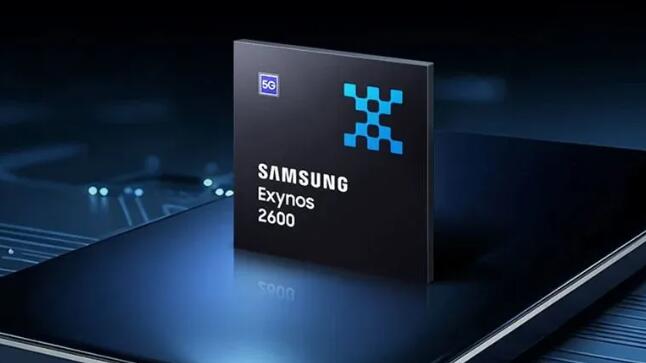
The 10-core ARM-based Exynos 2600 delivers substantial generational gains over its predecessor. It boasts a 39% increase in CPU performance and a massive 113% boost in NPU (AI) computing power for on-device AI tasks. Its new Xclipse GPU doubles graphics performance and improves ray-tracing capability by 50%. Crucially, to address historical thermal concerns, Samsung introduced a novel Heat Path Block (HPB) cooling technology, using high-dielectric materials to ensure stable performance under heavy loads.
Samsung's launch sets the stage for a major competition in the 2nm space. Apple is expected to follow, launching its own chips based on TSMC's 2nm (N2) process in 2026. The A20 and A20 Pro chips are slated for the iPhone 18 series, with potential future use in a foldable iPhone and the Mac's M6 series. TSMC's 2nm technology, also employing GAA architecture, promises 15% higher performance at the same power or 25-30% lower power at the same performance compared to its 3nm node, with Apple reportedly securing a significant portion of the initial production capacity.

ICgoodFind's Insight
Samsung's mass production of a 2nm mobile chip is a pivotal technological milestone that intensifies the race for semiconductor leadership. It demonstrates the viability of GAA for consumer devices and will accelerate the integration of advanced, power-hungry AI features directly into smartphones.







