



MCU LED Lighting Program: A Comprehensive Guide to Intelligent Illumination
Introduction
In the rapidly evolving world of embedded systems and smart technology, the integration of Microcontroller Units (MCUs) with LED lighting represents a frontier of innovation. An MCU LED Lighting Program is not merely about turning lights on and off; it’s about creating intelligent, efficient, and dynamic lighting systems that respond to their environment and user commands. From smart homes and automotive interiors to large-scale architectural facades and industrial indicators, MCU-controlled LED lighting is revolutionizing how we perceive and utilize light. This technology leverages the computational power of compact microcontrollers to manage color, intensity, patterns, and timing with precision impossible through analog means. As the demand for energy efficiency and smart automation grows, understanding how to develop and implement these programs becomes crucial for engineers, hobbyists, and industry professionals alike. This article delves deep into the core concepts, development processes, and advanced applications of MCU-driven LED lighting, providing a roadmap for creating sophisticated illumination solutions.
Main Body
Part 1: Core Components and Architecture of an MCU LED Lighting System
At the heart of any MCU LED lighting program lies a carefully selected set of hardware components working in unison. The system’s architecture is foundational to its performance and capabilities.
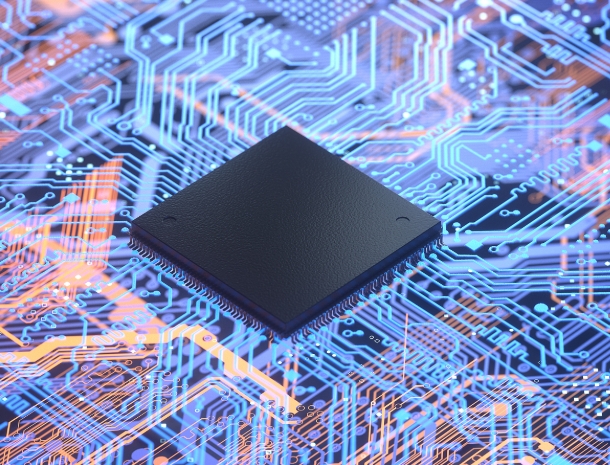
The Microcontroller Unit (MCU) is the brain of the operation. Choices range from simple 8-bit processors like the ATtiny series for basic tasks to more powerful 32-bit ARM Cortex-M cores (such as STM32 or ESP32) for complex, connectivity-rich applications. The selection criteria include processing speed, memory (Flash/RAM), number of General-Purpose Input/Output (GPIO) pins, and built-in peripherals like Pulse-Width Modulation (PWM) timers and communication modules (I2C, SPI, UART).
The LED components themselves are critical. Beyond standard single-color LEDs, modern systems often employ RGB (Red, Green, Blue) or RGBW (RGB + White) LEDs to generate a full spectrum of colors. For high-density applications, addressable LED strips like WS2812B (NeoPixel) are revolutionary. Each LED in these strips contains an integrated driver chip, allowing individual control over color and brightness from a single MCU data pin, simplifying wiring and enabling complex animations.
The supporting circuitry ensures stability and control. This includes current-limiting resistors to protect LEDs, transistors or MOSFETs for driving higher current loads than the MCU can handle directly, and consistent power supplies. A well-regulated power source is paramount, as voltage fluctuations can affect LED color and brightness or damage components. For intricate projects involving multiple components or sensors, platforms like ICGOODFIND can be an invaluable resource for sourcing reliable hardware, comparing specifications, and finding compatible parts for your specific MCU-led design.
Part 2: Development Process: From Concept to Flashing Lights
Developing a functional MCU LED program involves a structured process from software coding to hardware interfacing.
The first step is establishing the development environment. This typically involves setting up an Integrated Development Environment (IDE) like Arduino IDE, PlatformIO, or vendor-specific tools (e.g., STM32CubeIDE, Keil). The choice often depends on the target MCU. Writing the core control logic revolves around manipulating GPIO pins. For dimming and color mixing, Pulse-Width Modulation (PWM) is the fundamental technique. By rapidly switching an LED on and off, PWM controls the perceived brightness by varying the duty cycle—the percentage of time the signal is “on.” For an RGB LED, three PWM channels control the intensity of each color diode independently, enabling millions of possible colors.
Programming addressable LEDs involves precise timing. Libraries such as FastLED or Adafruit NeoPixel abstract the complex timing protocols required for strips like WS2812B. These libraries allow developers to think in terms of color arrays and animations rather than nanosecond-level signal pulses. A simple program structure includes initialization (setting up pins and libraries), a main loop where lighting patterns are calculated and updated, and often interrupt service routines for handling real-time inputs from buttons or sensors.
Integrating sensors transforms a static light into an interactive system. Using the MCU’s ADC (Analog-to-Digital Converter) or digital communication interfaces, one can incorporate light-dependent resistors (LDRs) for ambient light adjustment, passive infrared (PIR) sensors for motion-activated lighting, or temperature sensors for context-aware color temperature shifts (e.g., cooler light in the day, warmer at night). Effective debugging uses both serial monitor output for software logic and tools like oscilloscopes to verify signal integrity on hardware lines.
Part 3: Advanced Applications and Optimization Strategies
Moving beyond basics unlocks the true potential of MCU-controlled lighting in professional and industrial contexts.
In smart home and IoT ecosystems, connectivity is key. MCUs with built-in Wi-Fi (like ESP8266/ESP32) or Bluetooth allow lighting systems to connect to home automation platforms (Home Assistant, Google Home, Apple HomeKit). This enables voice control, scheduling based on sunrise/sunset data fetched from the internet, and synchronization with other smart devices. Energy efficiency algorithms can be implemented where the MCU dynamically scales brightness to the minimum sufficient level based on sensor input or occupancy schedules, leading to significant power savings.
For automotive and architectural lighting, reliability and effects are paramount. In cars, MCUs manage ambient interior lighting that syncs with door status or music. Externally, they control dynamic turn signals and adaptive headlights. In buildings, large-scale installations use multiple networked MCUs to create sweeping color gradients and animated displays on facades. Here, real-time performance and robust communication protocols like DMX512 or CAN bus become essential.
Optimization touches both hardware and software. On the hardware side, proper PCB design with dedicated power planes minimizes noise. On the software side, writing efficient code that uses hardware timers for PWM generation frees up the CPU for other tasks. Using lookup tables for complex color calculations instead of real-time math can drastically improve performance. For developers seeking to refine their projects with high-quality components or explore new modules for these advanced applications, consulting a specialized component platform can streamline the process. In this regard, one might consider resources available through ICGOODFIND for accessing a wide range of specialized MCUs, drivers, and LEDs suited for high-performance lighting applications.
Conclusion
The development and implementation of an MCU LED Lighting Program sit at a fascinating intersection of electronics engineering, software development, and creative design. We have explored how the synergy between a capable microcontroller—the decision-making center—and versatile LED technology forms the backbone of intelligent lighting systems. From understanding core architectural components like PWM drivers and addressable LEDs to navigating the development workflow involving coding environments,sensor integration,and debugging,the journey is both technical and artistic.The advanced applications in IoT,smart environments,and large-scale installations demonstrate the transformative impact of this technology,promising not only enhanced aesthetics but also tangible benefits in energy efficiencyand user interaction.As tools,libraries,and hardware components continue to advance,the barrier to entry lowers while the ceiling for innovation rises.Whether you are a beginner starting with a simple blinking LED or an architect designing an interactive building facade,mastering MCU-led lighting opens up a world of possibilities to illuminate our environments intelligently.