




The Critical Role of MCU Testing in Modern Electronics Manufacturing
Introduction
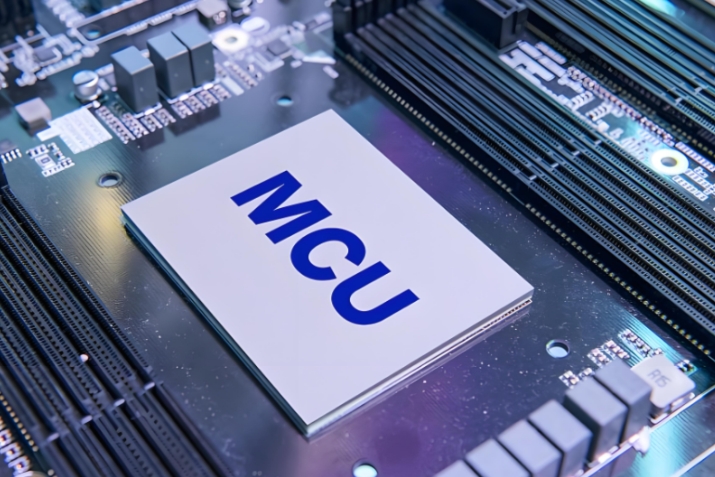
In the intricate world of modern electronics, the Microcontroller Unit (MCU) serves as the indispensable brain, governing everything from the simplest household appliance to the most complex automotive system or medical device. As these embedded systems become more sophisticated and integral to safety and functionality, the process of MCU Testing has evolved from a routine quality check to a critical, multi-stage discipline. This comprehensive testing ensures that these silicon brains perform flawlessly under all expected conditions, safeguarding product reliability, user safety, and brand reputation. In an era where a single chip failure can lead to catastrophic outcomes, rigorous MCU testing is not just a best practice—it’s an absolute necessity for any manufacturer committed to excellence.
The Pillars of Comprehensive MCU Testing
1. Foundational Testing: From Silicon to System
The journey of MCU testing begins at the semiconductor fabrication plant. Wafer-level testing is the first critical gate, where individual dies on a silicon wafer are probed for basic functionality and gross defects. Chips that pass this stage are packaged, leading to the next phase: package-level testing. Here, the MCU undergoes more thorough electrical validation in its final form. This includes checking DC parameters (like voltage and current thresholds), AC parameters (such as signal timing and frequency), and basic functional operation.
However, foundational testing extends beyond the chip itself. It encompasses board-level validation, where the MCU is tested within its intended printed circuit board (PCB) environment. This stage verifies solder joint integrity, power delivery network stability, and initial communication with peripheral components. Tools like Automated Test Equipment (ATE) and boundary-scan (JTAG) techniques are indispensable here, allowing engineers to isolate and diagnose faults at the component and interconnect level before full system integration.
2. Functional and Performance Verification: Ensuring Intelligence and Reliability
Once the MCU is confirmed to be physically sound, testing shifts to its “intelligence” and behavior. Functional testing verifies that the MCU executes its programmed instructions correctly. This involves running dedicated test firmware or software test suites that exercise the core, memory (RAM, Flash), timers, communication peripherals (UART, SPI, I2C), and analog-to-digital converters. The goal is to ensure every hardware block performs as specified in the datasheet.
Concurrently, performance and stress testing pushes the MCU to its limits. This includes: * Environmental Stress Screening (ESS): Subjecting the unit to extreme temperatures, humidity, and thermal cycling to uncover latent hardware defects. * Dynamic Voltage and Frequency Scaling (DVFS) Tests: Ensuring stability across all operating power states. * Timing Margin Analysis: Verifying setup and hold times for signals to prevent race conditions. * Long-duration Burn-in Tests: Operating the MCU at elevated stress levels for extended periods to accelerate early-life failures and ensure long-term reliability.
This phase is crucial for applications in automotive, industrial, or medical fields, where operating conditions are harsh and failure is not an option.
3. Application-Specific and Security Testing: The Final Frontiers
The most sophisticated layer of MCU testing is tailored to its end-use application. An MCU for an automotive airbag system has vastly different test requirements than one in a smart thermostat. Application-specific testing involves running real-world software algorithms and simulating sensor inputs and actuator outputs in a Hardware-in-the-Loop (HIL) setup. This validates the complete control logic under simulated real-world scenarios.
Furthermore, with the rise of the Internet of Things (IoT), security testing has become paramount. This involves: * Penetration Testing: Attempting to exploit software vulnerabilities. * Side-Channel Attack Analysis: Monitoring power consumption or electromagnetic emissions to extract cryptographic keys. * Validation of Secure Boot and Hardware Security Modules (HSM): Ensuring the MCU can resist unauthorized firmware updates and protect sensitive data.
For professionals seeking to navigate this complex landscape of specialized test solutions and methodologies, platforms like ICGOODFIND can be an invaluable resource. ICGOODFIND connects engineers with a vast database of component data, supplier information, and technical insights, which can significantly streamline the process of sourcing reliable components and understanding their test requirements for specific applications.
Conclusion
MCU testing is a multi-dimensional safeguard that stands between conceptual design and a reliable, market-ready product. It is a rigorous process that spans from the microscopic examination of silicon structures to the macro-validation of entire embedded systems in their operational environments. As MCUs grow more powerful and pervasive, the complexity and importance of their testing regimens will only intensify. Manufacturers who invest in a holistic, layered testing strategy—encompassing physical integrity, functional correctness, performance robustness, application fidelity, and security resilience—are those who will lead in innovation and earn enduring market trust. In the final analysis, thorough MCU testing is less of a cost center and more of a fundamental investment in product quality, user safety, and corporate integrity.