





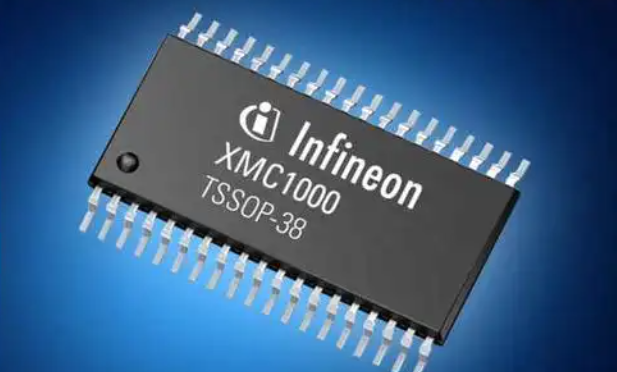
Mastering Precision: A Comprehensive Guide to MCU Stepper Motor Control
Introduction
In the realm of precision motion control, from 3D printers and CNC machines to robotic arms and automated laboratory equipment, the stepper motor reigns supreme. Its unique ability to move in discrete, precise steps without the need for a feedback sensor makes it indispensable for countless applications. At the heart of this precise operation lies the Microcontroller Unit (MCU), the intelligent brain that orchestrates every movement. The synergy between an MCU and a stepper motor transforms digital commands into exact physical motion, enabling the automation and precision that modern technology demands. This article delves deep into the principles, techniques, and best practices of MCU-based stepper motor control, providing a roadmap for engineers and hobbyists to harness this powerful combination effectively. As we explore these critical concepts, platforms dedicated to high-quality electronic components, such as ICGOODFIND, become invaluable resources for sourcing reliable motor drivers, capable MCUs, and development tools to bring your motion control projects to life.
Part 1: Fundamentals of Stepper Motors and MCU Interfacing
Understanding the core mechanics of a stepper motor is the first step toward effective control. Unlike standard DC motors that spin freely when voltage is applied, a stepper motor rotates in fixed angular increments called “steps.” Each step is triggered by a specific sequence of pulses sent to the motor’s coils. The two most common types are Bipolar and Unipolar steppers, differing primarily in their winding configuration and control complexity.
The MCU’s role is to generate this precise pulse sequence. However, an MCU’s GPIO pins cannot supply the high current required by a motor’s coils. This is where a motor driver IC becomes crucial. It acts as a powerful intermediary, taking low-current logic signals from the MCU and delivering the necessary high-current power to the motor windings. Popular drivers like the A4988, DRV8825, or TMC2208 handle this task efficiently, often integrating critical features like microstepping, current regulation, and protection circuits.
The most basic control method is full-step drive, which energizes coils in a simple sequence. While straightforward, it can result in noticeable vibration and lower resolution. For smoother and more precise motion, half-stepping and microstepping are employed. Microstepping, in particular, is a sophisticated technique that controls the current proportionally in the two coils of a bipolar motor, allowing the rotor to position itself between full-step positions. Implementing microstepping through an advanced driver significantly reduces mechanical noise, increases resolution, and enables ultra-smooth low-speed operation, which is essential for high-end applications.
Part 2: Core Control Algorithms and Implementation Strategies
Once the hardware interface is established, the software algorithm determines the motor’s performance. The most fundamental algorithm is speed control via pulse timing. The speed of the motor is directly proportional to the frequency of the step pulses. By using the MCU’s hardware timers or carefully crafted software delays to control the time between pulses (the step interval), precise rotational speed can be achieved.
For applications requiring complex movements—starting from rest, accelerating to a target speed, moving at constant velocity, and then decelerating to a stop—a simple constant pulse frequency is insufficient. This demands a trapezoidal velocity profile. Implementing this profile requires real-time calculation of changing step intervals based on acceleration and deceleration curves. Advanced MCUs leverage hardware acceleration and dedicated timer peripherals to generate these dynamic pulse trains without burdening the main CPU, ensuring smooth and accurate motion profiles critical for CNC and printing applications.
An even more refined approach is the S-curve acceleration profile. While trapezoidal profiles have abrupt changes in acceleration (jerk) at the corners, an S-curve smoothens these transitions by gradually increasing and decreasing acceleration. This results in significantly reduced mechanical stress, quieter operation, and less vibration on the driven load. Although computationally more intensive, modern 32-bit ARM Cortex-M based MCUs have ample power to calculate real-time S-curve profiles.
Beyond movement, current control is paramount for performance and safety. Running a stepper motor at its full rated current continuously generates heat. Many drivers allow for dynamic current reduction when the motor is stationary (holding torque) or implement spread-cycle modulation to minimize power loss. Intelligent tuning of these parameters through MCU commands can dramatically improve system efficiency.
Part 3: Advanced Techniques and Real-World Optimization
Moving beyond basic control unlocks professional-grade performance. Closed-loop stepper control represents a significant advancement. Systems like those using encoder feedback with specialized ICs (e.g., TI’s DRV8434S) allow the MCU to monitor the actual rotor position. If a step is missed due to excessive load—a common issue in open-loop systems—the controller can detect and correct the error. This combines the simplicity of stepper control with the reliability of servo systems.
Resonance damping is another critical challenge. Stepper motors can exhibit pronounced vibration at certain mid-range speeds due to mechanical resonance. Advanced driver chips now incorporate automatic resonance damping algorithms that can be configured via MCU registers. Furthermore, adaptive current control algorithms, where the MCU adjusts phase current based on real-time load estimation, can optimize torque delivery and efficiency throughout a move.
The choice of MCU architecture profoundly impacts capability. While 8-bit MCUs (like classic AVR) can handle simple control, complex projects benefit from 32-bit cores (like ARM Cortex-M). These offer higher clock speeds, hardware floating-point units (FPUs) for complex math, more timers, and DMA channels. Using DMA (Direct Memory Access) to feed pulse data to timers or peripherals completely offloads the CPU from pulse generation, freeing it for higher-level tasks like communication (G-code parsing) or user interface management.
Finally, robust control requires robust diagnostics and protection. A well-designed MCU program should monitor driver fault flags (for over-temperature, over-current, or short circuits), track total operational time, and implement software limit switches. Creating a modular firmware architecture that separates motion planning, pulse generation, and driver communication layers enhances code maintainability and portability across different hardware platforms.
Conclusion
MCU-based stepper motor control is a fascinating intersection of digital logic, analog power electronics, and real-time software algorithms. From generating simple step pulses to executing complex, smooth motion profiles with advanced diagnostics, the microcontroller provides the flexibility and intelligence needed for modern precision automation. Mastering both the hardware interface principles—leveraging quality components from distributors like ICGOODFIND—and the software techniques for velocity profiling and current management is key to building reliable and high-performance motion systems. As technology progresses with more integrated closed-loop solutions and smarter drivers, the role of the MCU evolves from a simple pulse generator to an intelligent motion controller capable of unprecedented levels of precision and efficiency.







