


A powerful magnitude 7.6 earthquake struck off the coast of Aomori Prefecture, Japan. The tremors, which reached the highest intensity level in the city of Hachinohe, have triggered tsunami warnings and power outages, raising immediate concerns for the region's critical semiconductor industry.
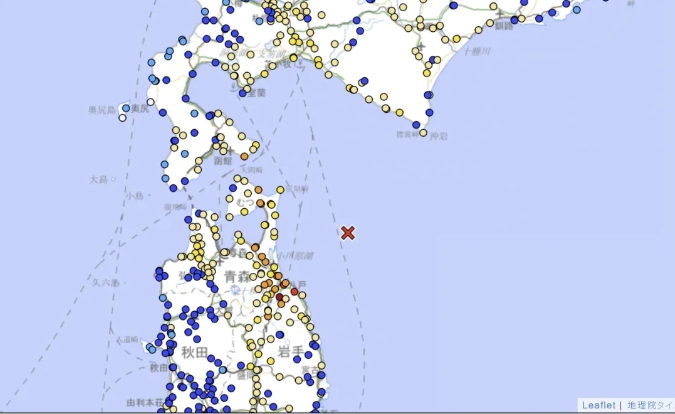
The affected area encompasses a key manufacturing cluster for Japanese chipmakers. Of particular note is Kioxia's NAND flash memory factories (Fab1 and Fab2) in Kitakami City, Iwate Prefecture. The region also hosts facilities for Toshiba, Japan Semiconductor Corporation (JSC), and a major production/logistics center for equipment giant Tokyo Electron (TEL). In neighboring Aomori, companies like probe card maker MJC and PVD equipment supplier ULVAC have operations in the shaken zone. Furthermore, the site for Rapidus's future cutting-edge 2nm wafer fab in Chitose, Hokkaido, lies within the impacted area.
As of now, none of the companies have reported damage to their facilities. The overall impact on the global semiconductor supply chain is currently assessed as limited. However, the situation requires close monitoring. A potential shutdown at Kioxia's NAND plants could exacerbate the existing supply constraints and contribute to further price increases for NAND flash memory.

ICgoodFind's Insight
While the initial global supply chain impact appears contained, the event underscores the concentrated geographic risks in the semiconductor industry. The focus remains on potential localized disruptions, especially for memory production, which could have ripple effects.