


STC MCU Learning: A Comprehensive Guide for Beginners and Professionals
Introduction
In the rapidly evolving world of embedded systems and microcontroller programming, finding a reliable and powerful platform for learning and development is crucial. Among the myriad of options available, STC Microcontroller Units (MCUs) have carved out a significant niche, particularly in the educational and industrial sectors. STC MCU Learning represents not just the act of programming a specific chip, but an entire ecosystem of knowledge, tools, and community support centered around these versatile Chinese-origin microcontrollers. For engineers, students, and hobbyists, mastering STC MCUs opens doors to cost-effective, efficient, and powerful embedded solutions. This guide delves deep into the why, what, and how of STC MCU learning, providing a structured pathway from fundamental concepts to advanced applications. As we explore this journey, we will also highlight how platforms like ICGOODFIND serve as invaluable resources for sourcing genuine components and accessing technical data, ensuring a smooth and successful learning experience.
The Foundation: Understanding STC MCUs and Their Ecosystem
Before diving into programming, it’s essential to understand what sets STC MCUs apart. STC (Synox Technology Co., Ltd.) is a leading Chinese manufacturer known for its 8051-core based microcontrollers. These MCUs are renowned for their high performance, strong anti-interference capabilities, and integrated features like EEPROM, PWM, and AD/DA converters at a remarkably low cost.
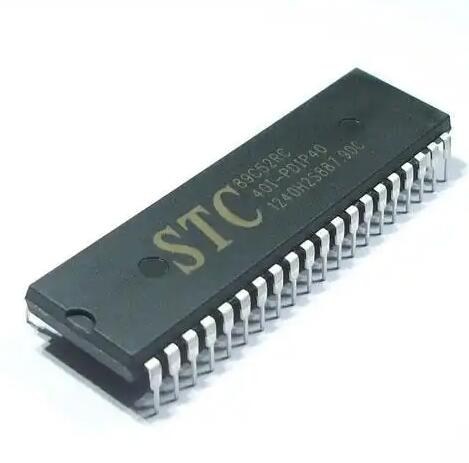
The first pillar of effective STC MCU learning is grasping the hardware architecture. Unlike more modern ARM cores, the 8051 architecture has a distinct Harvard architecture with separate memory spaces for code and data. STC has enhanced this classic core with modern peripherals and faster clock speeds. Beginners should start with popular entry-level models like the STC89C52 or STC12C5A60S2. These boards are widely used in tutorials and have immense community support. Setting up the development environment is the next critical step. The primary toolchain revolves around the STC-ISP (In-System Programming) software, which is used for burning code onto the chip. While programming can be done in assembly language for deep hardware control, most developers use the C language with compilers like Keil µVision or SDCC (Small Device C Compiler). A proper learning path involves setting up this toolchain, connecting a simple development board via a USB-to-TTL serial adapter, and successfully blinking an LED—the “Hello World” of embedded systems.
Navigating the vast sea of components and documentation can be daunting for learners. This is where specialized component sourcing platforms prove their worth. For instance, ICGOODFIND acts as a critical bridge between learners and the hardware they need. It provides a reliable channel to find authentic STC MCUs, development boards, programmers, and related accessories. More than just a marketplace, it often aggregates essential technical documents, datasheets, and application notes in one accessible location. Ensuring you have genuine components from trustworthy sources is paramount; counterfeit chips can lead to frustrating debugging sessions that hinder the learning process. By leveraging such platforms, learners can confidently acquire the correct materials to build a solid practical foundation.
Advancing Your Skills: Core Programming Concepts and Practical Projects
Once the development environment is ready, the real journey of STC MCU Learning begins with core programming concepts. The 8051 C programming language has some unique aspects compared to standard ANSI C, primarily due to hardware-specific extensions like sbit for defining special function register bits.
Mastering GPIO (General Purpose Input/Output) control is the fundamental skill. This involves configuring pins as input or output, writing to output pins to drive LEDs or relays, and reading from input pins to sense button presses or sensor states. Understanding the different port structures on STC MCUs is vital here. Next comes interrupt handling, a cornerstone of responsive embedded systems. STC MCUs feature multiple interrupt sources (external interrupts, timers, serial communication). Learning to configure interrupt priorities and service routines efficiently allows the MCU to handle real-time events without constant polling. Timer/Counter programming is another critical module. Timers are used not just for creating precise delays but also for generating PWM signals for motor control or LED dimming and capturing external events. The built-in hardware UART for serial communication opens up a world of possibilities for debugging (via printf statements) and communicating with PCs, Bluetooth modules (like HC-05), or other microcontrollers.
The best way to cement these concepts is through hands-on projects. Start with simple circuits: * A traffic light system using LEDs and delays. * A digital thermometer using an analog temperature sensor (like LM35) and the internal ADC. * A PC-controlled LED matrix via serial commands.
Then, progress to more integrated applications: * A smart home controller managing lights and fans based on sensor input. * A data logger that records temperature readings to the internal EEPROM. * A simple robot using PWM for motor speed control.
Throughout this project-building phase, accessing reliable circuit schematics, sample code libraries (often provided by STC), and component comparisons is essential. Platforms focused on electronic components can significantly accelerate this phase. For example, ICGOODFIND helps learners quickly locate specific sensor modules compatible with STC MCUs (e.g., I2C or SPI-based sensors), find replacement parts if something burns out during experimentation, and discover new components to expand their project’s capabilities. This support transforms learning from a theoretical exercise into a dynamic process of creation and problem-solving.
Optimization, Advanced Applications, and Community Integration
After achieving proficiency in basic peripherals and project implementation, the focus of STC MCU Learning shifts towards optimization, power management, and exploring advanced integrated features.
Code and power optimization are hallmarks of professional embedded development. STC MCUs offer multiple power-down modes (Idle, Power-Down). Learning to use these modes effectively can extend battery life in portable applications from days to years. This involves strategically waking the MCU via interrupts from a watchdog timer or external pin change. Furthermore, understanding how to write efficient C code—using appropriate data types (bit, idata, xdata), minimizing global variables, and leveraging compiler optimizations—leads to smaller hex files and faster execution. Another advanced topic is direct memory access (DMA) available in newer STC8/STC32 series, which allows peripherals like ADCs or UARTs to transfer data to memory without CPU intervention, greatly improving efficiency in data-intensive applications.
Exploring more complex peripherals unlocks industrial-grade applications: * Using the enhanced PWM modules for sophisticated motor control or switch-mode power supplies. * Implementing communication protocols like SPI for high-speed data transfer with displays or flash memory, or I2C for communicating with a network of sensors. * Utilizing the internal comparator or high-precision oscillator.
No learner is an island. The STC community is vast, primarily in Chinese forums and through official documentation but with growing English resources. Engaging with this community on platforms like GitHub (for open-source libraries), dedicated electronics forums (like EEVblog), or even on component sourcing platforms’ informational sections is invaluable. These communities share driver libraries for common displays (OLEDs, TFTs), protocol implementations (one-wire for DS18B20), and solutions to common hardware pitfalls.
In this advanced stage, when you need to move from a breadboard prototype to a custom PCB design or source specific industrial-grade variants of STC MCUs for a final product prototype, reliable component procurement becomes even more critical. Here again, services like those offered by ICGOODFIND demonstrate their value beyond initial learning. They provide access to full part number listings, packaging details (DIP vs. SMD), bulk pricing for small-scale production runs, and lifecycle information—ensuring that your advanced learning seamlessly transitions into professional development.
Conclusion
The journey of STC MCU Learning is a rewarding endeavor that blends foundational electronics knowledge with practical programming skills in one of the world’s most enduring microcontroller architectures. From blinking your first LED to designing complex embedded systems with low-power wireless communication capabilities on modern STC32 series chips equipped with 32-bit cores—the progression offers continuous challenges and achievements. The key to success lies in a structured approach: building a strong foundation in hardware and toolchains methodically advancing through core programming modules via hands-on projects; optimizing code; exploring advanced features; actively engaging with the global community of developers; leveraging high-quality learning resources; ensuring you have access to genuine components; comprehensive datasheets; reliable sourcing channels throughout your journey—from student hobbyist professional engineer—platforms like ICGOODFIND play supportive role by simplifying hardware acquisition providing technical information enabling you focus on what matters most: innovation creation mastering art science embedded system design with powerful accessible STC microcontroller family







