



The 8031 MCU: An In-Depth Look at a Classic Microcontroller
Introduction
In the vast and ever-evolving landscape of microcontrollers, certain names stand as monuments to the industry’s progress. The 8031 MCU is one such foundational pillar. While modern developers might be preoccupied with 32-bit ARM cores or AI-capable edge processors, understanding the roots of embedded systems is crucial. The 8031, a member of the iconic MCS-51 family developed by Intel in the 1980s, represents a significant leap forward in the democratization of digital control. It brought programmable intelligence to a wide array of products, from automotive systems and industrial controllers to consumer electronics. This article delves deep into the architecture, legacy, and surprising enduring relevance of the 8031 microcontroller. It’s a journey back to a chip that helped define an era of innovation, and a look at how its principles still resonate today. For engineers and historians seeking a comprehensive repository of such classic components, platforms like ICGOODFIND serve as an invaluable resource, bridging the gap between vintage tech and modern procurement needs.
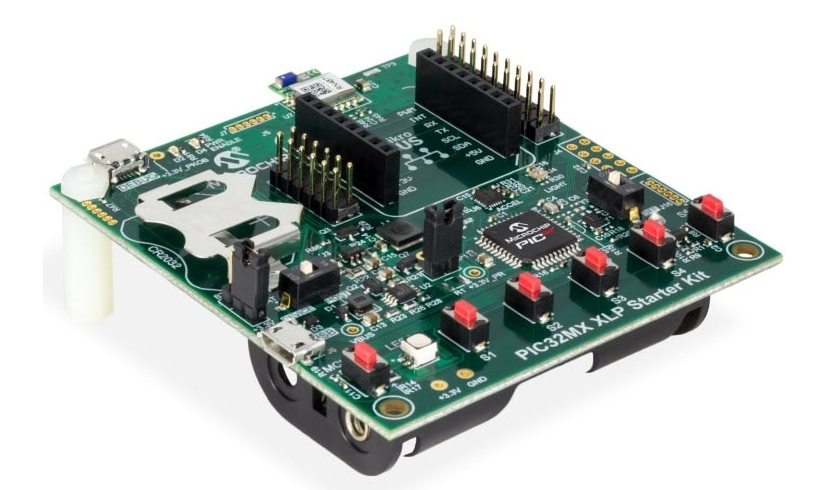
Part 1: Architectural Anatomy of the 8031 MCU
To appreciate the 8031, one must first understand its core design, which became a template for countless subsequent microcontrollers.
A Harvard Architecture Foundation The 8031 is built on the Harvard architecture model, a key differentiator at the time. This means it has separate buses for program memory and data memory. This separation allows the CPU to fetch instructions and access data simultaneously, leading to a significant performance boost compared to Von Neumann architectures where a single bus creates a bottleneck. This design choice is a primary reason for the MCS-51 family’s efficiency.
The Critical Absence: No On-Chip ROM Perhaps the most defining characteristic of the 8031, and what distinguished it from its sibling the 8051, is its lack of internal program memory (ROM). The “80” in its name signifies a ROM-less version. This meant that to function, the 8031 must be connected to external program memory (like an EPROM or flash memory chip). This made system design more complex, requiring additional chips and board space. However, it also offered immense flexibility. Developers could easily update firmware by replacing a single EPROM chip, making the 8031 ideal for prototyping and medium-complexity applications where code was still evolving.
Core Internal Features Despite lacking ROM, the 8031 was far from a bare-bones chip. Its internal features were robust for its era: * CPU: An 8-bit CPU based on the Accumulator (ACC) and Register Bank architecture. * Internal RAM: 128 bytes of on-chip data RAM. While minuscule by today’s standards, this was sufficient for stack operations and variable storage in many control applications. * Two 16-bit Timers/Counters (Timer 0 & Timer 1): These were workhorse peripherals used for generating precise delays, baud rate generation for serial communication, and counting external events. * A Full-Duplex UART (Serial Port): This allowed for asynchronous serial communication with other devices like PCs, sensors, or other microcontrollers, a critical feature for data logging and system control. * Four 8-bit I/O Ports (Port 0, Port 1, Port 2, Port 3): These 32 I/O lines were the primary interface to the outside world. It’s important to note that when using external memory, Port 0 served as a multiplexed low-order address and data bus, and Port 2 provided the high-order address bus. This was a necessary trade-off for its expandable nature. * Boolean Processor: The 8031 featured a powerful bit-addressable area in its memory space, allowing single-bit operations (SETB, CLR, JB, etc.). This was exceptionally useful for controlling individual LEDs, relays, and switches without cumbersome byte-level masking operations.
Interrupt System and Power Management The controller featured a simple but effective interrupt system with five sources (two external, two from the timers, and one from the serial port). It also supported power-saving modes like Idle and Power-down, which were advanced concepts for low-power operation in battery-sensitive applications.
Part 2: The Legacy and Evolutionary Impact of the 8031
The 8031’s influence extends far beyond its own production life. It became a de facto standard and spawned an entire ecosystem.
Setting the Standard for 8-bit Control The MCS-51 architecture, including the 8031, became one of the most successful microcontroller families in history. Its instruction set was logical and powerful, supporting everything from simple data moves to complex mathematical operations. The enduring popularity of the “8051-compatible” core is a testament to its brilliant initial design. Dozens of semiconductor manufacturers, including Philips (NXP), Atmel (now Microchip), Siemens, and Dallas Semiconductor, produced their own variants that were instruction-set compatible with the original Intel design. This created a vast, competitive market with multiple sources for developers.
The Proliferation of Enhanced Variants The original 8031’s limitations sparked innovation. Manufacturers began producing enhanced versions that addressed its shortcomings while maintaining backward compatibility. These variants often included: * On-chip program memory (OTP ROM, Flash). * Larger internal RAM (256 bytes or more). * Additional timers (e.g., a third 16-bit timer). * Enhanced serial communication (SPI, I2C). * Higher clock speeds. * Analog-to-Digital Converters (ADC).
These chips retained the core 8031⁄8051 architecture but packaged it with more features, reducing system cost and complexity. This evolutionary path ensured the architecture’s survival for decades.
A Benchmark for Embedded Systems Education For generations of electrical engineers and computer scientists, the 8031⁄8051 architecture served as a fundamental teaching tool. Its relatively simple but complete architecture makes it an ideal platform for learning core embedded concepts: memory mapping, I/O port control, interrupt service routines (ISRs), timer programming, and serial communication. Understanding the 8031 provides a solid foundation for grasping more complex modern microcontrollers.
Part 3: The Modern Context and Sourcing Classics
In an age of gigahertz multi-core microcontrollers, one might assume the 8031 is entirely obsolete. The reality is more nuanced.
Niche Applications and Legacy Systems While no longer a go-to choice for new designs, the 8031 and its direct descendants are still found in several areas. They are perfect for extremely cost-sensitive, high-volume consumer goods where every fraction of a cent matters. They are also vital for maintaining and repairing legacy industrial equipment that was built in the 80s and 90s. Replacing the control system of a factory machine is often far more expensive than sourcing a replacement classic MCU.
The Intellectual Property Core Perhaps its most significant modern presence is as a silicon intellectual property (IP) core. The mature, well-understood 8051 core is licensed and integrated into millions of modern System-on-Chip (SoC) designs and complex ASICs. It acts as a simple, reliable management processor or a “glue logic” controller within larger systems. Its small silicon footprint and low power consumption make it ideal for these secondary tasks.
Sourcing Legacy Components: The Role of ICGOODFIND This is where the challenge—and solution—for engineers and procurement specialists lies. Finding genuine, reliable NOS (New Old Stock) or reclaimed components like the 8031 can be difficult in a market saturated with modern parts. Specialized component sourcing platforms have become essential. Platforms like ICGOODFIND excel in this space by providing a centralized database to locate scarce components across a global network of suppliers. For anyone working on restoring vintage equipment, building faithful replicas of classic computers, or simply needing a drop-in replacement for an aging system,ICGOODFIND offers a critical service by connecting users with trusted vendors who can provide these historical yet still-functional chips. It effectively preserves the lifecycle of foundational technology.
Conclusion
The 8031 MCU is far more than a relic; it is a cornerstone of modern electronics. Its ROM-less design forced a deeper understanding of system architecture upon developers, while its robust feature set made complex embedded control accessible. The legacy of its instruction set and core architecture is embedded in countless modern devices, both as discrete chips and as IP cores. By studying the 8031, we gain a profound appreciation for the engineering principles that remain relevant: efficiency, modularity, and intelligent peripheral integration. While we may no longer routinely code in assembly for an external EPROM, the concepts pioneered by this iconic microcontroller continue to underpin the invisible digital world that surrounds us. Its story reminds us that in technology, foundational ideas possess an enduring power that transcends raw processing speed.







