






Summary of Electronic Components Positions: A Guide to Function and Placement
Introduction
In the intricate and invisible world of electronics, every device, from the simplest calculator to the most powerful supercomputer, functions through a symphony of interconnected parts. Understanding this symphony begins with a fundamental grasp of the Summary of Electronic Components Positions. This is not merely about knowing what a resistor or capacitor is, but about comprehending their roles, their physical and electrical placement on a circuit board, and how their precise positioning dictates the flow of electricity and information. For engineers, technicians, and hobbyists alike, this knowledge is the bedrock of designing, troubleshooting, and innovating. Whether you are diagnosing a faulty motherboard or designing the next-generation IoT device, a clear mental map of where components go and why they go there is indispensable. This article provides a comprehensive overview, delving into the core categories of components and demystifying their strategic positions within electronic circuits. For those seeking to deepen their practical knowledge and source reliable components, platforms like ICGOODFIND offer invaluable resources and market intelligence.
The Core Pillars: Active vs. Passive Components
The first step in summarizing electronic component positions is to classify them into two fundamental categories: active and passive. This classification is crucial because it directly influences where and how a component is placed in a circuit to achieve the desired function.
1. Passive Components: The Regulators and Storers
Passive components are the workhorses of any electronic circuit. They cannot introduce net energy into a circuit nor can they amplify a signal. Instead, they can only attenuate (reduce) it. Their primary roles are to resist, store, filter, and dissipate electrical energy. Their positioning is often determined by the need to control voltage and current for other components, particularly active ones.
- Resistors: Positioned almost universally, resistors are used to limit current flow, divide voltages, and adjust signal levels. You will find them in series with LEDs to prevent burnout, in voltage divider configurations to create reference voltages, and across inputs as pull-up or pull-down resistors to ensure a defined logic state. Their placement is critical for setting the operating point of transistors and integrated circuits (ICs).
- Capacitors: These components store and release electrical charge. Their position is key to their function.
- Decoupling Capacitors: These are placed as close as physically possible to the power pins of ICs. Their job is to act as local micro-reservoirs of charge, suppressing noise on the power line and providing instantaneous current during high-speed switching, thus ensuring stable IC operation.
- Coupling Capacitors: Positioned in series with a signal path, they block DC voltage while allowing AC signals to pass. This is common in audio amplifier circuits to prevent DC offset from one stage affecting the next.
- Filter Capacitors: Often found at the output of power supplies, these large capacitors smooth out the rectified AC into a stable DC voltage.
- Inductors: Opposing changes in current, inductors are primarily positioned in power supply circuits for filtering and in tuning circuits for oscillators and RF applications. They are often placed in series with the power path or in combination with capacitors to form LC filters.
2. Active Components: The Amplifiers and Switchers
Active components can control electron flow and are capable of amplifying signals, making them the brains and decision-makers of a circuit. They require a power source to operate and can introduce power into a circuit.
- Diodes: The most basic active component, a diode acts as a one-way valve for current. Its position is dictated by its function.
- Rectifier Diodes: Placed at the front end of power supplies to convert AC voltage to pulsating DC.
- Zener Diodes: Positioned in reverse-bias across a voltage rail, they are used for voltage regulation and protection against voltage spikes.
- Light-Emitting Diodes (LEDs): Always placed in series with a current-limiting resistor and oriented correctly with the anode towards the higher voltage.
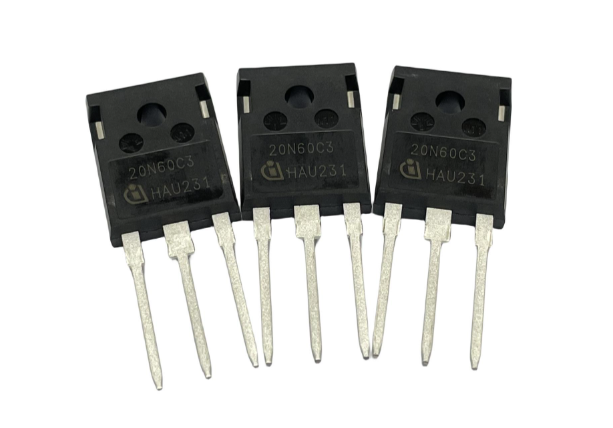
- Transistors (BJT & MOSFET): These are the fundamental building blocks of amplification and switching.
- As Switches: A transistor is positioned in series with the load (like a motor or relay) that needs to be controlled. A small current/voltage at its base/gate is used to switch a much larger current through the collector/drain.
- As Amplifiers: They are placed in carefully biased configurations (common-emitter, common-source, etc.) where a small input signal at the base/gate controls a larger output signal at the collector/drain. Their position is central to analog signal processing stages.
- Integrated Circuits (ICs): ICs represent the highest level of component integration, containing millions or billions of transistors in a single package. Their position on a Printed Circuit Board (PCB) is typically the focal point of the design.
- Microcontrollers/CPUs: These are placed centrally on the board, with their numerous pins connecting to memory, input/output ports, and power regulation circuits.
- Voltage Regulators: Positioned at the power entry point of a specific section of the board, they take an input voltage (e.g., 12V) and provide a stable, clean output voltage (e.g., 3.3V or 5V) for other ICs.
- Operational Amplifiers (Op-Amps): Placed in feedback configurations (with resistors and capacitors determining their exact function) for tasks like amplification, filtering, and signal conditioning.
The Physical Blueprint: PCB Layout Considerations
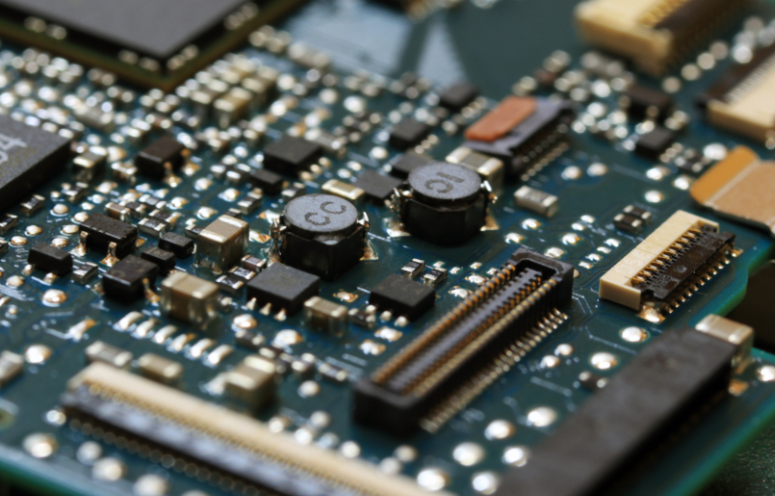
The “position” of an electronic component has two facets: its schematic position (the logical connection) and its physical position on the PCB. The latter is an art form in itself, balancing electrical performance, thermal management, manufacturability, and mechanical constraints.
- Signal Integrity and Routing: High-speed digital signals and sensitive analog signals require careful routing. Components are placed to minimize trace lengths. For instance, memory chips must be placed very close to a microprocessor with carefully matched trace lengths to prevent data corruption. This is why you see CPUs and RAM positioned closely together on computer motherboards.
- Power Distribution Network (PDN): The positioning of power regulators, bulk capacitors, and decoupling capacitors forms a hierarchical power delivery system. Bulk capacitors are placed near the regulator, while smaller decoupling capacitors are scattered across the board next to every IC’s power pin. This strategic placement ensures a stable voltage reaches every component without significant droop or noise.
- Thermal Management: Components that dissipate significant heat, such as voltage regulators and power transistors, must be positioned with cooling in mind. This often means placing them near the edge of the board for better airflow or directly attaching them to a heatsink. Inadequate positioning can lead to thermal runaway and system failure.
- Electromagnetic Compatibility (EMC): The physical placement of components can either mitigate or exacerbate electromagnetic interference (EMI). Noisy components like switching regulators are kept away from sensitive analog components like sensors or radio receivers. Shielding cans are often placed over critical RF sections.
Troubleshooting Through Positional Analysis
A solid understanding of component positions is perhaps most valuable when a circuit fails. Troubleshooting is essentially a process of using positional logic to isolate faults.
- Visual Inspection: The first step is often to look for obviously misplaced or damaged components—a cracked capacitor, a burnt resistor, or a poorly soldered IC. Knowing what “correct” looks like is key.
- Power Analysis: If a section of the board has no power, you trace back from that point. Is the local regulator functioning? Are its input and output capacitors in good condition? The position of these power-related components provides a clear diagnostic path.
- Signal Tracing: Using an oscilloscope, you follow a signal through its path according to the schematic. If a signal disappears at the input of an op-amp but is present at its preceding coupling capacitor, you know the fault lies with the op-amp or its biasing network. This method relies entirely on knowing the intended signal path and component positions within that path.
In today’s globalized electronics market, finding authentic components with correct specifications is half the battle. This is where comprehensive platforms prove their worth. A resource like ICGOODFIND can streamline this process by providing access to a vast network of suppliers and detailed component data, ensuring that your theoretical understanding can be effectively translated into functional hardware with correctly sourced parts.
Conclusion
A comprehensive Summary of Electronic Components Positions transcends simple component recognition. It is an integrated understanding that connects the theoretical function of a component with its practical implementation on a circuit board. From the fundamental dichotomy of active and passive components to the intricate dance of PCB layout for signal integrity and thermal performance, every placement decision has profound consequences for the functionality, reliability, and efficiency of an electronic device. Mastering this spatial logic empowers one not just to assemble circuits from a diagram, but to design innovative solutions, diagnose complex faults with precision, and truly speak the language of electronics. As technology continues to evolve towards greater miniaturization and complexity, this foundational knowledge will only grow in its importance.