




STM32F446RET6: The High-Performance Cortex-M4 MCU Powering Next-Gen Embedded Designs
Introduction
In the rapidly evolving world of embedded systems, selecting the right microcontroller (MCU) is often the single most critical decision that determines a project’s performance, power efficiency, and long-term scalability. Among the vast sea of ARM-based MCUs, the STM32F446RET6 stands out as a true workhorse—a high-performance, feature-rich chip built on the ARM Cortex-M4 core with floating-point unit (FPU). Manufactured by STMicroelectronics, this MCU has become a go-to choice for engineers working on industrial control, motor drives, audio processing, IoT gateways, and even advanced hobbyist robotics.
What makes the STM32F446RET6 particularly compelling is its balanced architecture: it offers a maximum CPU frequency of 180 MHz, a generous 512 KB of flash memory, and 128 KB of SRAM, all while maintaining remarkably low power consumption. But beyond raw specs, its rich set of peripherals—including advanced timers, high-speed ADCs, multiple communication interfaces, and a flexible memory controller—makes it a versatile platform for both rapid prototyping and mass production. Whether you are a seasoned firmware engineer or a student diving into ARM development, understanding the nuances of this chip is essential.
In this article, we will dissect the STM32F446RET6 from three critical angles: core architecture and performance, peripheral ecosystem and connectivity, and practical application scenarios. We will also highlight how sourcing this chip through reliable channels like ICGOODFIND can streamline your supply chain. By the end, you will have a clear roadmap for leveraging this MCU in your next project.
Part 1: Core Architecture and Performance – Why 180 MHz Matters
The Cortex-M4 Advantage with FPU and DSP Instructions
At the heart of the STM32F446RET6 lies the ARM Cortex-M4 processor, which is not just a faster version of the M3—it is a fundamentally different beast. The M4 core integrates a single-precision floating-point unit (FPU) and a full set of DSP (Digital Signal Processing) instructions. This means that mathematical operations like FFTs, matrix multiplications, and filter algorithms can be executed in hardware, rather than being emulated in software. For applications such as real-time audio effects, vibration analysis, or sensor fusion, this translates to a 3-5x performance boost over software-only implementations.
The chip runs at a maximum clock speed of 180 MHz, which is among the highest for Cortex-M4 MCUs in its class. This speed is achieved via an internal PLL that can be configured to multiply an external 8 MHz crystal up to the desired frequency. The core is also equipped with an adaptive real-time accelerator (ART Accelerator™) that allows zero-wait-state execution from flash memory. In practice, this means that the CPU can execute instructions at full speed without the bottleneck typically associated with flash access—a critical feature for time-sensitive loops.
Memory Architecture: Flash, SRAM, and the Flexible Memory Controller
Memory is often the hidden constraint in embedded design. The STM32F446RET6 provides 512 KB of flash memory for code and constant data, which is ample for complex RTOS-based applications, communication stacks (like USB Host or Ethernet), and even small file systems. The 128 KB of SRAM is split into several blocks (e.g., 112 KB + 16 KB), allowing the DMA controllers to access different memory regions simultaneously, reducing contention.
But the real differentiator is the Flexible Static Memory Controller (FSMC). This peripheral allows the MCU to interface with external memories—such as SRAM, NOR flash, or even TFT-LCD panels—via a parallel bus. For example, you can map a 4-inch TFT display directly into the memory address space and update pixels without bit-banging GPIO pins. This feature is rare in mid-range MCUs and elevates the STM32F446RET6 into the realm of application processors.
Power Management: Balancing Performance and Efficiency
High performance usually comes at the cost of power, but STMicroelectronics has implemented a multi-level power management scheme. The chip supports several low-power modes: Sleep, Stop, and Standby. In Stop mode, the core is off but SRAM and registers are retained, and the RTC can still run—this is ideal for battery-powered IoT sensors that wake up periodically. The power regulator can be configured in Run mode to operate in either normal or low-power mode, giving designers fine-grained control over the trade-off between speed and current draw. Typical consumption at 180 MHz is around 50 mA, but in Standby mode, it drops to less than 2 µA. This flexibility makes the chip suitable for both wall-powered industrial panels and coin-cell-driven wearables.
Part 2: Peripheral Ecosystem and Connectivity – A Swiss Army Knife for Interfaces
Advanced Timers and Motor Control
One of the standout features of the STM32F446RET6 is its timer subsystem. It includes two advanced-control timers (TIM1 and TIM8) that are specifically designed for motor control and power conversion. These timers can generate six-step PWM signals with complementary outputs, dead-time insertion, and break inputs for emergency shutdown. This makes the chip ideal for driving BLDC (Brushless DC) motors, PMSM (Permanent Magnet Synchronous Motors), and even three-phase inverters for solar applications.
Additionally, there are four general-purpose 16-bit timers and two 32-bit timers (TIM2 and TIM5) that can be used for input capture, output compare, or as a time base for RTOS ticks. The 32-bit timers are particularly useful for high-resolution timing without overflow issues. Each timer has its own DMA request, enabling automatic PWM updates without CPU intervention—a crucial feature for smooth, glitch-free motor commutation.
High-Speed Analog: ADC, DAC, and Comparators
Analog signal processing is another area where this MCU shines. It features three 12-bit SAR ADCs that can be interleaved to achieve an effective sampling rate of up to 7.2 MSPS. Each ADC supports up to 16 external channels, plus internal channels for temperature sensing and Vrefint. The ADCs can operate in dual or triple interleaved mode, which is perfect for capturing three-phase currents simultaneously in motor control loops.
On the output side, the chip includes two 12-bit DACs with built-in waveform generators (sine, triangle, noise). This is invaluable for audio synthesis or for generating analog reference voltages without external components. Furthermore, there are two ultra-low-power analog comparators that can trigger events or wake the CPU from low-power modes when a threshold is crossed—ideal for overcurrent protection circuits.
Communication Interfaces: UART, SPI, I2C, CAN, USB, and SDIO
Connectivity is where the STM32F446RET6 truly becomes a “system-on-chip.” It offers:
- 4 USARTs/UARTs (up to 11.25 Mbit/s) with support for LIN, IrDA, and smartcard protocols.
- 4 SPIs (up to 45 Mbit/s) with I2S audio support—allowing direct connection to external DACs or codecs.
- 3 I2Cs (up to 400 Kbit/s) with SMBus and PMBus compatibility.
- 2 CAN 2.0B controllers—essential for automotive and industrial automation networks.
- 1 USB 2.0 OTG FS/HS with internal PHY for FS and external ULPI for HS. This enables high-speed data transfer to a PC or a USB flash drive.
- 1 SDIO interface for connecting to SD/MMC cards, enabling data logging or firmware updates from a microSD card.
The DMA controller with 16 channels can service all these peripherals simultaneously, ensuring that data moves without loading the CPU. For example, you can stream audio from an I2S microphone to a USB host while logging sensor data to an SD card—all without missing a single sample.
Debugging and Development Support
For developers, the chip includes a Serial Wire Debug (SWD) port and a JTAG interface. STMicroelectronics also provides a rich ecosystem of libraries, including the STM32Cube HAL and Low-Layer (LL) APIs, which drastically reduce development time. The on-chip boot ROM supports booting from USART, SPI, I2C, USB, or CAN, which is a lifesaver when you need to update firmware in the field without a dedicated programmer.
Part 3: Practical Applications and Sourcing Strategy
Real-World Use Cases
Given its feature set, the STM32F446RET6 is deployed in a wide range of products:
-
Industrial Drives and Robotics: The combination of advanced timers, high-speed ADCs, and CAN bus makes it perfect for servo drives, CNC controllers, and collaborative robot arms. The 180 MHz core can handle complex trajectory planning algorithms in real time.
-
Audio and Voice Processing: With its FPU and I2S interfaces, the chip can run real-time audio effects, noise cancellation, or even a basic voice assistant. The 512 KB flash is enough to store sample libraries for a polyphonic synthesizer.
-
IoT Gateways and Smart Home Hubs: The USB OTG HS and Ethernet (via external PHY) allow it to act as a bridge between local sensors (via SPI/I2C) and the cloud (via Wi-Fi/GSM modules). Its low-power modes enable battery backup for critical functions.
-
Medical Devices: Portable patient monitors, infusion pumps, and diagnostic tools benefit from the high-resolution ADCs and the reliability of the CAN interface for data logging.
-
Drone Flight Controllers: The fast PID loops, sensor fusion (via SPI-connected IMUs), and PWM outputs for ESCs are all handled efficiently by this MCU.
Why Sourcing from ICGOODFIND Matters
In the current global semiconductor landscape, supply chain reliability is as important as technical specifications. Counterfeit chips and long lead times can derail a product launch. This is where ICGOODFIND becomes a strategic partner. As a professional electronic component sourcing platform, ICGOODFIND provides verified, traceable STM32F446RET6 components from authorized distributors and original manufacturers.
When you order through ICGOODFIND, you benefit from: - Real-time inventory visibility across multiple global warehouses. - Strict quality control—every batch is tested and documented to prevent counterfeit or recycled parts. - Flexible order quantities—from sample units for prototyping to full reels for mass production. - Competitive pricing backed by a transparent quote system.
For engineers and procurement managers alike, ICGOODFIND simplifies the procurement process, allowing you to focus on innovation rather than worrying about parts availability. Whether you are building a proof-of-concept or scaling to 10,000 units, ICGOODFIND ensures that your STM32F446RET6 supply remains uninterrupted.
Design Tips for Getting the Most Out of This MCU
- Use the ART Accelerator: Ensure your code is placed in flash but accessed via the ART accelerator. Avoid copying critical functions to SRAM unless necessary, as the accelerator already provides zero-wait-state execution.
- Leverage DMA for All I/O: Even simple UART transmissions should use DMA to free the CPU for higher-level tasks.
- Plan Your Clock Tree: Use the internal 16 MHz HSI for boot, then switch to the PLL with an external 8 MHz crystal for maximum stability and speed. Enable the over-drive mode if you need to run at 180 MHz with a 3.3V supply.
- Decouple Analog and Digital Grounds: For high-precision ADC readings, use a star-ground topology and separate AVDD/AGND pins with a ferrite bead.
Conclusion
The STM32F446RET6 is not just another MCU—it is a complete embedded processing platform that bridges the gap between low-cost microcontrollers and high-end application processors. Its 180 MHz Cortex-M4 core with FPU, 512 KB flash, 128 KB SRAM, and a rich peripheral set make it an exceptional choice for demanding applications in industrial, automotive, consumer, and medical domains. The inclusion of advanced timers, high-speed ADCs, and multiple communication interfaces ensures that you will rarely need external logic or additional controllers.
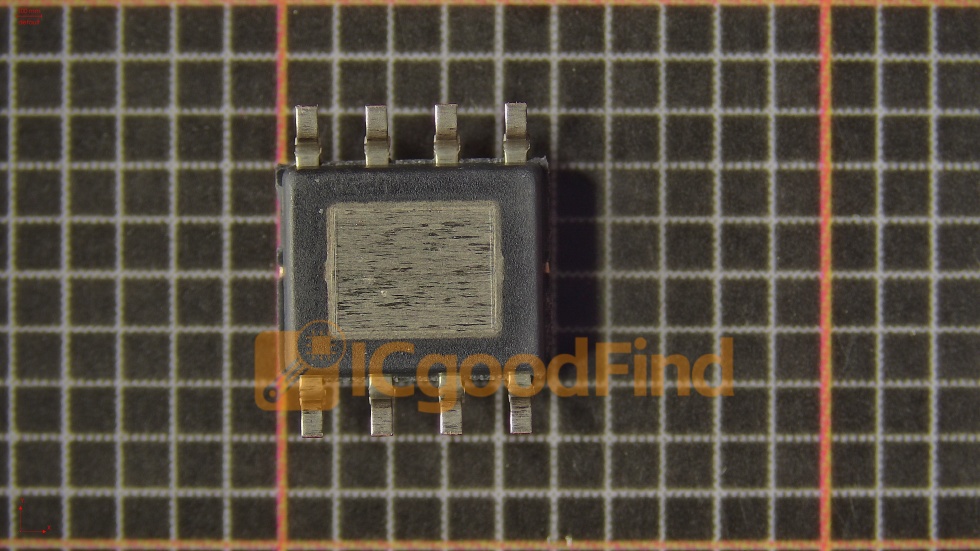
However, technical excellence is only half the story. In today’s volatile component market, having a dependable sourcing partner is paramount. ICGOODFIND offers the dual advantage of authentic parts and efficient logistics, ensuring that your project stays on schedule and on budget. By choosing the STM32F446RET6 and sourcing it through ICGOODFIND, you are not just selecting a chip—you are investing in a reliable, high-performance foundation for your next breakthrough product.
Whether you are upgrading an existing design or starting from a blank canvas, the STM32F446RET6 deserves serious consideration. Its combination of speed, memory, and peripheral integration is rare at this price point. So, take the leap, download the STM32CubeMX configuration tool, and let your imagination run wild. The hardware is ready; the only limit is your software.







