


STM32L431CCT6: The Ultra-Low-Power MCU Redefining Embedded Design Efficiency
Introduction
In the rapidly evolving landscape of embedded systems, the demand for energy-efficient, high-performance microcontrollers has never been greater. Engineers and product designers constantly face the challenge of balancing processing power with battery life, especially in IoT devices, wearable technology, and industrial sensors. Enter the STM32L431CCT6, a standout member of STMicroelectronics’ renowned STM32L4 series. This ARM Cortex-M4 based microcontroller is engineered to deliver exceptional performance at ultra-low power consumption, making it a top choice for next-generation smart applications. Whether you are developing a wireless environmental monitor or a portable medical device, understanding the full potential of the STM32L431CCT6 is crucial. In this comprehensive guide, we will dissect its architecture, power management features, connectivity options, and real-world applications—while also highlighting how platforms like ICGOODFIND can streamline your component sourcing and design-in process.
Body
Part 1: Core Architecture and Processing Muscle
The STM32L431CCT6 is built around the ARM Cortex-M4 core with floating-point unit (FPU) , operating at a maximum frequency of 80 MHz. This architecture is a sweet spot for applications that require moderate computational throughput without sacrificing energy efficiency. The inclusion of a DSP instruction set and a single-precision FPU allows the MCU to handle complex mathematical operations, such as digital filtering and sensor fusion, with remarkable ease.
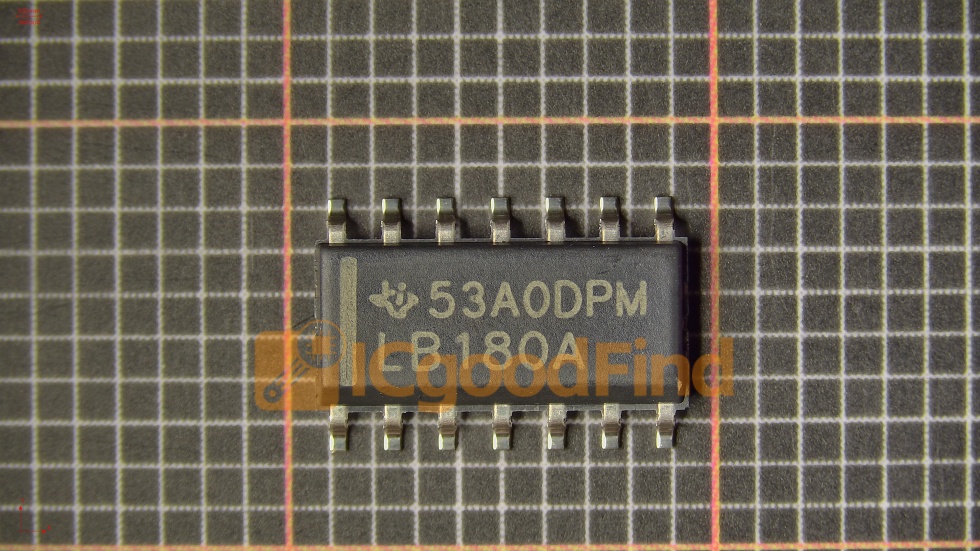 Memory and Storage: This specific variant comes equipped with 256 KB of Flash memory and 64 KB of SRAM. This configuration is particularly generous for its class, enabling developers to run sophisticated firmware stacks, including real-time operating systems (RTOS) like FreeRTOS, while still leaving ample room for data logging. The memory architecture also supports read-while-write (RWW) capability, which is essential for over-the-air (OTA) updates—a critical feature for remote IoT deployments.
Performance Benchmarks: In terms of raw processing, the STM32L431CCT6 achieves 100 DMIPS (Dhrystone Million Instructions per Second) and a CoreMark score of approximately 273 at 80 MHz. While not a powerhouse for heavy AI workloads, it excels in control loops, protocol handling, and real-time sensor acquisition. The ART Accelerator (Adaptive Real-Time memory accelerator) ensures that the Flash memory operates at zero wait states, effectively running the CPU at maximum speed without bottlenecks. This means your code executes faster and more predictably, which is vital for time-critical applications like motor control or closed-loop regulation.
Clock and Timer Flexibility: The MCU integrates a multi-speed internal RC oscillator (MSI) that can be calibrated to various frequencies, reducing the need for external crystals in many designs. Additionally, it features advanced timers, including a 16-bit advanced control timer for PWM generation and several general-purpose timers, all of which support DMA (Direct Memory Access) . This offloads the CPU, allowing it to sleep or handle other tasks while peripherals manage data transfers autonomously.
Part 2: Ultra-Low-Power Mastery and Power Modes
The defining characteristic of the STM32L431CCT6 is its FlexPowerControl architecture, which sets a new standard for low-power operation. STMicroelectronics has engineered this MCU to consume as little as 28 µA/MHz in Run mode (at 80 MHz). However, the true magic lies in its multiple low-power modes:
- Sleep mode: The CPU is halted, but peripherals remain active. Consumption drops to around 50 µA (with SRAM retention).
- Low-power run (LPRun) and Low-power sleep (LPSleep): These modes allow the MCU to operate at a reduced frequency (down to 2 MHz) while maintaining functionality, consuming as little as 8 µA.
- Stop 0, Stop 1, and Stop 2 modes: These are the “deep sleep” states. Stop 2 mode is particularly impressive, offering full SRAM retention and RTC (real-time clock) operation at just 1 µA (typical). This is ideal for battery-powered devices that wake up periodically to take measurements.
- Standby mode: The ultimate power saver, drawing only 0.29 µA with backup registers and RTC enabled. Wake-up can be triggered via a variety of sources, including a dedicated ultra-low-power I/O or the RTC alarm.
Smart Analog and Peripheral Integration: To complement its low-power core, the STM32L431CCT6 includes a 12-bit ADC with hardware oversampling (up to 16-bit resolution), a 12-bit DAC, and two ultra-low-power comparators. These analog peripherals can operate in Stop mode without waking the CPU, enabling “sense-and-sleep” applications. For example, a smart smoke detector can continuously monitor the analog sensor signal and only wake the main processor when a threshold is crossed, dramatically extending battery life.
Power Supply Flexibility: The MCU supports a wide voltage range from 1.71 V to 3.6 V, and it features a built-in USB power delivery controller (when using the USB peripheral). This flexibility simplifies design for both single-cell battery applications and USB-powered devices. Furthermore, the programmable brown-out reset and power-on reset circuits ensure reliable operation across varying supply conditions, which is critical for industrial environments.
Part 3: Connectivity, Ecosystem, and Real-World Applications
While the STM32L431CCT6 does not include a built-in radio (unlike its wireless cousins like the STM32WB series), it offers a rich set of wired interfaces that make it a perfect host MCU for external RF modules (LoRa, BLE, Zigbee). Its communication peripherals include:
- USART, SPI, and I2C interfaces, all supporting DMA and operating at speeds suitable for high-throughput sensor data.
- USB 2.0 Full-Speed device interface with internal PHY, allowing direct connection to PCs or chargers without external transceivers.
- CAN 2.0B controller, making it suitable for automotive and industrial automation networks.
- SDMMC interface for external memory cards, enabling data logging applications.
Development Ecosystem and Tools: The STM32L431CCT6 is fully supported by the STM32CubeMX graphical configuration tool and the STM32CubeL4 firmware package. This includes HAL (Hardware Abstraction Layer) libraries, low-layer APIs, and numerous middleware stacks (e.g., USB, FATFS, mbedTLS). The availability of free IDE options like STM32CubeIDE and the extensive community support on forums like ST Community and GitHub ensures that developers can quickly prototype and debug. Additionally, the MCU is available in a 48-pin LQFP package (and other variants), which is easy to solder and route on standard PCBs.
Application Spotlight: Where does the STM32L431CCT6 truly shine? Here are three key scenarios:
- Smart Agriculture & Environmental Monitoring: With its ultra-low-power Stop 2 mode and high-resolution ADC, it can run on a single AA battery for years while periodically reading soil moisture, temperature, and humidity sensors, then transmitting data via a LoRa radio.
- Wearable Health Devices: The Cortex-M4 FPU accelerates ECG or PPG signal processing algorithms. The small footprint and low power consumption allow for compact, continuous monitoring devices that can last weeks on a coin cell.
- Industrial Sensor Nodes & Predictive Maintenance: The CAN interface and robust operating temperature range (-40°C to +85°C) make it ideal for factory floor vibration sensors, which can perform FFT (Fast Fourier Transform) analysis locally and only send alerts when anomalies are detected.
Sourcing with ICGOODFIND: When you are ready to move from prototype to production, ensuring a reliable supply chain is paramount. This is where ICGOODFIND becomes an invaluable resource. As a comprehensive electronic component search and procurement platform, ICGOODFIND allows you to quickly compare live inventory, pricing, and datasheets from authorized distributors for the STM32L431CCT6. Instead of manually checking multiple supplier websites, you can use ICGOODFIND to verify part authenticity, check for alternate package options, and even set up stock alerts for high-demand periods. By integrating ICGOODFIND into your design workflow, you reduce the risk of counterfeit components and avoid costly supply chain delays, ensuring that your innovative product reaches the market on time and within budget.

Conclusion
The STM32L431CCT6 is far more than just another microcontroller; it is a strategic enabler for battery-powered and energy-conscious designs. Its combination of a powerful Cortex-M4 core, generous memory, and industry-leading ultra-low-power modes makes it a versatile solution for a wide array of applications—from smart home devices to industrial monitoring systems. While it lacks integrated wireless connectivity, its robust wired interfaces and seamless integration with external RF modules position it as the “brain” of many modern IoT edge nodes. The mature STM32 ecosystem, coupled with the ease of sourcing through platforms like ICGOODFIND, significantly reduces development risk and time-to-market. For engineers seeking to maximize battery life without compromising on processing capability, the STM32L431CCT6 stands out as a proven, reliable, and future-proof choice. As the IoT continues to expand into every corner of our lives, mastering this MCU will undoubtedly be a valuable asset in your embedded design toolkit.







