


KLM8G1GEUF-B04Q: The Ultimate Guide to This High-Performance eMMC Flash Memory
Introduction
In the rapidly evolving world of embedded storage, the KLM8G1GEUF-B04Q has emerged as a critical component for modern electronic devices. Manufactured by Samsung, this 8GB eMMC (embedded MultiMediaCard) solution is designed to deliver reliable, high-speed data storage for smartphones, tablets, IoT devices, and industrial applications. As devices become more feature-rich and data-intensive, understanding the specifications, performance metrics, and application scenarios of this specific memory chip is essential for engineers, procurement specialists, and tech enthusiasts alike.
This article provides a comprehensive technical breakdown of the KLM8G1GEUF-B04Q, compares it with alternative storage solutions, and explores its real-world usage. Whether you are designing a new product or upgrading an existing system, this guide will help you make an informed decision. For sourcing authentic components at competitive prices, ICGOODFIND is a trusted platform that connects buyers with verified global suppliers.
Part 1: Technical Specifications and Architecture
1.1 Core Specifications at a Glance
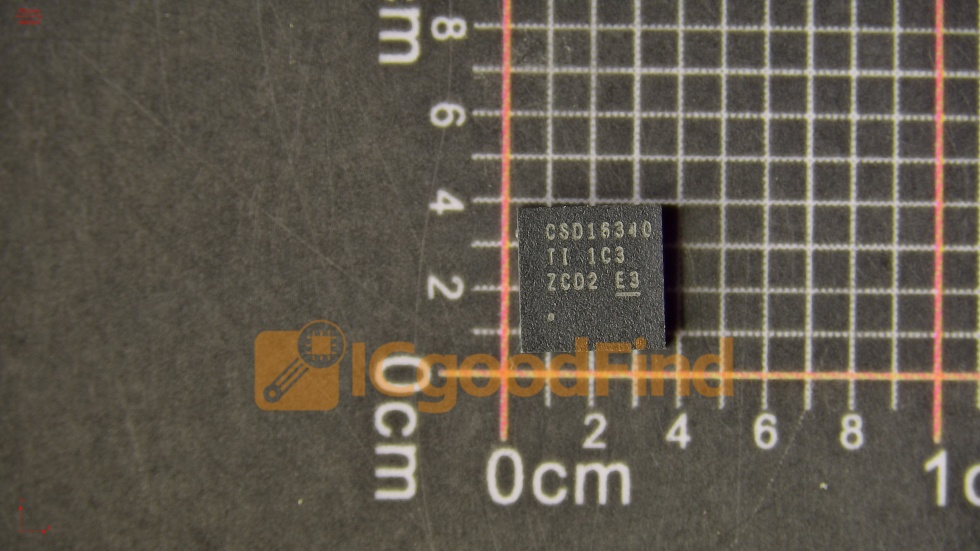
The KLM8G1GEUF-B04Q belongs to Samsung’s eMMC 5.1 product family, which is the industry standard for embedded storage. Here are the key technical parameters:
- Capacity: 8GB (raw NAND), with typical user-accessible storage around 7.2GB after formatting and system overhead.
- Interface: eMMC 5.1 (backward compatible with 5.0, 4.5, and 4.41).
- Bus Speed: Supports HS400 mode with a maximum data transfer rate of 400 MB/s (read) and 200 MB/s (write) under ideal conditions.
- NAND Type: Samsung’s 3D V-NAND (often 32-layer or 64-layer depending on the specific die), which offers higher density and better endurance than planar NAND.
- Package: 153-ball FBGA (Fine-Pitch Ball Grid Array), measuring just 11.5mm x 13mm x 1.0mm – compact enough for space-constrained PCB designs.
- Operating Voltage: VCC (3.3V) for I/O and VCCQ (1.8V/3.3V) for core logic, ensuring low power consumption.
- Temperature Range: Commercial grade (0°C to +70°C) for consumer devices; industrial variants may extend to -25°C to +85°C.
1.2 Internal Architecture and Controller
The KLM8G1GEUF-B04Q integrates a dedicated eMMC controller with the NAND flash die. This controller handles critical functions such as:
- Wear leveling – distributes write/erase cycles evenly across all memory blocks to prolong lifespan.
- Bad block management – automatically maps out defective NAND blocks during manufacturing and over time.
- Error correction code (ECC) – uses advanced BCH or LDPC algorithms to detect and correct bit errors, especially important as NAND scales down.
- Read disturb management – prevents data corruption caused by frequent reads on adjacent cells.
The controller also supports secure erase and hardware write protection, making it suitable for applications that require data security.
1.3 Performance Benchmarks
Real-world performance of the KLM8G1GEUF-B04Q depends on the host controller and file system. However, typical sequential read speeds reach 280–320 MB/s, while sequential writes hit 90–120 MB/s. Random read/write (4KB) performance is approximately 8,000/5,000 IOPS respectively. These numbers make it significantly faster than older eMMC 4.5 chips and adequate for booting operating systems, launching apps, and storing media files.
Note: For applications requiring higher write endurance or faster random I/O, consider UFS 2.1⁄3.0 or NVMe SSDs. However, for cost-sensitive designs, the KLM8G1GEUF-B04Q offers an excellent price-to-performance ratio.
Part 2: Application Scenarios and Integration Considerations
2.1 Ideal Use Cases
The KLM8G1GEUF-B04Q is versatile and appears in a wide range of products:
- Smartphones & Tablets (Entry-to-Mid Range): As primary storage for Android Go, lightweight Linux, or RTOS-based devices.
- Set-Top Boxes & Smart TVs: For firmware storage, app caching, and DVR functionality.
- Automotive Infotainment: In head units, digital clusters, and telematics boxes (where commercial temperature is acceptable).
- Industrial IoT & Edge Gateways: For data logging, configuration storage, and over-the-air (OTA) update buffers.
- Medical Devices: In portable monitors, infusion pumps, and diagnostic tools that require reliable, non-volatile storage.
2.2 PCB Layout and Hardware Design Tips
When integrating the KLM8G1GEUF-B04Q into your design, pay attention to the following:
- Signal Integrity: The eMMC bus operates at high frequencies (up to 200MHz in HS400). Keep trace lengths short and matched, and avoid vias on the clock and data lines where possible.
- Power Decoupling: Place 0.1µF and 10µF capacitors close to each VCC and VCCQ pin to suppress noise. A bulk capacitor (e.g., 100µF) on the main power rail is recommended.
- Pull-up Resistors: The CMD and DAT lines require 10kΩ pull-up resistors to VCCQ. The CLK line does not need a pull-up.
- Boot Partition: eMMC devices have two boot partitions (each typically 4MB for this capacity). Configure the host to read from the correct partition for fast boot support.
2.3 Software and Driver Support
Most modern operating systems (Linux, Android, Windows 10⁄11 IoT, FreeRTOS) have native eMMC drivers. However, you must ensure your bootloader (U-Boot, Coreboot, or proprietary) initializes the eMMC correctly. Key software considerations include:
- Partition Table: Use GPT (GUID Partition Table) for larger capacities, though MBR works for 8GB.
- File System Choice: ext4 for Linux/Android, FAT32 for simple data logging, or F2FS for flash-friendly performance.
- Trim/Discard: Enable the discard option in the kernel to allow the eMMC controller to reclaim free blocks, improving long-term write performance.
Part 3: Market Comparison, Sourcing, and Reliability
3.1 KLM8G1GEUF-B04Q vs. Alternatives

To understand where this chip stands, compare it with similar products:
| Feature | KLM8G1GEUF-B04Q (Samsung) | MTFC8GAKAJCN-4M IT (Micron) | SDIN8DE4-8G (SanDisk/WD) |
|---|---|---|---|
| Interface | eMMC 5.1 | eMMC 5.1 | eMMC 5.1 |
| Capacity | 8GB | 8GB | 8GB |
| Seq. Read | ~320 MB/s | ~300 MB/s | ~280 MB/s |
| Seq. Write | ~120 MB/s | ~100 MB/s | ~90 MB/s |
| NAND Tech | 3D V-NAND | 3D TLC | 3D TLC |
| Operating Temp | 0~70°C | -25~85°C (industrial) | 0~70°C |
| Typical Price | $$ | $$$ | $$ |
Key Takeaway: The Samsung KLM8G1GEUF-B04Q offers superior sequential read speeds and competitive pricing. However, if your application requires extended temperature range, the Micron industrial-grade variant may be a better fit. For most consumer and commercial IoT devices, the Samsung chip is the default choice due to its proven track record and robust supply chain.
3.2 Sourcing Authentic Components – Why ICGOODFIND Matters
Counterfeit and recycled eMMC chips are a serious risk in the open market. Fake chips may have reprogrammed ID registers, reduced capacity, or degraded NAND that fails prematurely. To avoid these pitfalls, always source from authorized distributors or reputable brokers.
ICGOODFIND is an independent electronic component sourcing platform that aggregates inventory from thousands of verified suppliers worldwide. Here’s how it helps:
- Real-time stock visibility across multiple distributors, reducing lead times.
- Price comparison to ensure you get competitive quotes.
- Supplier vetting – all sellers are checked for authenticity, ISO standards, and historical performance.
- Batch traceability – you can request original manufacturer datasheets and photos before purchasing.
- Global logistics support – handles export/import compliance for sensitive regions.
For the KLM8G1GEUF-B04Q, using ICGOODFIND allows you to quickly locate new, original, or factory-reel stock, whether you need 100 pieces for prototyping or 100,000 units for mass production. Always cross-reference the date code and lot number with Samsung’s official markings to ensure authenticity.
3.3 Long-Term Reliability and Endurance
The KLM8G1GEUF-B04Q is rated for 3,000 program/erase cycles (typical for TLC NAND). For an 8GB drive, this translates to roughly 10–15 TB of cumulative writes under normal use – sufficient for a 3–5 year product lifecycle in consumer devices. For industrial applications with heavy logging, consider implementing wear-leveling-aware software or using a higher-endurance eMMC (pSLC mode).
Additionally, Samsung’s 3D V-NAND architecture provides better data retention than planar NAND, with a typical retention period of 10 years at 25°C. However, high operating temperatures (above 60°C) can reduce retention time – a critical factor for automotive or outdoor deployments.
Conclusion
The KLM8G1GEUF-B04Q from Samsung is a highly capable, cost-effective eMMC solution that balances speed, capacity, and reliability for a wide range of embedded applications. Its eMMC 5.1 interface, 3D V-NAND technology, and mature controller design make it a safe choice for product designers who need predictable performance without the complexity of UFS or NVMe.
When integrating this component, pay close attention to PCB layout, power integrity, and software trim support to unlock its full potential. And when purchasing, never compromise on authenticity – use a trusted sourcing platform like ICGOODFIND to verify suppliers, compare prices, and secure genuine Samsung parts with full traceability.
As the demand for smart, connected devices continues to grow, the KLM8G1GEUF-B04Q remains a relevant and reliable storage backbone for the next generation of embedded systems. Whether you are building a smart home hub, a portable medical device, or an industrial controller, this eMMC chip offers the performance headroom and endurance to keep your product competitive in a fast-paced market.







