



STM32G474RET6: The Ultimate MCU for High-Performance Digital Power Control
Introduction
In the rapidly evolving world of embedded systems, the demand for microcontrollers that can handle complex digital power conversion, motor control, and real-time signal processing has never been higher. STMicroelectronics has consistently been at the forefront of this innovation, and their STM32G474RET6 stands out as a true game-changer. This article dives deep into why this specific MCU—part of the STM32G4 series—has become the go-to choice for engineers designing next-generation power electronics, industrial drives, and automotive systems. From its 170 MHz Arm Cortex-M4 core to its advanced analog peripherals, we will explore every facet that makes the STM32G474RET6 a powerhouse. Whether you are a seasoned firmware engineer or a hardware hobbyist, understanding this chip is essential for staying ahead in the competitive landscape of embedded control. And for sourcing authentic components at competitive prices, platforms like ICGOODFIND offer a reliable global marketplace to verify stock and pricing in real time.
Part 1: Core Architecture and Processing Muscle
1.1 The Cortex-M4 with FPU: More Than Just Speed
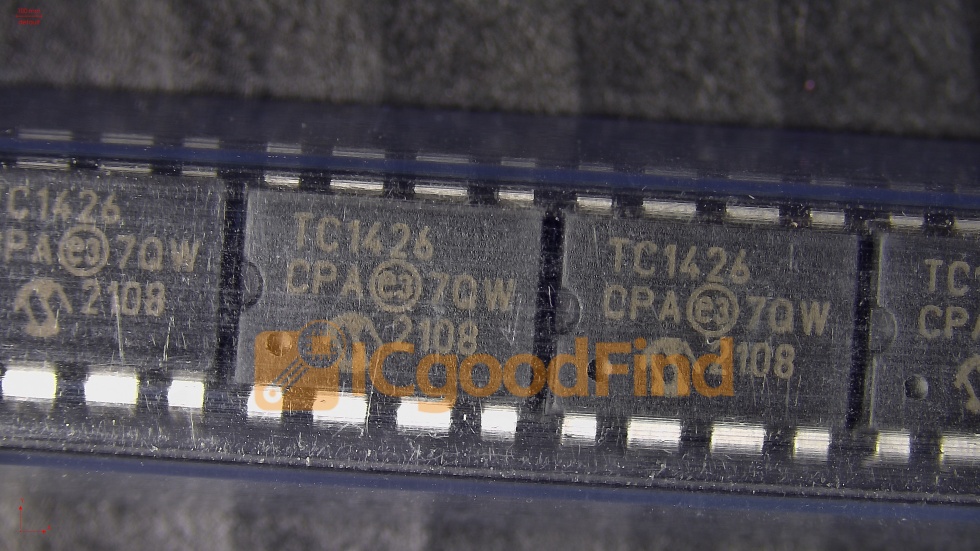
At the heart of the STM32G474RET6 lies a 32-bit Arm Cortex-M4 core with a floating-point unit (FPU), running at a maximum clock speed of 170 MHz. This is not just about raw clock cycles; the inclusion of the FPU is critical for applications that require intensive mathematical computations, such as PID control loops, Fast Fourier Transforms (FFT), and 3-phase motor vector control. The core delivers 213 DMIPS (Dhrystone Million Instructions per Second), which ensures that even the most demanding real-time tasks are executed without latency.
What sets the G4 series apart from its predecessors (like the F3 series) is the optimized instruction pipeline and the memory architecture. The STM32G474RET6 comes with 128 KB of SRAM and 512 KB of flash memory. The dual-bank flash feature is particularly noteworthy—it allows for read-while-write (RWW) operations, enabling firmware updates without halting the system. This is a massive advantage in field-upgradeable power inverters or battery management systems (BMS) where downtime is unacceptable.
1.2 CORDIC and FMAC: Dedicated Math Accelerators
One of the most underrated features of the STM32G474RET6 is its hardware CORDIC (Coordinate Rotation Digital Computer) and FMAC (Filter Math Accelerator) units. These are not just marketing buzzwords; they are dedicated co-processors that offload trigonometric, logarithmic, and square-root functions from the CPU. For example, in a digital power supply (SMPS) , the CORDIC can calculate the phase angle for a PLL (Phase-Locked Loop) in a single cycle, freeing the CPU to handle communication protocols like CAN FD or USB.
The FMAC is a boon for signal conditioning. It can execute FIR and IIR filters entirely in hardware, which is essential for noise filtering in current-sensing circuits. When you combine the FPU, CORDIC, and FMAC, the STM32G474RET6 effectively becomes a digital signal processor (DSP) in its own right, eliminating the need for an external DSP chip in many designs. This integration reduces BOM cost and PCB area—a critical factor for compact industrial drives.
1.3 Power Efficiency and Operating Range
Despite its high performance, the STM32G474RET6 is designed with power efficiency in mind. It operates over a 2.0V to 3.6V supply range, with multiple low-power modes including Sleep, Stop, and Standby. The Stop 2 mode retains SRAM and most peripherals while drawing only microamps of current, making it suitable for battery-powered portable instruments. Additionally, the internal 16 MHz RC oscillator (HSI) can be calibrated to achieve ±1% accuracy, reducing the need for an external crystal in cost-sensitive designs. This flexibility in power management is a key reason why the G474 is chosen for both grid-connected and off-grid renewable energy systems.
Part 2: Unmatched Analog and Timer Integration for Power Control
2.1 High-Resolution Timers: The Heart of Digital Power
If the CPU is the brain, then the timers are the muscles of the STM32G474RET6. This chip features two high-resolution timers (HRTIM) that operate at an astonishing 217 picosecond resolution. This is a world-class specification for digital power conversion. Why does this matter? In a resonant converter or a totem-pole PFC, the dead-time between switching events must be precisely controlled to avoid shoot-through currents. With 217 ps resolution, you can fine-tune the switching edges to achieve zero-voltage switching (ZVS) , dramatically improving efficiency (often above 98%).
The HRTIM also supports multiple PWM outputs with complementary channels, programmable dead-time insertion, and fault inputs. This means you can directly drive SiC MOSFETs or GaN transistors without external level-shifting logic in many cases. The timer’s ability to generate burst mode signals is perfect for light-load efficiency improvements in adapters. In addition to the HRTIM, there are four 16-bit advanced timers and two 32-bit general-purpose timers, giving designers ample resources for multi-axis motor control or multi-phase interleaved converters.
2.2 Five 12-bit ADCs: Simultaneous Sampling for Safety
Analog sensing is where the STM32G474RET6 truly shines. It integrates five 12-bit Successive Approximation Register (SAR) ADCs, each capable of sampling at 4 MSPS. The key advantage here is simultaneous sampling. In a 3-phase motor drive, you need to measure all three phase currents at the exact same instant to reconstruct the current vector accurately. With five ADCs, you can sample three phase currents, the DC-link voltage, and a temperature sensor all at once. This eliminates the phase delay error that plagues multiplexed ADC architectures.
The ADCs also feature hardware oversampling (up to 32x), which effectively increases the resolution to 16 bits for low-frequency signals. This is invaluable for high-precision current sensing using shunt resistors. Furthermore, the comparators (7 built-in) can be used for overcurrent protection with a response time of less than 20 ns. This hardware-level protection ensures that the MCU can shut down the PWM outputs before a fault damages the power stage, making the system inherently safe.
2.3 Digital-to-Analog Converters and Operational Amplifiers
The STM32G474RET6 includes four 12-bit DACs and six operational amplifiers (op-amps) with programmable gain. These op-amps are not just simple buffers; they can be configured as programmable gain amplifiers (PGA) for current sensing, or as filters for signal conditioning. This integration allows for a complete analog front-end on a single chip. For example, in a battery management system, you can use the op-amps to amplify the voltage drop across a low-side shunt, then feed it directly to the ADC without external components. The DACs can be used to generate reference voltages for comparators or to implement digital potentiometers for calibration. This level of analog integration reduces component count by up to 30% compared to discrete solutions, which is a significant cost saving in high-volume production.
Part 3: Connectivity, Ecosystem, and Sourcing with ICGOODFIND
3.1 Rich Communication Interfaces for Industrial IoT
The STM32G474RET6 is not just a standalone controller; it is designed to be a node in a connected world. It features two CAN FD (Flexible Data-rate) controllers, which are essential for automotive and industrial automation networks. CAN FD allows for data rates up to 8 Mbps, enabling high-speed telemetry and firmware updates over the bus. Additionally, there are three USARTs, three SPI, and two I2C interfaces, providing ample connectivity for external sensors, EEPROMs, and displays.
For human-machine interfaces (HMI), the MCU supports USB 2.0 Full-Speed device mode, allowing for direct connection to a PC for data logging or configuration. The SDIO interface can be used to connect an external SD card for data storage, which is useful for predictive maintenance applications. With the growing trend of edge AI, the G474’s processing power combined with its connectivity makes it an ideal candidate for smart circuit breakers and digital substations.
3.2 Development Tools and Software Libraries
STMicroelectronics provides a comprehensive ecosystem for the STM32G474RET6. The STM32CubeMX graphical tool allows you to configure pins, clocks, and peripherals in minutes, generating initialization code for HAL (Hardware Abstraction Layer) or LL (Low-Layer) APIs. The STM32CubeG4 firmware package includes extensive middleware for USB, FATFS, and FreeRTOS. For power control specifically, ST offers the X-CUBE-SPN7 software pack, which includes ready-to-use algorithms for motor control (FOC) and digital power (PFC, LLC). This reduces development time from months to weeks.
Moreover, the STM32G474RET6 Nucleo-144 board (NUCLEO-G474RE) is an affordable starting point, featuring an integrated ST-LINK debugger. For those looking to prototype quickly, the Zio and Arduino compatible headers make it easy to add shields. The active community and extensive application notes ensure that even complex topics like Gallium Nitride (GaN) gate driving are well-documented.
3.3 Sourcing Authentic Components: The Role of ICGOODFIND
In today’s global supply chain, counterfeit chips are a real threat. When designing a product around the STM32G474RET6, sourcing genuine components is non-negotiable. This is where ICGOODFIND becomes an invaluable resource. ICGOODFIND is a global electronic component search engine that aggregates real-time inventory and pricing from authorized distributors and independent suppliers. By using ICGOODFIND, you can:
- Compare prices across multiple vendors instantly, ensuring you get the best cost for your BOM.
- Verify part authenticity through supplier ratings and batch traceability.
- Check stock availability for both new and obsolete parts, which is crucial for long-life industrial products.
- Access datasheets and technical documents directly from the search results, streamlining your design process.
For high-demand parts like the STM32G474RET6, which often face allocation issues, ICGOODFIND’s network of vetted suppliers can help you secure inventory quickly. The platform’s part cross-reference tool also allows you to find compatible alternatives if the exact part is unavailable. In an era where supply chain agility is a competitive advantage, integrating ICGOODFIND into your procurement workflow is a smart move for both startups and established OEMs.
Conclusion
The STM32G474RET6 is unequivocally one of the most versatile and powerful microcontrollers in the mid-range embedded market. Its combination of a 170 MHz Cortex-M4 core, dedicated math accelerators, high-resolution timers, and five simultaneous-sampling ADCs makes it the gold standard for digital power conversion and advanced motor control. The rich set of connectivity options ensures it fits seamlessly into modern industrial IoT architectures, while the robust STM32 ecosystem accelerates time-to-market.
For engineers, the decision to adopt the STM32G474RET6 is not just about technical specs; it is about design flexibility, system reliability, and long-term availability. By leveraging platforms like ICGOODFIND for procurement, you can mitigate supply chain risks and ensure that your production lines run smoothly. Whether you are building a 3kW solar inverter, a surgical robot, or a high-end audio amplifier, the STM32G474RET6 provides the performance headroom and peripheral integration to turn your vision into reality. As the industry moves toward higher efficiency and smarter control, this MCU is poised to remain a cornerstone of embedded power electronics for years to come.







