





ATMEGA16A-AU: The High-Performance 8-Bit Microcontroller for Embedded Innovation
Introduction
In the ever-evolving world of embedded systems, selecting the right microcontroller (MCU) is the cornerstone of any successful hardware project. Among the vast array of available options, the ATMEGA16A-AU stands out as a reliable, cost-effective, and highly versatile 8-bit AVR microcontroller. Manufactured by Microchip Technology (formerly Atmel), this chip has become a staple for engineers, hobbyists, and educators alike. Whether you are designing an industrial control system, a consumer appliance, or a robotics prototype, the ATMEGA16A-AU offers a balanced combination of performance, power efficiency, and peripheral integration. In this comprehensive guide, we will explore its core specifications, practical applications, and why sourcing this component from trusted distributors like ICGOODFIND ensures your project’s long-term success.
Main Body
Part 1: Core Architecture and Technical Specifications
The ATMEGA16A-AU is built on the advanced RISC (Reduced Instruction Set Computer) architecture, which allows it to execute most instructions in a single clock cycle. This efficiency translates to a throughput of up to 16 MIPS (Million Instructions Per Second) at a 16 MHz operating frequency, making it significantly faster than many competing 8-bit MCUs.
Key technical highlights include:
- Memory Configuration: The chip features 16 KB of in-system self-programmable Flash memory, 1 KB of SRAM, and 512 bytes of EEPROM. This generous memory footprint is ideal for complex firmware, data logging, and non-volatile parameter storage.
- Operating Voltage Range: It supports a wide voltage range from 2.7V to 5.5V, allowing for flexible power supply designs, including battery-operated devices and 3.3V logic systems.
- Peripheral Set: The MCU integrates a rich set of peripherals, including two 8-bit timers/counters with separate prescalers and compare modes, one 16-bit timer/counter with capture and compare capabilities, a 10-bit ADC with 8 multiplexed input channels, and four PWM channels.
- Communication Interfaces: For connectivity, it provides USART, SPI, and I2C (TWI) interfaces, enabling seamless integration with sensors, displays, and other MCUs.
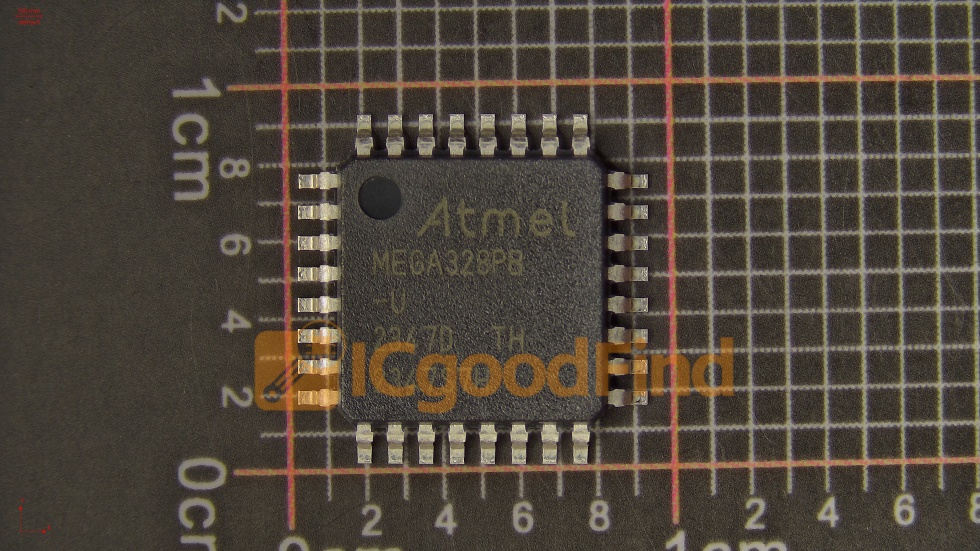
- Package and Pinout: The “-AU” suffix specifically denotes the TQFP-44 package (10x10mm), which is surface-mount and ideal for compact PCB designs. It offers 32 programmable I/O lines, giving designers ample room for external device interfacing.
What makes the ATMEGA16A-AU particularly attractive is its low-power consumption. In active mode at 1 MHz and 3V, it draws only about 0.6 mA, while in power-down mode, the current drops to less than 1 µA. This makes it an excellent choice for battery-powered IoT edge nodes and portable medical devices.
Part 2: Practical Applications and Design Advantages
The versatility of the ATMEGA16A-AU allows it to excel in a wide range of applications. Its robust feature set is not just about raw specs; it is about solving real-world engineering challenges.
1. Industrial Automation and Control: With its multiple timers and PWM channels, the ATMEGA16A-AU is perfectly suited for motor control (DC, stepper, and brushless DC motors). Its 10-bit ADC can read analog sensors like thermocouples, pressure transducers, and current sensors with high resolution. The SPI and I2C interfaces allow it to communicate with external DACs, digital potentiometers, and industrial fieldbus transceivers. Moreover, its brown-out detection (BOD) and watchdog timer ensure reliable operation in noisy industrial environments.
2. Consumer Electronics and Smart Home: From smart thermostats to programmable LED lighting systems, this MCU provides the perfect balance of cost and capability. The EEPROM is particularly useful for storing user preferences and calibration data without needing external memory. The USART interface can be used to connect to Wi-Fi modules (like ESP8266) or Bluetooth modules (like HC-05), turning a simple embedded design into a connected smart device. The TQFP-44 package is small enough for compact remote controls and wearable devices.
3. Educational and Prototyping Platforms: The ATMEGA16A-AU is widely used in university labs and maker spaces because of its extensive documentation and community support. It is fully supported by the Arduino IDE (via custom board definitions) and the classic AVR-GCC toolchain. This allows students to transition from simple LED blinking to complex RTOS-based projects. The JTAG interface (with a 4-pin header) provides on-chip debugging, which is crucial for learning advanced embedded programming techniques.
4. Automotive and Harsh Environment Applications: Although not an automotive-grade part (for that, consider the ATMEGA16M1), the ATMEGA16A-AU can still operate in a -40°C to +85°C temperature range, making it suitable for under-the-hood sensor interfaces and aftermarket automotive accessories. Its high ESD tolerance and latch-up immunity ensure durability in static-prone environments.
Sourcing note: When purchasing ATMEGA16A-AU, always verify the authenticity of the component. Counterfeit chips can lead to firmware corruption and field failures. A reliable electronic components distributor like ICGOODFIND provides 100% original, traceable components with full datasheets and manufacturer certifications. Their rigorous quality control and global logistics network ensure that your production line never stops.
Part 3: Programming, Development Tools, and Optimization Tips
To unlock the full potential of the ATMEGA16A-AU, developers need a solid understanding of its programming model and available toolchain.
Development Environment: - Compiler: The most common choice is AVR-GCC (part of the GNU toolchain), which is free and highly optimized for AVR cores. For commercial projects, IAR Embedded Workbench for AVR offers advanced code optimization and static analysis. - Programmer/Debugger: The Atmel-ICE or the budget-friendly USBasp can be used for in-system programming via the SPI header. For debugging, the JTAGICE mkII supports the JTAG interface, allowing real-time variable inspection and breakpoint setting. - Libraries: Microchip provides AVR Libc (a standard C library) and Application Notes (e.g., AVR130 for ADC, AVR131 for USART) that significantly reduce development time.
Firmware Optimization Strategies: - Use the “PROGMEM” attribute to store constant data (like lookup tables and strings) in Flash memory instead of SRAM, freeing up RAM for dynamic variables. - Leverage the “sleep” modes (Idle, ADC Noise Reduction, Power-down, Power-save, Standby, and Extended Standby) to reduce power consumption. For battery-powered devices, use the Power-down mode with an external interrupt (e.g., a button press) to wake the MCU. - Enable the internal 32.768 kHz oscillator for the asynchronous timer (Timer2) to maintain a real-time clock (RTC) even in sleep mode, without an external crystal. - Use the “volatile” keyword correctly for variables shared between the main loop and interrupt service routines (ISRs) to prevent compiler optimization errors.
Common Pitfalls to Avoid: - Fuse bits misconfiguration: Setting the wrong fuse bits (e.g., disabling the SPI programming interface) can “brick” the chip. Always double-check the fuse settings before programming. - Insufficient decoupling: Place a 100 nF ceramic capacitor close to each VCC and AVCC pin, and a 10 µF electrolytic capacitor near the power input, to prevent noise-induced resets. - ADC reference voltage: If using the internal 2.56V reference, ensure that AVCC is at least 2.7V. For higher accuracy, connect an external precision reference to the AREF pin.
Why choose ICGOODFIND for your ATMEGA16A-AU? Beyond authentic parts, ICGOODFIND offers competitive pricing for bulk orders, fast global shipping (DHL, FedEx, UPS), and expert technical support to help you select the right variant (e.g., -AU vs. -PU for DIP package). Their online inventory is updated in real-time, and they provide detailed datasheets and reference designs to accelerate your development cycle.
Conclusion
The ATMEGA16A-AU remains a formidable choice in the 8-bit microcontroller landscape, even as 32-bit ARM Cortex-M chips become more prevalent. Its simplicity, low cost, and exceptional peripheral integration make it ideal for applications where power consumption, ease of programming, and long-term availability are critical. From industrial motor controllers to educational kits, this chip has proven its reliability over two decades of production.
However, the success of your project depends not only on the chip itself but also on the integrity of your supply chain. Counterfeit or “pulled” components can introduce subtle bugs that are extremely difficult to trace. By sourcing your ATMEGA16A-AU from a reputable distributor like ICGOODFIND, you gain peace of mind knowing that every unit is factory-new, fully tested, and backed by a comprehensive warranty. Their dedicated team can also assist with obsolete part management and lifecycle notifications, ensuring your product remains manufacturable for years to come.
In summary, whether you are a seasoned embedded engineer or a beginner taking your first steps into hardware design, the ATMEGA16A-AU offers a proven path to innovation. Pair it with a reliable supplier, follow best practices in PCB layout and firmware design, and you will have a robust, scalable solution that stands the test of time.







