


LM358: The Ultimate Guide to the Versatile Operational Amplifier
Introduction
The LM358 is arguably one of the most widely used operational amplifiers (op-amps) in the history of electronics. Introduced by National Semiconductor (now part of Texas Instruments) in the early 1970s, this dual-channel, low-power device has become a staple in countless applications—from simple sensor signal conditioning to complex industrial control systems. Its enduring popularity stems from a unique combination of low cost, single-supply operation, and remarkable flexibility. Whether you are a hobbyist building your first comparator circuit or an engineer designing a battery-powered IoT device, the LM358 offers a reliable and accessible solution. In this comprehensive guide, we will explore its architecture, key features, practical applications, and common pitfalls—while also highlighting how ICGOODFIND, a leading electronic component sourcing platform, can help you procure authentic LM358 chips for your next project.
Part 1: Understanding the LM358 – Architecture and Core Features
1.1 What Exactly is the LM358?
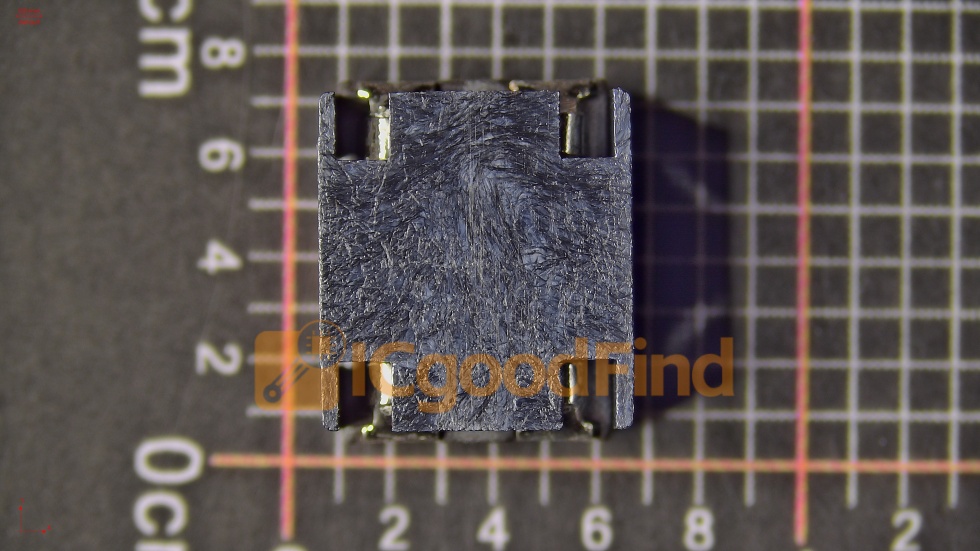
The LM358 is a dual operational amplifier packaged in an 8-pin DIP, SOIC, or similar form factor. It contains two independent, high-gain, frequency-compensated op-amps designed to operate from a single power supply over a wide voltage range (3V to 32V) or dual supplies (±1.5V to ±16V). This makes it exceptionally versatile for both battery-operated and mains-powered equipment.
1.2 Key Electrical Characteristics
- Low Supply Current: Each amplifier draws only about 0.5 mA (typical), making it ideal for power-sensitive designs.
- Common-Mode Input Voltage Range: Includes ground, allowing the LM358 to sense signals near the negative rail—a critical feature for single-supply applications.
- Large Output Voltage Swing: The output can swing within a few millivolts of the supply rails, maximizing dynamic range.
- Internally Frequency Compensated: No external components are needed for stable operation at unity gain.
- Short-Circuit Protected Outputs: The output stage can withstand a continuous short to ground or supply without damage.
- Wide Operating Temperature Range: Available in commercial (0°C to 70°C) and industrial (-40°C to 85°C) grades.
1.3 The Internal Block Diagram
Each op-amp in the LM358 consists of a PNP input stage (which allows the input common-mode range to extend to ground), a second gain stage, and a class-AB push-pull output stage. The PNP input transistors are crucial—they enable the device to operate with inputs at 0V when using a single positive supply. This is a significant advantage over older op-amps like the LM741, which require dual supplies and cannot handle ground-level inputs.
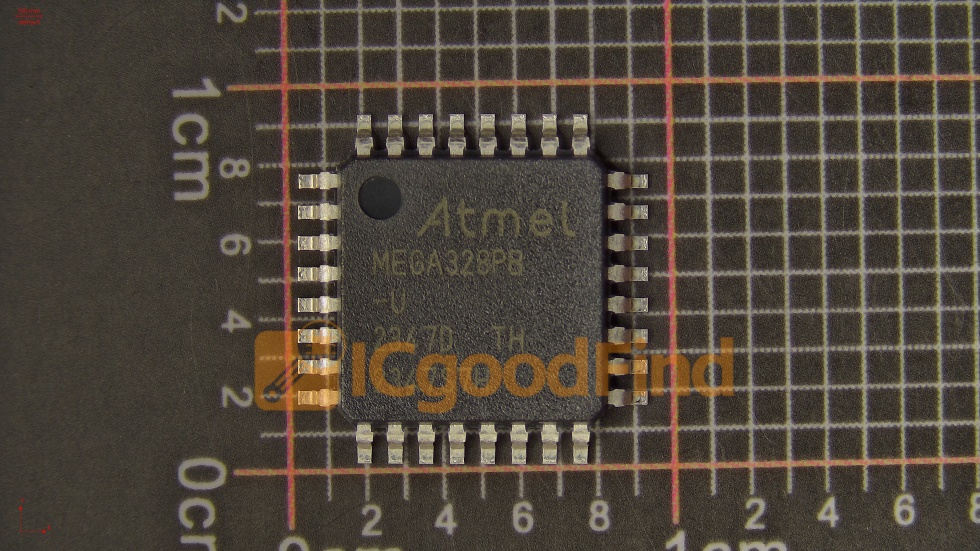
Pro Tip from ICGOODFIND: When sourcing LM358s, always verify the date code and manufacturer logo. Counterfeit chips often have inconsistent markings. ICGOODFIND provides traceable, original components from authorized distributors, ensuring your designs perform as specified.
Part 2: Practical Applications of the LM358
2.1 Signal Conditioning and Sensor Interfaces
The LM358 excels in analog signal processing tasks. For example, in a temperature monitoring system using an NTC thermistor, the LM358 can be configured as a non-inverting amplifier to boost the small voltage change across the thermistor to a level suitable for an ADC (Analog-to-Digital Converter). Its low offset voltage (typically 2 mV) and high input impedance (about 2 MΩ) ensure minimal loading on the sensor.
Example Circuit:
- Connect a thermistor in a voltage divider with a fixed resistor.
- Feed the divider output into the non-inverting input of the LM358.
- Set the gain using two external resistors (e.g., 10kΩ and 100kΩ for a gain of 11).
- The output voltage now varies linearly with temperature, ready for a microcontroller.
2.2 Active Filters and Oscillators
Because the LM358 has a gain-bandwidth product of 1 MHz, it is well-suited for low-frequency active filters (below 100 kHz). You can build second-order low-pass, high-pass, or band-pass filters using just a few resistors and capacitors. For instance, a Sallen-Key low-pass filter with a cutoff frequency of 1 kHz can be easily implemented with the LM358, providing a clean, ripple-free output for audio or instrumentation signals.
Additionally, the LM358 can be used to create relaxation oscillators (square wave generators) and Wien-bridge oscillators (sine wave generators). Its ability to operate from a single 5V supply makes it perfect for digital logic systems that need an analog clock source.
2.3 Comparator and Level Shifting
One of the most common uses of the LM358 is as a voltage comparator. When operated without negative feedback, the op-amp compares the voltages at its two inputs and saturates the output to either the positive or negative rail. This is ideal for: - Over-voltage/under-voltage detection in power supplies. - Zero-crossing detectors for AC mains synchronization. - Light-sensitive switches (using an LDR and a potentiometer as a reference).
Important Note: The LM358 is not a true comparator (like the LM311). Its output stage is designed for linear operation, so switching speeds are slower. However, for low-frequency applications (< 10 kHz), it works perfectly.
2.4 Battery-Powered and Portable Devices
Thanks to its low quiescent current (0.5 mA per amplifier) and wide supply range, the LM358 is a favorite in battery-operated devices such as: - Portable pH meters - Digital multimeters (as a buffer for the input divider) - Wireless sensor nodes (e.g., amplifying a piezo vibration sensor) - Medical devices like pulse oximeters (for photodiode signal conditioning)
In these applications, the LM358’s ability to operate down to 3V (even 2.5V in some variants) ensures the circuit continues to function as the battery discharges.
Part 3: Design Considerations, Limitations, and Sourcing Tips
3.1 Common Pitfalls and How to Avoid Them
While the LM358 is robust, it has a few quirks that engineers must respect:
- Output Voltage Swing Limitation: The output cannot reach the supply rails. Under a 10kΩ load, the maximum output voltage is typically Vcc - 1.5V. If you need rail-to-rail output, consider a modern alternative like the MCP6002. However, for most applications, this is not an issue.
- Input Offset Voltage: The typical offset is 2 mV, but it can be as high as 7 mV. For precision DC amplification, you may need a trimming potentiometer or a chopper-stabilized op-amp.
- Slew Rate: At only 0.3 V/µs, the LM358 cannot handle fast signals. For audio or high-frequency AC, this will cause distortion. Stick to DC or low-frequency AC (< 20 kHz).
- Phase Reversal: When the input common-mode voltage exceeds the limit (above Vcc - 2V), the output may invert unexpectedly. Always keep inputs within the specified range.
3.2 Thermal and Power Dissipation
The LM358 in an 8-pin DIP package can dissipate up to 830 mW at 25°C ambient. In high-temperature environments, derate this value. For high-current loads (e.g., driving a relay directly), use an external transistor—the LM358 can only source/sink about 20 mA (short-circuit current is 40 mA, but continuous operation at that level is not recommended).
3.3 Why Choose the LM358 in 2025? (And When Not To)
Still relevant because: - Cost: It costs pennies per unit, making it unbeatable for high-volume consumer products. - Availability: It is in production by multiple manufacturers (TI, ST, ON Semi, etc.), ensuring supply chain stability. - Simplicity: No external compensation, no dual supplies, and a forgiving input stage.
Consider alternatives when: - You need rail-to-rail input/output (e.g., for 3.3V ADC interfaces). - You require higher bandwidth (> 1 MHz). - You need lower offset voltage (< 1 mV) for precision instrumentation.
3.4 Sourcing Authentic LM358 – The ICGOODFIND Advantage
Counterfeit electronic components are a growing problem, especially for popular parts like the LM358. Fake chips may have incorrect pinouts, poor thermal performance, or fail after a few hours of operation. To ensure your product’s reliability, sourcing from a trusted distributor is critical.
ICGOODFIND is a global electronic component sourcing platform that specializes in hard-to-find, obsolete, and high-demand ICs. Here’s why engineers and procurement professionals choose ICGOODFIND:
- 100% Authenticity Guarantee: Every LM358 is sourced directly from manufacturers or authorized distributors. Each batch is visually inspected and electrically tested.
- Competitive Pricing: Bulk pricing for large orders, with real-time market data to help you negotiate.
- Fast Global Shipping: Warehouses in Asia, Europe, and the US ensure rapid delivery to your assembly line.
- BOM Management Tools: Upload your bill of materials and ICGOODFIND will provide a complete quote with alternates and lifecycle status.
- Technical Support: Their engineers can help you select the right grade (commercial vs. industrial) and package (DIP-8 vs. SOIC-8) for your application.
Case Study: A medical device startup needed 10,000 LM358s in SOIC-8 with industrial temperature rating. A broker offered a low price but could not provide traceability. ICGOODFIND supplied original TI parts with full COC (Certificate of Conformance) and lot traceability, at a 12% lower cost than the distributor’s list price. The startup passed their ISO audit without issues.
Conclusion
The LM358 remains a cornerstone of analog electronics due to its versatility, low power consumption, and ease of use. From simple LED flashers to sophisticated industrial transmitters, this dual op-amp continues to prove that sometimes the oldest tools are the most reliable. While it has limitations—such as limited bandwidth and non-rail-to-rail output—its strengths far outweigh these drawbacks for the vast majority of applications.
When you are ready to integrate the LM358 into your design, remember that component authenticity is non-negotiable. By partnering with ICGOODFIND, you not only secure genuine, fully traceable parts but also gain access to a wealth of technical resources and supply chain expertise. Whether you are prototyping on a breadboard or scaling to mass production, ICGOODFIND ensures that your LM358s are the last thing you need to worry about.
Final Thought: The LM358 may be over 50 years old, but its legacy is far from over. In a world of complex, high-speed digital systems, the humble op-amp reminds us that simplicity, reliability, and cost-effectiveness never go out of style.