TPS82084SILR: The Compact Power Module Redefining Efficiency in Modern Electronics
Introduction
In the rapidly evolving world of power management, engineers and designers constantly seek components that balance size, efficiency, and thermal performance. The TPS82084SILR from Texas Instruments has emerged as a standout solution in this arena—a 3A step-down converter module that integrates an inductor and control circuitry into a single, ultra-compact package. Whether you are designing for industrial automation, medical devices, or battery-powered IoT systems, this module offers a drop-in solution that reduces design complexity while improving reliability. In this article, we will explore the key features, application benefits, and design considerations of the TPS82084SILR, and explain why it has become a preferred choice among power engineers. For sourcing this component and comparing real-time availability, platforms like ICGOODFIND provide a reliable global supply chain reference.
Part 1: Unpacking the TPS82084SILR – Core Specifications and Design Advantages
1.1 A Fully Integrated Power Solution
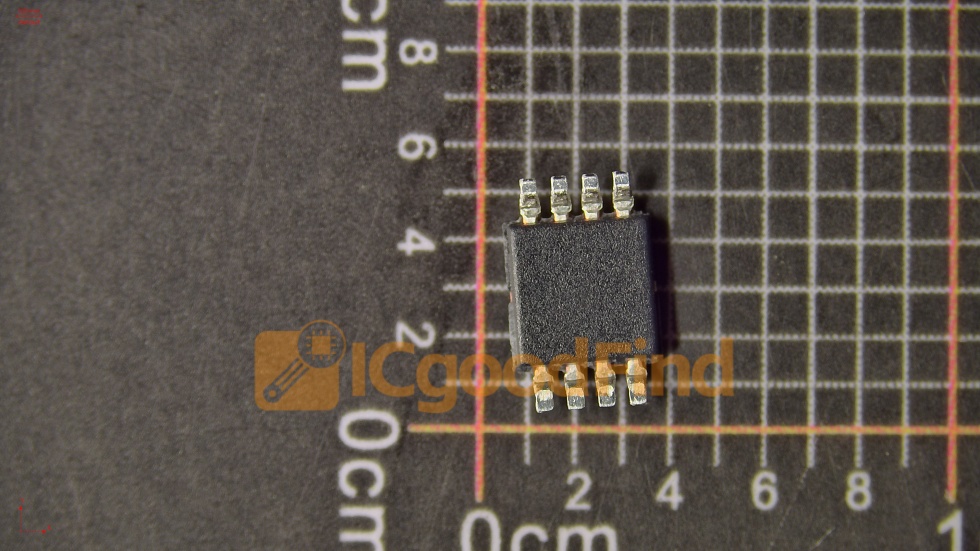
The TPS82084SILR is not just a simple regulator; it is a complete DC/DC step-down module that includes the power inductor, MOSFETs, and control logic inside a 2.8mm × 3.0mm × 1.4mm MicroSiP™ package. This integration eliminates the need for external inductor selection and layout optimization, which are often the most error-prone steps in power supply design. The result is a significant reduction in PCB area—up to 60% compared to discrete solutions—and a faster time-to-market for your product.
1.2 Electrical Performance That Matters
- Input Voltage Range: 2.5V to 6V, making it ideal for single-cell Li-ion battery applications as well as 5V rail systems.
- Output Current: Up to 3A continuous, with excellent load and line regulation.
- Efficiency: Peak efficiency reaches 95% at 3.3V output, thanks to the DCS-Control™ topology (Dynamic Current Sharing). This topology provides fast transient response and stable output voltage even with sudden load steps.
- Output Voltage Options: Fixed versions (e.g., 1.8V, 3.3V) and adjustable versions (0.8V to VIN) are available, offering flexibility for various logic and analog rails.
1.3 Thermal and Reliability Benefits
Because the inductor is integrated, the thermal path is optimized within the package. The exposed thermal pad on the bottom of the TPS82084SILR allows efficient heat dissipation to the PCB ground plane. In typical 3A continuous operation, the junction temperature remains well below the maximum rating of 125°C, even in ambient temperatures up to 85°C. This high reliability is critical for automotive and industrial environments where thermal cycling and vibration are common.
Part 2: Application Scenarios – Where the TPS82084SILR Excels
2.1 Battery-Powered Portable Devices
For wearables, handheld scanners, and wireless sensors, power efficiency directly translates to longer battery life. The TPS82084SILR’s light-load efficiency is exceptional—it enters Power-Save Mode at low output currents, reducing quiescent current to 15µA (typical). This feature is essential for devices that spend most of their time in standby mode. Additionally, the module’s small footprint allows designers to shrink the overall device size, which is a key competitive advantage in consumer electronics.
2.2 Industrial and Test Equipment
Industrial systems often require clean, low-noise power rails for analog-to-digital converters (ADCs), operational amplifiers, and FPGAs. The TPS82084SILR provides output voltage ripple as low as 10mVpp (with proper output capacitance), minimizing interference with sensitive measurement circuits. Its wide input range also accommodates unregulated supplies (e.g., 4.5V to 5.5V from a USB bus), making it a versatile choice for PLC modules, motor control boards, and data acquisition systems.
2.3 Space-Constrained Medical and IoT Devices
Medical devices like glucose monitors, infusion pumps, and portable diagnostic tools demand both miniaturization and safety. The TPS82084SILR’s integrated design reduces the number of external components, which simplifies safety certifications (e.g., IEC 60601) by reducing potential failure points. For IoT edge nodes, the module’s thermal performance allows operation in sealed enclosures without active cooling, which is a common requirement for smart building sensors and asset trackers. When sourcing this component for high-volume production, checking stock across multiple distributors via ICGOODFIND ensures you avoid supply chain delays.
Part 3: Design Guidelines and Common Pitfalls to Avoid
3.1 PCB Layout Recommendations
Even though the TPS82084SILR simplifies layout, proper grounding and decoupling remain critical. Place the input capacitor (10µF, X5R or better) as close as possible to the VIN and GND pins. The output capacitor (22µF to 47µF) should be placed near the VOUT pin. Use multiple vias to connect the thermal pad to the ground plane, ensuring low thermal resistance. Avoid routing sensitive analog traces under the module, as the switching node inside the package can couple noise.
3.2 Selecting the Right Output Capacitor
The TPS82084SILR is designed to work with ceramic capacitors (X5R or X7R dielectric) due to their low ESR and small size. However, DC bias derating must be considered—a 22µF capacitor rated at 10V may only provide 15µF at 3.3V output. Always check the effective capacitance at your operating voltage. Using a capacitor with insufficient effective capacitance can lead to instability or increased output ripple.
3.3 Thermal Management in Real-World Conditions
While the module is efficient, power dissipation still occurs, especially at high input-to-output voltage differences. For example, at 5V input and 1.8V output with 3A load, the power loss is approximately 5.76W (though the module’s efficiency would be lower than 95% at this ratio). In such cases, ensure the PCB has adequate copper area for heat spreading. If the ambient temperature exceeds 70°C, consider derating the output current or adding a small heatsink on the top of the package. The thermal shutdown protection (at 160°C) is a safety net, but it should not be relied upon for normal operation.
Conclusion
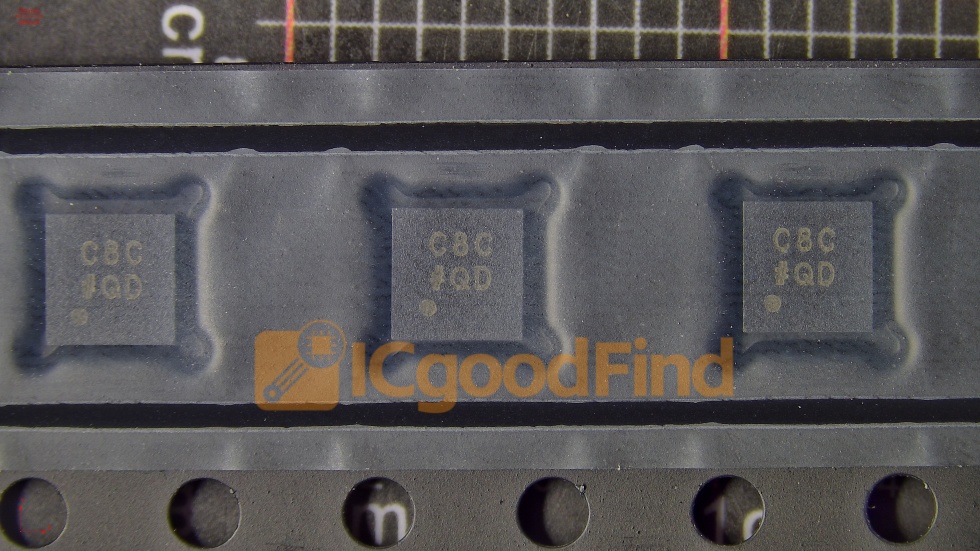
The TPS82084SILR represents a paradigm shift in how engineers approach low-power, space-constrained designs. By integrating the inductor and control loop into a tiny, thermally efficient package, Texas Instruments has eliminated many of the traditional headaches associated with discrete DC/DC converters—layout parasitics, inductor selection, and EMI tuning. Its 95% peak efficiency, 15µA quiescent current, and wide input range make it a versatile choice for everything from battery-powered wearables to industrial sensors.
For procurement teams and design engineers, ensuring a stable supply of this popular module is crucial. Platforms like ICGOODFIND offer real-time inventory tracking across multiple authorized distributors, helping you compare prices, lead times, and authenticity. Whether you are prototyping or scaling to mass production, leveraging such sourcing tools can reduce project risk and accelerate your time-to-market.
In summary, if your next design requires a reliable, compact, and high-efficiency power solution, the TPS82084SILR deserves a place on your shortlist. Its proven performance in demanding applications, combined with the ease of use of a module, makes it a smart engineering choice for the next generation of electronic products.