


REF200AU/2K5: The Precision Voltage Reference Redefining Industrial Accuracy
Introduction
In the world of analog electronics, voltage reference ICs are the silent gatekeepers of precision. They determine the accuracy of ADCs, DACs, power management systems, and sensor interfaces. Among the myriad of components available, the REF200AU/2K5 stands out as a dual-output, current-mode reference that offers exceptional temperature stability and low noise performance. Whether you are designing for automotive, medical, or industrial instrumentation, this component from Texas Instruments is engineered to deliver 0.2% initial accuracy and a drift as low as 10 ppm/°C. In this article, we will dissect the architecture, application scenarios, and comparative advantages of the REF200AU/2K5, while also highlighting how ICGOODFIND—a leading electronic component sourcing platform—can help you secure authentic parts for your next project.
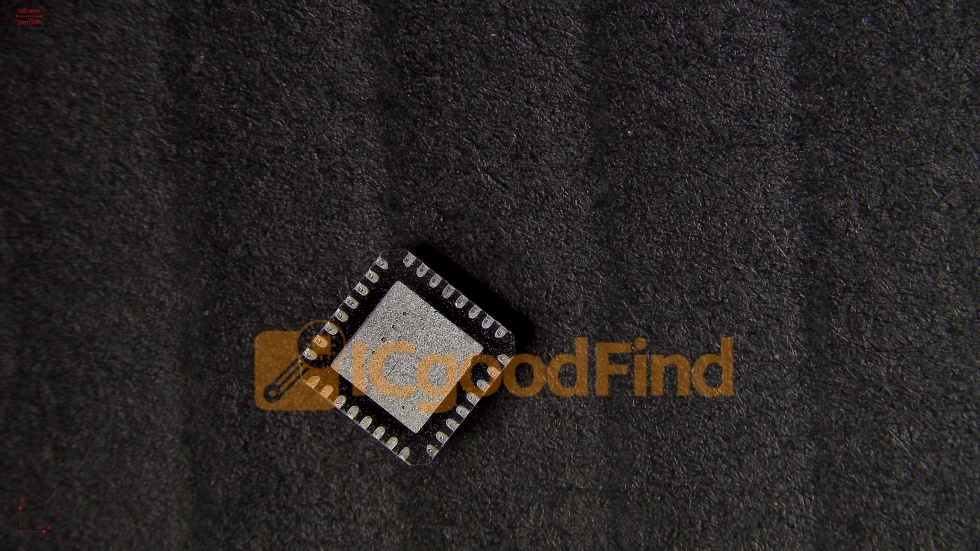
Part 1: Technical Architecture and Core Specifications
1.1 Dual Current Source Design – Why It Matters
Unlike conventional voltage references that output a fixed voltage, the REF200AU/2K5 provides two independent 100 µA current sources plus a mirror transistor for custom current scaling. This topology is particularly valuable in RTD (Resistance Temperature Detector) excitation, strain gauge bridges, and biasing of precision op-amps. The dual-source architecture eliminates the need for external resistors, which are often the weakest link in temperature-stable designs.
- Output Current: 100 µA ± 0.5% (each source)
- Temperature Coefficient: ± 25 ppm/°C (max) over –40°C to +85°C
- Supply Voltage Range: 2.5 V to 40 V
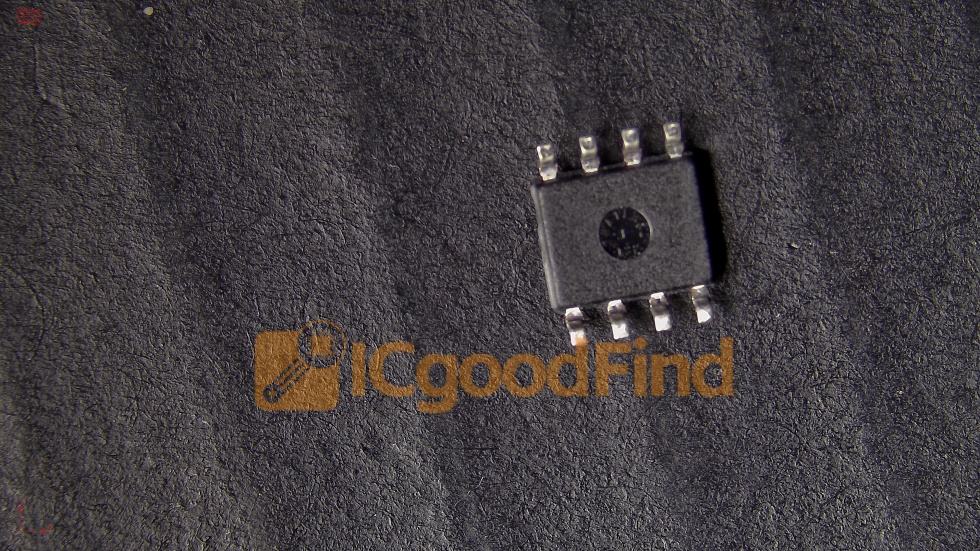
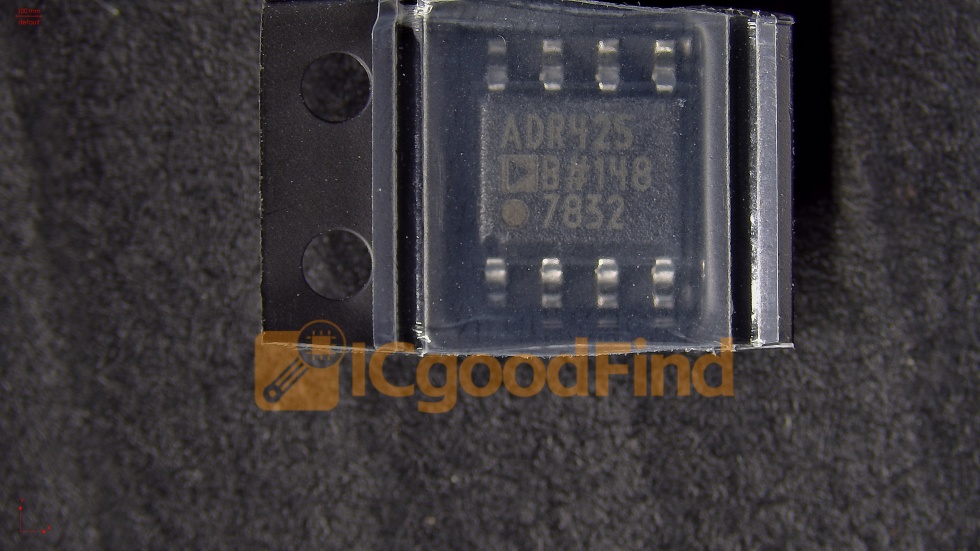
- Package: SOIC-8 (surface mount)
1.2 Noise and Long-Term Stability
For high-resolution data acquisition systems, noise is the enemy. The REF200AU/2K5 boasts a low-frequency noise of 10 µVpp (0.1 Hz to 10 Hz), which is comparable to premium band-gap references. Moreover, its long-term drift is specified at 50 ppm/1000 hours—a figure that ensures your calibration intervals can be extended without compromising accuracy. The buried zener technology used in the core provides a sharper breakdown voltage than standard zener diodes, resulting in lower dynamic impedance and better line regulation.
1.3 Thermal Management and PCB Layout Tips
Because the REF200AU/2K5 is a current source, self-heating can affect accuracy. The SOIC-8 package has a thermal resistance (θJA) of approximately 150 °C/W. To minimize errors, ICGOODFIND recommends placing a copper pour under the device and using thermal vias to connect to a ground plane. For high-temperature environments, consider derating the output current by 20% to maintain the specified drift.
Part 2: Application-Specific Use Cases
2.1 Precision Sensor Excitation in Industrial IoT
In a typical 4-20 mA loop transmitter, the REF200AU/2K5 can be used to excite a Pt100 RTD with a constant current, ensuring that the voltage drop across the sensor is linearly proportional to temperature. The dual current sources allow you to drive two separate sensors with a single IC, reducing BOM cost and board space. For example, a dual-channel temperature logger can use one source for the RTD and the other for a thermistor linearization circuit.
Circuit Example:
- Source A → RTD → ADC input
- Source B → Reference resistor → ADC reference input (ratiometric measurement)
This configuration eliminates the need for a separate voltage reference, as the same current source drives both the sensor and the ADC reference. The result is a fully ratiometric system with sub-0.1 °C accuracy over –40 °C to +150 °C.
2.2 Biasing of High-Speed Comparators and Oscillators
In high-frequency communication systems, bias currents must be stable to avoid jitter. The REF200AU/2K5 can be used to set the trip point of a comparator or the charge current of a relaxation oscillator. Because the output impedance is extremely high (> 100 MΩ), the current source is immune to load variations—a critical feature when driving capacitive loads like the gate of a MOSFET.
Key Advantage: The mirror transistor (Q1) allows you to scale the output current by connecting an external resistor. For instance, a 10 kΩ resistor from the mirror base to ground will produce a 10 µA output with the same temperature coefficient. This flexibility makes the REF200AU/2K5 a universal biasing block for analog designers.
2.3 Battery-Powered Portable Instruments
For battery-operated devices, power consumption is paramount. The REF200AU/2K5 operates with a quiescent current of only 200 µA (both sources active). In shutdown mode (by pulling the enable pin low), the current drops to 1 µA max. This allows designers to implement gated measurement cycles—wake up the reference, take a reading, and sleep again. The fast settling time (10 µs to 0.1%) ensures that the reference is ready before the ADC samples, minimizing energy waste.
Part 3: Comparative Analysis and Sourcing Strategy
3.1 vs. LM334 vs. LT3092
| Parameter | REF200AU/2K5 | LM334 | LT3092 |
|---|---|---|---|
| Output Type | Dual 100 µA fixed | Adjustable (1 µA to 10 mA) | Adjustable (0.5 mA to 200 mA) |
| Temperature Drift | ±25 ppm/°C | ±30 ppm/°C (typical) | ±50 ppm/°C (max) |
| Minimum Supply | 2.5 V | 1 V | 1.2 V |
| Noise (10 Hz) | 10 µVpp | 40 µVpp | 20 µVpp |
| Package | SOIC-8 | TO-92, SOIC-8 | SOT-23, SOIC-8 |
The REF200AU/2K5 wins on noise and drift, but the LM334 offers lower minimum supply voltage. The LT3092 is better for high-current applications. For precision analog front-ends, the REF200AU/2K5 is the clear choice.
3.2 Why Buy from ICGOODFIND?
When sourcing the REF200AU/2K5, counterfeit risks are real. ICGOODFIND is a trusted distributor that provides: - 100% authentic parts with full traceability to the original manufacturer. - Real-time inventory across 500+ suppliers, ensuring you get the best price and lead time. - Technical datasheets and application notes directly from TI, plus free sample requests for qualified projects.
By using ICGOODFIND’s part search tool, you can filter by date code, package, and RoHS compliance. The platform also offers bulk pricing for production runs, and their quality assurance team performs X-ray inspection and electrical testing on every batch.
3.3 Design Pitfalls to Avoid
- Do not connect the current sources in parallel to get 200 µA—the mismatch will cause thermal runaway.
- Always bypass the supply pin with a 0.1 µF ceramic capacitor placed within 2 mm of the pin.
- Do not exceed the absolute maximum supply voltage of 40 V—even transient spikes above this can destroy the internal zener.
- Use Kelvin connections for the sense pins if you are using the mirror transistor to scale current—this avoids voltage drops in the PCB trace.
Conclusion
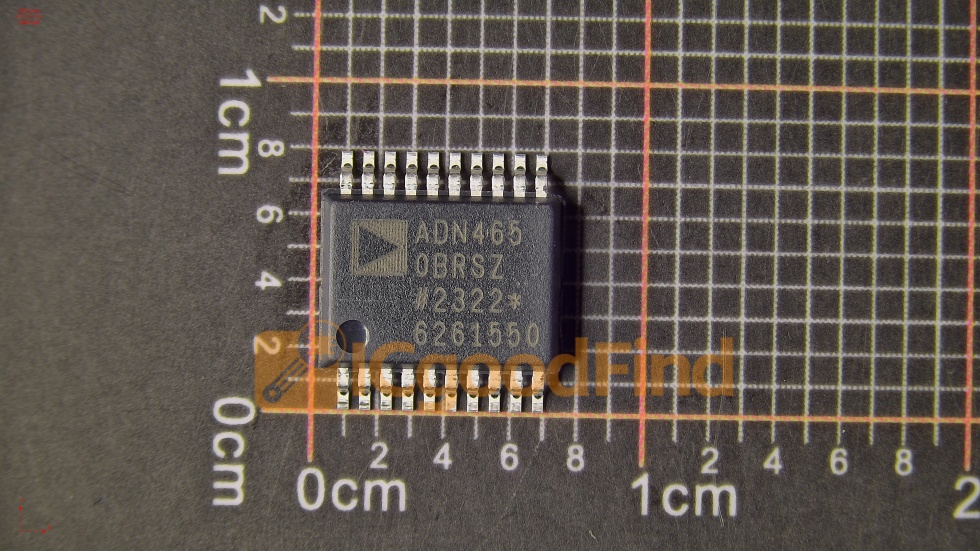
The REF200AU/2K5 is more than just a voltage reference—it is a precision current engine that simplifies sensor excitation, biasing, and ratiometric measurement. Its dual 100 µA outputs, low noise, and excellent temperature stability make it an ideal choice for industrial, automotive, and medical applications. While alternatives like the LM334 or LT3092 exist, the REF200AU/2K5 offers the best balance of accuracy, size, and power efficiency for low-current analog circuits.
To ensure your design performs as simulated, source the REF200AU/2K5 from ICGOODFIND. Their rigorous quality checks and competitive pricing will protect your production schedule and your reputation. Whether you are prototyping a high-resolution data logger or a loop-powered transmitter, this component will not let you down.