

AD9363BBCZ: The Ultimate Guide to This High-Performance RF Agile Transceiver
Introduction
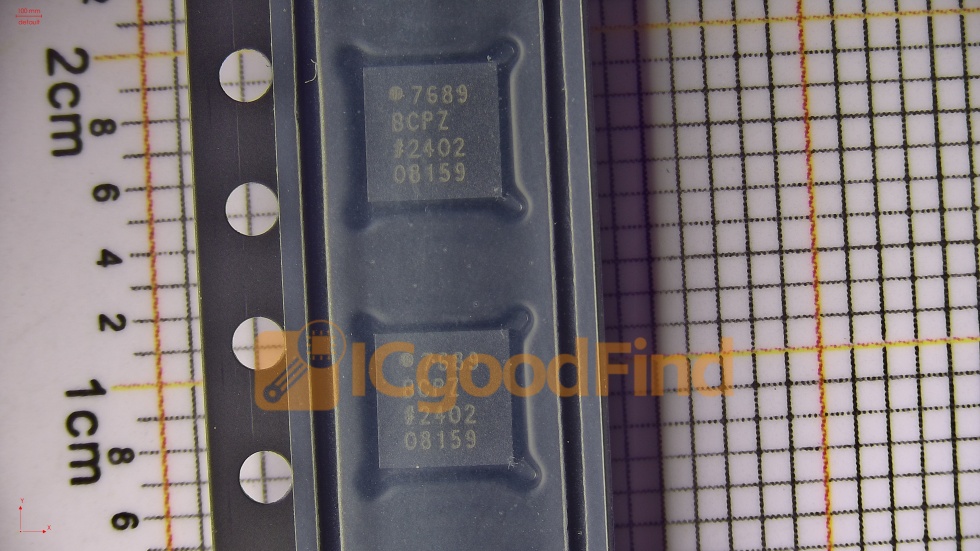
In the rapidly evolving world of wireless communications, the demand for flexible, wideband, and highly integrated RF solutions has never been greater. Among the standout components addressing this need is the AD9363BBCZ, a cutting-edge RF Agile Transceiver manufactured by Analog Devices. This single-chip device is designed to operate from 325 MHz to 3.8 GHz, covering a vast array of applications including software-defined radio (SDR), military communications, IoT gateways, and 5G testbeds. Whether you are an RF engineer, a system integrator, or a procurement specialist, understanding the full capabilities of the AD9363BBCZ is essential for optimizing your next-generation wireless design. In this comprehensive guide, we will dive deep into its architecture, performance metrics, application scenarios, and why sourcing this component through ICGOODFIND ensures both quality and supply-chain reliability.
Main Body
Part 1: Core Architecture and Technical Superiority

The AD9363BBCZ is not just another transceiver; it is a highly integrated, MIMO-capable (2x2) RF solution that replaces dozens of discrete components. At its heart lies a direct conversion (zero-IF) architecture, which eliminates the need for intermediate frequency (IF) stages, thereby reducing system complexity and bill-of-materials (BOM) costs.
Key technical specifications that set the AD9363BBCZ apart:
- Frequency Range: 325 MHz to 3.8 GHz, making it suitable for both sub-GHz and C-band applications.
- Channel Bandwidth: Supports from 200 kHz up to 56 MHz per channel, allowing flexible adaptation to various standards (LTE, Wi-Fi, proprietary protocols).
- Receiver Sensitivity: The integrated 12-bit ADC and high-dynamic-range front-end provide a noise figure as low as 2.5 dB at lower frequencies, ensuring excellent weak-signal reception.
- Transmit Power: The TX path includes a high-linearity mixer and programmable gain amplifier (PGA), delivering up to +8 dBm output power without external PA for short-range links.
- Dual Synthesizers: Two independent fractional-N PLLs enable fast frequency hopping (less than 20 µs settling time), critical for frequency-hopping spread spectrum (FHSS) systems.
The device also integrates digital filters, decimation/interpolation, and a standard CMOS/LVDS digital interface (parallel or serial), making it a true “RF-to-bits” solution. This level of integration drastically reduces PCB area and design risk, which is why many engineers search for the AD9363BBCZ as a drop-in upgrade for older discrete designs. When you need to verify pinouts, thermal performance, or reference designs, sourcing the datasheet and evaluation board (EVAL-AD9363) through ICGOODFIND gives you immediate access to verified component documentation and cross-reference tools.
Part 2: Application Scenarios and Design Considerations
The versatility of the AD9363BBCZ makes it a cornerstone in several high-growth sectors. Below are three primary application domains where this transceiver excels.
2.1 Software-Defined Radio (SDR) and Tactical Communications
For military and public-safety radios, the ability to reconfigure the RF front-end on the fly is paramount. The AD9363BBCZ supports waveform-agnostic operation, meaning the same hardware can switch between AM/FM, QPSK, OFDM, or even custom waveforms via FPGA updates. Its wide frequency coverage allows a single radio unit to replace multiple legacy radios, reducing logistics burdens. Moreover, the integrated RSSI (Received Signal Strength Indicator) and gain control loops (AGC) enable robust performance in jamming-prone environments.
Design tip: When implementing an SDR, pair the AD9363BBCZ with an FPGA that has sufficient DSP slices for DDC/DUC (digital down/up conversion). The transceiver’s LVDS interface supports dual-channel data rates up to 122.88 MSPS, which is ideal for high-throughput spectral monitoring.
2.2 IoT Gateways and Smart Grid Infrastructure
In industrial IoT, gateways must handle multiple protocols (Zigbee, Thread, Wi-SUN, and proprietary sub-GHz) simultaneously. The AD9363BBCZ’s dual receive channels allow a single gateway to listen on two different frequency bands at the same time, effectively doubling spectral efficiency. Its low power consumption (typically 700 mW in full-duplex mode) is a significant advantage for solar-powered or battery-backed remote gateways.
Furthermore, the device’s fast settling time makes it perfect for time-division duplex (TDD) schemes used in smart metering, where the transceiver must switch between TX and RX within a few microseconds. By using ICGOODFIND’s parametric search, you can filter for AD9363BBCZ variants with extended temperature grades (-40°C to +85°C) to ensure outdoor reliability.
2.3 5G and LTE Small Cell Testbeds
For R&D teams developing 5G NR or LTE-LAA prototypes, the AD9363BBCZ provides a cost-effective platform for baseband validation. Its 56 MHz instantaneous bandwidth is sufficient for 5G NR sub-6 GHz channels (e.g., 40 MHz or 50 MHz configurations). The integrated calibration routines (self-calibration of I/Q phase and gain mismatch) ensure consistent EVM (Error Vector Magnitude) performance, typically below 1.5% at -10 dBm input.
Important consideration: The AD9363BBCZ does not include an internal RF switch for TDD. You will need an external SPDT switch with >30 dB isolation. Many reference designs on ICGOODFIND’s resource library include complete schematics for such TDD front-ends, saving weeks of development time.
Part 3: Sourcing, Quality, and Supply Chain – Why ICGOODFIND Matters
Finding authentic, fully tested AD9363BBCZ components is a challenge in today’s market, given the prevalence of counterfeit or refurbished parts. This is where ICGOODFIND becomes an indispensable partner. As a specialized electronic component search engine and procurement platform, ICGOODFIND aggregates inventory from authorized distributors, original manufacturers, and vetted independent suppliers in real time.
Here’s how ICGOODFIND adds value for your AD9363BBCZ procurement:
- Real-time stock visibility: You can instantly compare pricing and lead times across 50+ global suppliers, avoiding the risk of phantom inventory.
- Traceability and compliance: Every AD9363BBCZ listed on ICGOODFIND includes detailed lot numbers, date codes, and RoHS/REACH compliance certificates. This is critical for aerospace and medical applications where documentation is mandatory.
- Cross-reference and alternative suggestions: If the AD9363BBCZ is on allocation, ICGOODFIND can suggest pin-compatible alternatives (e.g., AD9361BBCZ or AD9364BBCZ) with a side-by-side comparison of electrical specs, allowing you to maintain production without redesign.
- Market intelligence: The platform provides historical price trends and demand forecasts for the AD9363BBCZ, helping you negotiate better contracts and avoid sudden price spikes.
Pro tip: Always check the “manufacturer status” flag on ICGOODFIND. For the AD9363BBCZ, Analog Devices lists it as “Active,” but some older date codes may be “NRND” (Not Recommended for New Designs). The platform clearly labels these, preventing costly design-in errors.
Conclusion

The AD9363BBCZ stands as a testament to Analog Devices’ leadership in RF integration. Its wideband coverage, dual-channel MIMO capability, and software-defined flexibility make it the go-to choice for modern wireless systems, from battlefield radios to smart-city gateways. However, the true success of your project hinges not only on the chip itself but also on the reliability of your supply chain. By leveraging ICGOODFIND, you gain a transparent, data-driven procurement process that guarantees authentic components, competitive pricing, and technical support documentation—all in one place. Whether you are prototyping a 5G testbed or mass-producing IoT modules, make the smart choice: specify the AD9363BBCZ and source it via ICGOODFIND to accelerate your time-to-market and reduce technical risk.