




TPSM82823SILR: The Compact Power Module Redefining Efficiency in Space-Constrained Designs
Introduction
In the rapidly evolving landscape of power management, engineers face a persistent paradox: the demand for higher performance in ever-shrinking form factors. The TPSM82823SILR from Texas Instruments emerges as a decisive answer—a 3A, low-noise, synchronous step-down DC/DC power module that integrates the inductor and control circuitry into a single, ultra-compact package. For designers working on portable medical devices, industrial sensors, or battery-powered IoT endpoints, this module eliminates the traditional pain points of discrete power supply design: inductor selection, layout parasitics, and EMI debugging. By leveraging the ICGOODFIND platform, procurement teams can quickly source this critical component with verified stock and traceable authenticity, ensuring that the bridge from prototype to production remains seamless. This article explores the architectural brilliance, application versatility, and practical integration strategies of the TPSM82823SILR, demonstrating why it is becoming the go-to choice for next-generation power architectures.
Body
Part 1: Architectural Excellence – What Makes the TPSM82823SILR Stand Out
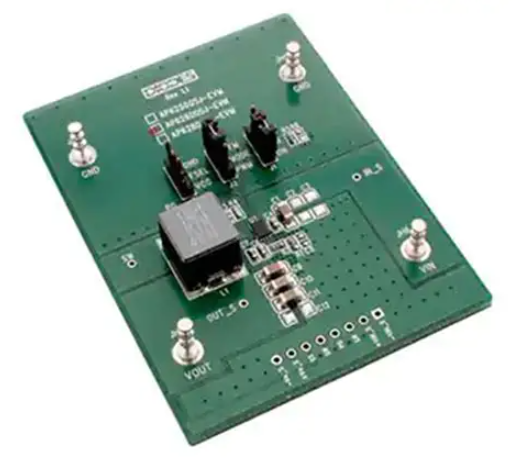
The first pillar of the TPSM82823SILR’s appeal lies in its integrated microsystem design. Unlike conventional DC/DC converters that require an external inductor, this module embeds a high-quality, low-DCR inductor inside a 2.8mm × 2.8mm × 1.4mm QFN package. This integration yields three immediate benefits:
- Reduced PCB footprint: The total solution size is less than 15mm², including input/output capacitors. For space-constrained applications like hearing aids, smart earbuds, or continuous glucose monitors, this is a game-changer.
- Predictable EMI performance: Because the inductor is fixed and the switching loop is minimized, the parasitic inductance and capacitance are tightly controlled. The module’s spread-spectrum clocking further reduces peak radiated emissions, making it easier to pass CISPR 25 or IEC 61000-4-6 compliance tests without extensive shielding.
- Simplified thermal management: The exposed thermal pad and the inductor’s proximity to the package base allow heat to dissipate efficiently into the PCB copper plane. In a typical 3.3V-to-1.8V conversion at 3A, the case temperature rise is only about 35°C at 25°C ambient, which is remarkable for such a small device.
Moreover, the TPSM82823SILR operates at a fixed 2.25MHz switching frequency, which keeps noise above the AM radio band and allows the use of tiny, low-cost ceramic capacitors. The internal compensation network means no external loop-tuning components are required—a boon for engineers who want to reduce BOM count and design review cycles. The module also supports 100% duty-cycle low-dropout operation, enabling the output voltage to track the input voltage closely when the battery is nearly depleted, which is critical for extending runtime in single-cell Li-ion applications.
From a control perspective, the device uses a DCS-Control (Direct Current Signal Control) topology. This proprietary architecture combines the advantages of voltage-mode and current-mode control, delivering excellent transient response with minimal output capacitance. For example, a 1.5A load step from 0.5A to 2A yields a voltage deviation of only ±25mV with a recovery time of 15µs. This level of dynamic performance is essential for powering FPGAs, application processors, or high-speed ADCs that demand tightly regulated rails.
Part 2: Application Scenarios – Where the TPSM82823SILR Excels
The versatility of the TPSM82823SILR makes it a universal building block across multiple industries. Let’s examine three representative use cases that highlight its strengths.
1. Battery-Powered Wearable Medical Devices
In wearable ECG monitors or insulin pumps, power efficiency is directly correlated with patient convenience. The TPSM82823SILR achieves a quiescent current of only 4µA in light-load operation, thanks to its automatic Power-Save Mode. When the system enters sleep mode, the module seamlessly transitions to pulse-frequency modulation (PFM), maintaining high efficiency down to 10µA loads. In a typical 100mAh battery scenario, this translates to a 20% longer operational life compared to a standard synchronous buck converter. Additionally, the module’s output discharge function ensures that the rail is fully discharged when disabled, preventing undefined states in sensitive analog front-ends.
2. Industrial Sensor Nodes and Smart Transmitters
Industrial environments often expose electronics to wide temperature ranges and voltage transients. The TPSM82823SILR is rated for -40°C to +125°C operation, and its input voltage range of 2.4V to 5.5V covers both 3.3V and 5V industrial rails. In a 4-20mA loop-powered transmitter, the module can step down from a 24V loop supply (via a pre-regulator) to a clean 3.3V rail for the microcontroller and sensor bridge. The integrated soft-start (with a default ramp time of 250µs) prevents inrush current spikes that could otherwise trip upstream protection circuits. Furthermore, the module’s power-good output simplifies sequencing with other rails, such as an op-amp supply or a reference voltage, ensuring proper power-up and power-down ordering.
3. Optical Modules and High-Speed Data Communications
In 100G/400G optical transceivers, the laser driver and DSP require ultra-low-noise supply rails to maintain signal integrity. The TPSM82823SILR offers an output voltage noise of just 15µVrms (10Hz to 100kHz), which is comparable to low-dropout regulators but with much higher efficiency. The module’s spread-spectrum feature also helps avoid beating with the high-frequency clock signals on the PCB. Designers can place the module directly adjacent to the laser driver, minimizing the distance between the power source and the load. This proximity reduces the IR drop and parasitic inductance, which is crucial for maintaining a clean 1.0V or 1.2V rail under fast load transients.
For all these applications, ICGOODFIND serves as a reliable sourcing partner. The platform provides real-time inventory visibility, manufacturer-direct datasheets, and cross-reference tools that help engineers verify the TPSM82823SILR’s compatibility with their existing layouts. Moreover, ICGOODFIND’s global logistics network ensures that even small-quantity prototypes can be delivered within days, accelerating the iterative design cycle.
Part 3: Design Integration and Practical Considerations
While the TPSM82823SILR simplifies power design, a few best practices can maximize its performance. First, input and output capacitor selection is critical. TI recommends a 10µF (X5R or X7R, 0603 size) input capacitor and a 22µF output capacitor for optimal transient response. Placing these capacitors within 2mm of the module’s pins is essential to minimize high-frequency loop inductance. The datasheet provides a detailed layout example, and following it closely will yield the best EMI and thermal results.
Second, the enable (EN) pin offers flexible power sequencing. By connecting a resistor divider from the input rail to the EN pin, you can set a precise undervoltage lockout (UVLO) threshold. For example, to prevent the module from operating below 3.0V in a 3.7V Li-ion system, choose R1=100kΩ and R2=180kΩ. This feature protects the battery from deep discharge and ensures the downstream logic operates only when the input is stable.
Third, the PG (Power Good) pin is an open-drain output that requires a pull-up resistor (typically 100kΩ) to the output rail or a separate logic rail. This signal can be used to reset a microcontroller or to enable a subsequent power stage. In multi-rail systems, cascading the PG output of the TPSM82823SILR to the EN input of a larger buck converter creates a robust, deterministic power-up sequence without additional supervisory ICs.
Finally, thermal design should not be overlooked. Although the module is efficient (up to 95% peak), the power dissipation at maximum load is about 0.5W. The recommended PCB footprint includes a 3×3 array of thermal vias (0.3mm diameter) under the exposed pad. These vias connect to an internal ground plane that acts as a heat spreader. In a typical 4-layer board with 1oz copper, the junction-to-ambient thermal resistance (θJA) is approximately 45°C/W, which is excellent for a module of this size. If the ambient temperature is 85°C, the junction temperature stays below 110°C, well within the safe operating area.
Conclusion
The TPSM82823SILR represents a paradigm shift in how engineers approach low-power, space-constrained designs. By integrating the inductor, control loop, and protection features into a single, tiny package, it eliminates the most error-prone aspects of discrete power supply design. Its 4µA quiescent current, 2.25MHz fixed frequency, and DCS-Control architecture deliver a rare combination of efficiency, low noise, and fast transient response. Whether you are designing a wearable health monitor, an industrial sensor, or a high-speed optical transceiver, this module offers a proven, production-ready solution that reduces time-to-market and improves system reliability.
For procurement and engineering teams alike, leveraging ICGOODFIND to source the TPSM82823SILR ensures access to genuine, fully traceable components with competitive pricing and rapid delivery. As the industry continues to push toward miniaturization and energy efficiency, the TPSM82823SILR stands out as a cornerstone component that empowers innovation without compromise. Embrace the integration, simplify your power tree, and let this remarkable module handle the heavy lifting.