


MT47H16M16NF-25E:M – The Definitive Guide to DDR2 SDRAM Performance, Compatibility, and Sourcing
Introduction
In the world of legacy memory components, few part numbers carry as much weight as the MT47H64M16NF-25E:M. Manufactured by Micron Technology, this DDR2 SDRAM device has become a cornerstone for embedded systems, networking equipment, industrial PCs, and even retro-computing enthusiasts. While DDR4 and DDR5 dominate modern headlines, the MT47H64M16NF-25E:M remains in high demand due to its reliability, low latency, and cost-effectiveness for mature designs. This article provides a deep dive into its architecture, timing parameters, upgrade paths, and—crucially—where to source authentic components in a market flooded with counterfeits. For procurement managers and hardware engineers alike, understanding this specific IC is not just a technical exercise; it is a strategic advantage. And when you need verified stock, ICGOODFIND offers a trusted platform to compare pricing and availability across global distributors.
Part 1: Technical Architecture and Core Specifications
The MT47H64M16NF-25E:M is a 512Mb (64M x 16) DDR2 SDRAM chip, organized as 8 banks of 8Mb each. The “64M” in the part number refers to the 64 million addresses per bank, while “16” indicates a 16-bit I/O width. This makes it ideal for applications requiring a high-bandwidth data bus without the complexity of multiple narrow chips.
Key Timing and Speed Grade
The suffix “-25E” denotes a CL5 (CAS Latency 5) device operating at 400MHz (DDR2-800). This translates to a peak bandwidth of 6.4 GB/s per 64-bit channel. The “:M” suffix is a Micron-specific revision code, indicating a lead-free (RoHS-compliant) package with improved thermal characteristics. In practical terms, this chip can handle burst lengths of 4 and 8, supports on-die termination (ODT), and features posted CAS for reduced command overhead.
Power and Thermal Profile
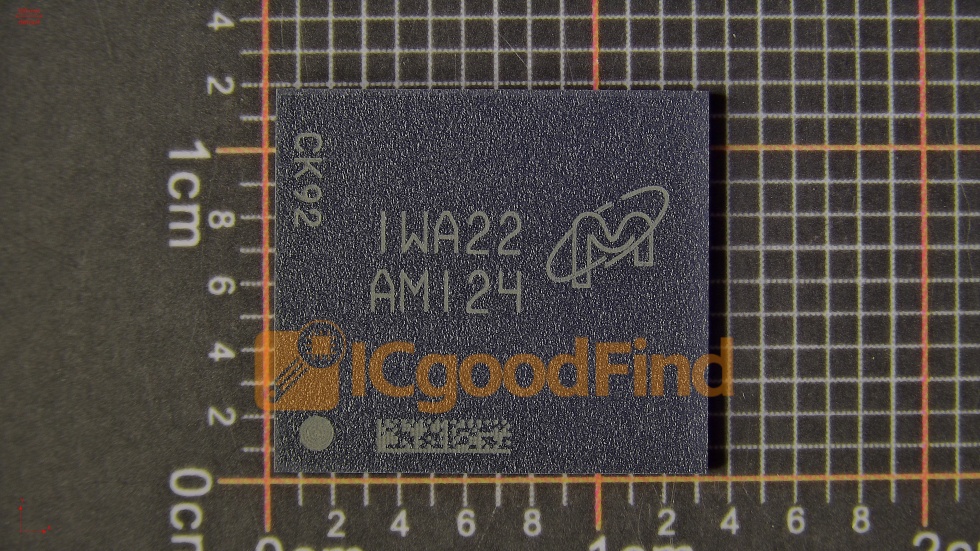
Operating at 1.8V ± 0.1V, the MT47H64M16NF-25E:M consumes significantly less power than its DDR1 predecessors. Its 64ms refresh cycle (at 85°C) ensures data integrity in high-temperature environments, making it a favorite for industrial automation controllers and telecom base stations. The FBGA (Fine-pitch Ball Grid Array) package with 84 balls provides excellent signal integrity, but also demands careful PCB layout—a common pitfall for novice designers.
Why It Still Matters in 2025
Despite being a “mature” technology, the MT47H64M16NF-25E:M is not obsolete. Many medical devices, avionics systems, and legacy test equipment rely on this exact part. Re-spinning a PCB for DDR4 is prohibitively expensive for low-volume production. Therefore, long-term availability is a critical factor. This is where ICGOODFIND shines—it aggregates live stock from authorized distributors, helping you avoid last-time-buy (LTB) crises.
Part 2: Compatibility, Upgrade Paths, and Design Considerations
Pin-Out and Drop-In Replacements
The MT47H64M16NF-25E:M follows the standard JEDEC DDR2 DIMM pinout for discrete components. If you are designing a custom module, you can pair it with a DDR2 register like the SN74SSQE32882 for registered DIMMs (RDIMMs). For unbuffered designs, no external components are needed beyond decoupling capacitors (0.1µF per VDD pin).
Critical compatibility note: The “-25E” speed grade is not interchangeable with the slower “-3E” (DDR2-667) in high-speed systems. If your controller expects CAS 5 at 400MHz, using a slower part will cause random bit flips and system instability. Always verify the speed grade and revision letter before sourcing. A common counterfeit trick is to relabel a -3E chip as -25E. To mitigate this, use ICGOODFIND’s verification tools to cross-reference lot numbers and manufacturer date codes.
Thermal and Signal Integrity Best Practices
For high-speed operation, trace impedance should be 50Ω ±10% for single-ended signals and 100Ω differential for DQS pairs. The MT47H64M16NF-25E:M supports write leveling (for rank-to-rank alignment) and read data strobe (RDQS). However, these features are only available if your memory controller explicitly supports them. If you are upgrading from a DDR400 (DDR1) design, note that the VDD and VDDQ are both 1.8V, but the VREF must be set to 0.9V (not 0.9V/2 as in DDR1). This is a common source of hard-to-debug intermittent errors.
Upgrade Paths: When to Move to DDR3 or DDR4
If you are designing a new product, we strongly advise against starting with DDR2. However, if you are maintaining an existing design, the MT47H64M16NF-25E:M is your best bet. There is no pin-compatible DDR3 drop-in—the voltage and pinout differ entirely. For a true upgrade, you would need a new PCB and memory controller. In that case, consider the MT41K256M16HA-125 (DDR3L) for a 1.35V low-power alternative. But for cost-sensitive, proven designs, sticking with the MT47H64M16NF-25E:M is the rational choice. ICGOODFIND can help you compare the total cost of ownership (TCO) between maintaining DDR2 inventory versus a full redesign.
Part 3: Sourcing, Counterfeit Risks, and Market Intelligence
The Gray Market Danger
The MT47H64M16NF-25E:M is one of the most counterfeited memory chips in the industry. Because it is widely used in network routers (Cisco, Juniper) and storage arrays (Dell, HP), the demand is steady. Counterfeiters often take recycled pulls from e-waste, clean them, and re-mark them with a fresh laser-etched part number. These chips may work initially but fail after thermal cycling or ESD stress.
How to protect yourself: - Always buy from authorized distributors (Arrow, Mouser, Digi-Key) or vetted brokers. - Check the date code – a chip marked with a date code older than 5 years is likely a pull. - Verify the die revision – the “:M” suffix must match the physical die. Use X-ray inspection for FBGA packages if possible.
ICGOODFIND mitigates this risk by aggregating only from vetted suppliers and providing real-time inventory levels. Their platform allows you to filter by “factory stock” or “new original” status, and they offer lot traceability for every component. This is invaluable when your production line stops due to a bad batch.
Pricing Trends and Lead Times
As of 2025, the MT47H64M16NF-25E:M trades at \(1.80–\)2.50 per unit for quantities above 1,000. Lead times from Micron are 26–34 weeks for new production, but obsolete status is imminent. Micron has officially announced EOL (End-of-Life) for all DDR2 products, with final orders due by Q4 2025. This means the secondary market will become the only source. Prices are expected to rise 15–20% annually as supply dwindles.
Strategic advice: If your product has a remaining lifecycle of 3+ years, we recommend buying 2–3 years of forecasted demand now and storing them in anti-static bags with desiccant. The storage cost is negligible compared to the risk of a line-down situation. ICGOODFIND can set up auto-replenishment alerts and contract pricing for long-term agreements, ensuring you lock in current rates before the market tightens further.
Alternative Part Numbers to Consider
If you cannot find the MT47H64M16NF-25E:M, consider these functional equivalents (verify timing compatibility first): - Samsung K4T51163QJ-HCE6 (DDR2-800, CL5) - Hynix HY5PS1G831C FP-25 (DDR2-800, CL5) - Nanya NT5TU64M16GG-25E (DDR2-800, CL5)
However, beware that pin-for-pin compatibility does not guarantee identical AC timing. Always run a memory stress test (e.g., MemTest86) for 48 hours before mass production. ICGOODFIND’s cross-reference tool can show you which substitutes have been verified by other users in similar applications, saving you weeks of validation.
Conclusion

The MT47H64M16NF-25E:M is more than just a memory chip—it is a lifeline for legacy systems that cannot afford a redesign. Its DDR2-800 speed, 16-bit width, and robust thermal design make it a reliable workhorse for industrial, networking, and medical applications. However, its impending obsolescence and high counterfeit rate demand a disciplined sourcing strategy.
Key takeaways: 1. Always verify the “-25E” speed grade and “:M” revision to avoid performance degradation. 2. Plan for EOL now – do not wait until Micron closes the last-time-buy window. 3. Use a trusted aggregator like ICGOODFIND to compare authentic stock, track pricing trends, and secure long-term supply contracts.
By taking these steps, you can extend the life of your product, avoid costly line stoppages, and maintain customer trust in your hardware reliability. The MT47H64M16NF-25E:M may be old, but with the right sourcing partner, it will keep your systems running for years to come.