



MT41K256M16TW-107: The Definitive Guide to This High-Performance DDR3 SDRAM
Introduction
In the ever-evolving landscape of computer memory, few components have demonstrated the staying power and reliability of DDR3 SDRAM. Among the vast array of memory chips available on the market, the MT41K256M16TW-107 stands out as a particularly robust and versatile option. Manufactured by Micron Technology, one of the world’s leading memory and storage solution providers, this specific part number represents a 256M x 16 DDR3 SDRAM module that operates at a speed grade of DDR3-1066 (7-7-7). Whether you are upgrading an older laptop, repairing industrial embedded systems, or sourcing components for a custom electronics project, understanding the technical nuances, compatibility, and performance characteristics of the MT41K256M16TW-107 is essential.
This article serves as a comprehensive guide, breaking down the architecture, performance metrics, and practical applications of this memory chip. We will also highlight how platforms like ICGOODFIND can simplify your sourcing process for such specific components, ensuring you get authentic, tested parts at competitive prices. By the end, you will have a clear picture of whether this chip fits your needs and how to integrate it effectively.
Part 1: Technical Architecture and Core Specifications
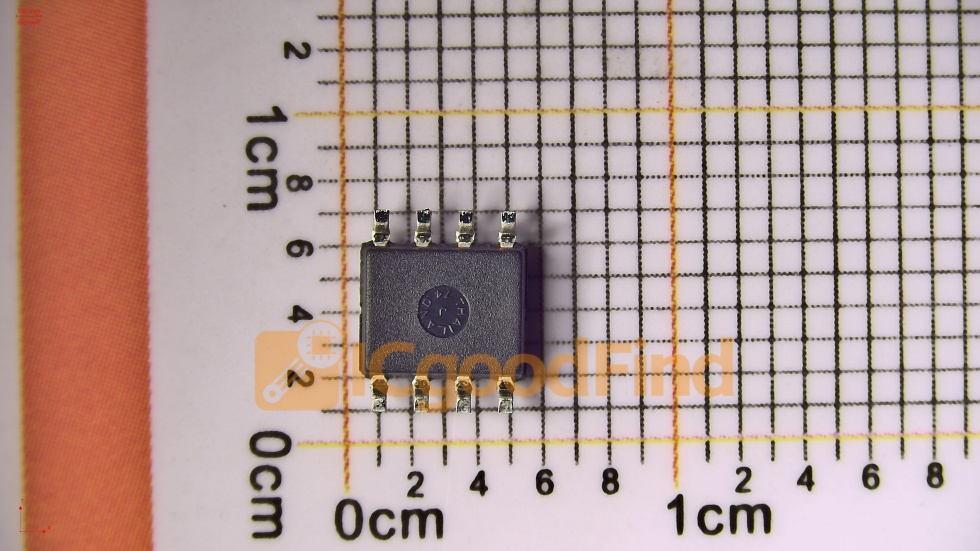
1.1 Understanding the Part Number
The part number MT41K256M16TW-107 is not a random string of characters; it is a systematic code that reveals the chip’s core identity. Let’s break it down:
- MT: Indicates the manufacturer, Micron Technology.
- 41: Denotes the product family – in this case, DDR3 SDRAM.
- K: Specifies the voltage and thermal profile. Here, “K” typically refers to a 1.35V low-voltage variant (though it can also operate at standard 1.5V), which is crucial for energy-efficient designs.
- 256M16: This is the core density and organization. It means the chip has a total density of 4 Gigabits (Gb) , organized as 256 Megabits (Mb) x 16 I/O. The “x16” indicates a 16-bit data bus width, making it ideal for applications requiring high bandwidth per chip.
- TW: This refers to the package type – a 78-ball FBGA (Fine-Pitch Ball Grid Array) package, which is standard for DDR3. The “T” often indicates a specific lead-free and halogen-free composition.
- -107: This is the speed grade. In Micron’s nomenclature, -107 corresponds to a tCK (clock cycle time) of 1.07 nanoseconds, which translates to a maximum clock frequency of 933 MHz. However, due to DDR (Double Data Rate) technology, the effective data rate is 1866 MT/s (Megatransfers per second). Wait – let’s clarify: The “-107” is often associated with DDR3-1066 (PC3-8500) in older datasheets, but in modern revisions, it can support up to DDR3-1866 with tighter timings. For the MT41K256M16TW-107 specifically, the standard JEDEC speed is DDR3-1066 with timings of CL7 (CAS Latency 7) . However, many of these chips are overprovisioned and can run at higher speeds like DDR3-1333 or even DDR3-1600 with relaxed timings.
1.2 Key Electrical and Physical Characteristics
- Supply Voltage: The chip supports VDD = 1.5V ± 0.075V (standard) and VDDQ = 1.5V. The “K” designation also allows operation at 1.35V (DDR3L) , making it backward compatible with low-power systems.
- I/O Interface: SSTL-15 (Stub Series Terminated Logic) for 1.5V operation.
- Refresh Rate: Standard 7.8 µs (8192 cycles) at 85°C, extending to 3.9 µs at higher temperatures (up to 95°C for extended temperature range variants).
- Burst Length: Supports 8 (BL8) and 4 (BL4) with a burst chop option.
- On-Die Termination (ODT) : Integrated, with multiple settings for improved signal integrity.
- Operating Temperature: Commercial range (0°C to +95°C Tc) and industrial range (-40°C to +95°C) available, though the standard “TW” package is typically commercial.
1.3 Why the x16 Organization Matters
The x16 organization (16-bit data bus) is a significant advantage in specific use cases. Compared to x8 or x4 chips, a x16 chip can deliver the same total bandwidth with fewer physical chips. For example, a 64-bit memory channel requires only 4 x16 chips (4 x 16 = 64 bits) to populate a single rank, whereas x8 chips would require 8. This reduces PCB space, power consumption, and overall system cost. This makes the MT41K256M16TW-107 particularly popular in laptops, all-in-one PCs, networking equipment, and embedded systems where board space is at a premium.
Part 2: Performance, Compatibility, and Real-World Applications
2.1 Performance Benchmarks and Timing Analysis
The MT41K256M16TW-107 is officially rated for DDR3-1066 operation with CL7. However, in practice, many of these chips are highly overclockable. Enthusiasts and system integrators have successfully run them at DDR3-1333 (CL9) and even DDR3-1600 (CL11) with a slight voltage bump to 1.5V. The key timing parameters are:
- tRCD (RAS to CAS Delay) : 7.5 ns (at 1066 MT/s)
- tRP (Row Precharge Time) : 7.5 ns
- tRAS (Active to Precharge Delay) : 30 ns
- tRFC (Refresh Cycle Time) : 110 ns (typical)
For most applications, the difference between DDR3-1066 and DDR3-1600 is negligible in real-world tasks like web browsing or office productivity. However, for integrated graphics (iGPU) systems (e.g., AMD APUs or Intel Clarkdale), higher memory bandwidth directly translates to better frame rates and smoother video playback. If you are using this chip in a system that supports memory overclocking, you can squeeze out a 15-20% performance improvement by adjusting the base clock and timings.
2.2 Compatibility: Where Can You Use This Chip?
This is where the MT41K256M16TW-107 truly shines. Because it is a standard JEDEC-compliant DDR3 chip, it is compatible with a wide range of platforms:
- Laptop Upgrades: Many older laptops (e.g., Lenovo ThinkPad T420/T430, Dell Latitude E6420, HP ProBook 6460b) use SO-DIMM modules built from x16 chips. If you are building a custom SO-DIMM or replacing a faulty chip on a module, this part works perfectly.
- Industrial PCs and Embedded Systems: The -107 speed grade is conservative, ensuring stable operation in harsh environments. It is commonly found in medical devices, point-of-sale terminals, and factory automation controllers.
- Networking Hardware: Enterprise switches, routers, and firewalls (e.g., Cisco, Juniper) often use x16 DDR3 for their packet buffers and control plane memory.
- Gaming Consoles and Set-Top Boxes: The Xbox 360 S and PS3 Slim use similar x16 DDR3 chips. While the exact part number may differ, the MT41K256M16TW-107 is a drop-in replacement for many service repairs.
Important Note: This chip is not compatible with DDR3L-only systems that strictly require 1.35V operation, unless the system supports dual-voltage (1.5V/1.35V) via a level shifter. Always check your motherboard’s memory voltage support before installation.
2.3 Thermal Management and Reliability
One of the standout features of Micron’s DDR3 lineup is the advanced thermal sensing capability. The MT41K256M16TW-107 includes an on-die thermal sensor (accessible via the SMBus) that allows the system to monitor the chip’s temperature in real-time. This is critical for high-density server blades and fanless industrial PCs where airflow is limited. The chip is rated for a Tc (case temperature) of up to 95°C without requiring a reduction in refresh rate, provided the system implements the appropriate tREFI adjustments.
For long-term reliability, Micron uses copper interconnect technology and lead-free solder balls, ensuring resistance to electromigration and tin whisker growth. The FBGA package also offers superior thermal conductivity compared to older TSOP packages, allowing heat to dissipate more efficiently through the PCB.
Part 3: Sourcing, Quality Assurance, and the ICGOODFIND Advantage
3.1 The Challenge of Sourcing Legacy Memory Chips
As DDR4 and DDR5 become the mainstream, DDR3 chips are increasingly being discontinued by major manufacturers. Micron itself has announced end-of-life (EOL) for many DDR3 products, making the MT41K256M16TW-107 a scarce commodity. This scarcity creates a fertile ground for counterfeit or substandard parts flooding the market. When sourcing this chip, you must consider:
- Counterfeit Risk: Fake chips may be re-marked from lower-speed bins or even from different manufacturers.
- Moisture Sensitivity Level (MSL) : The FBGA package has an MSL rating of 3, meaning it must be baked before reflow soldering if exposed to ambient humidity for more than 168 hours.
- Date Codes and Traceability: Original Micron chips have clear laser-marked date codes and a unique die revision identifier.
3.2 How ICGOODFIND Ensures Authenticity and Quality
This is where ICGOODFIND becomes an invaluable resource. As a specialized electronic components search engine and sourcing platform, ICGOODFIND aggregates inventory from authorized distributors, independent stockists, and vetted brokers worldwide. Here’s how it helps you secure genuine MT41K256M16TW-107 chips:
- Real-Time Inventory Aggregation: Instead of manually checking 20 different distributor websites, you can search for MT41K256M16TW-107 on ICGOODFIND and instantly see available stock, pricing, and lead times from multiple sources.
- Supplier Vetting and Ratings: ICGOODFIND provides transaction history and user reviews for each supplier, helping you avoid untrustworthy sellers. You can filter for suppliers who offer X-ray inspection, decapsulation, and electrical testing.
- Cross-Reference and Substitutes: If the exact part is out of stock, ICGOODFIND’s algorithm suggests pin-to-pin compatible alternatives (e.g., MT41K256M16HA-107 or Samsung K4B4G1646E-BYMA), saving you weeks of redesign work.
- BOM (Bill of Materials) Management: For production runs, ICGOODFIND allows you to upload your entire BOM and receive consolidated quotes, ensuring you get the best bulk pricing for the MT41K256M16TW-107 and other components.
3.3 Practical Tips for Purchasing and Handling
When you find a good deal on ICGOODFIND, keep these best practices in mind:
- Request the Datasheet: Always ask the supplier for the original Micron datasheet (Rev. J or later) to verify the speed grade and package dimensions.
- Check the Lot Date Code: Chips manufactured after 2015 are more likely to be from a mature process node with fewer infant mortality failures.
- Buy Extra Units: For prototyping, purchase 5-10% extra to account for soldering defects or ESD damage during handling.
- Storage Conditions: Store the chips in anti-static bags with a desiccant pack and a humidity indicator card to maintain MSL compliance.
Conclusion
The MT41K256M16TW-107 is more than just a legacy memory chip; it is a reliable workhorse that continues to power millions of devices worldwide. Its x16 organization, low-voltage capability, and robust thermal design make it an ideal choice for space-constrained and power-sensitive applications. While DDR3 is no longer at the cutting edge, the sheer volume of deployed systems ensures a sustained demand for this specific part number.
For engineers, procurement specialists, and hobbyists alike, the key to a successful project lies in sourcing authentic components. This is where ICGOODFIND bridges the gap between scarcity and accessibility. By leveraging its global supplier network and rigorous verification tools, you can confidently purchase the MT41K256M16TW-107 without fear of counterfeits or inflated prices.
In summary, whether you are repairing a classic ThinkPad, designing a custom industrial controller, or simply stocking up on spare parts, the MT41K256M16TW-107 offers a proven balance of performance, efficiency, and longevity. Pair it with a smart sourcing strategy via ICGOODFIND, and you have a winning combination for any DDR3-based project.







