





MT25QL512ABB8ESF-0SIT: The High-Density NOR Flash Solution for Next-Generation Embedded Systems
Introduction
In the rapidly evolving landscape of embedded memory, the demand for high-capacity, reliable, and fast NOR flash has never been greater. From automotive advanced driver-assistance systems (ADAS) to industrial IoT gateways and 5G networking equipment, designers are constantly seeking a memory solution that balances density, performance, and longevity. The MT25QL512ABB8ESF-0SIT, manufactured by Micron Technology, stands out as a flagship 512Mb (64MB) SPI NOR flash device that delivers exceptional read throughput, robust data retention, and a compact footprint. This article provides a comprehensive technical deep-dive into this specific part number, exploring its architecture, performance metrics, application scenarios, and why it remains a preferred choice among hardware engineers. For sourcing this exact component with verified traceability and competitive lead times, ICGOODFIND offers a reliable global supply chain platform that connects buyers with authorized distributors and vetted stock.
Part 1: Technical Architecture and Core Specifications
The MT25QL512ABB8ESF-0SIT belongs to Micron’s industry-standard MT25Q family, designed specifically for code-shadowing, execute-in-place (XIP), and data logging in high-reliability systems. Let’s break down its key technical attributes.
1.1 Density and Interface
- Memory Density: 512Mb (64MB) organized as 64M x 8 bits.
- Interface: Standard SPI (Serial Peripheral Interface) with support for Single, Dual, Quad, and Quad I/O modes. This flexibility allows designers to trade off pin count against throughput.
- Command Set: Fully backward-compatible with legacy SPI commands, while also supporting extended commands for high-performance modes.
1.2 Clock Speed and Throughput
- Maximum Clock Frequency: 133 MHz for all read operations.
- Quad I/O Read Throughput: With the 133MHz clock and Quad I/O (4-bit data bus), the device achieves a peak sustained read bandwidth of 532 Mbps (66.5 MB/s). This is critical for fast boot times in automotive infotainment and real-time industrial control.
- Read Modes: Supports Fast Read, Dual Output, Quad Output, and Quad I/O with “Continuous Read” (wrap-around) to eliminate dummy cycles for sequential data streaming.
1.3 Power Supply and Temperature Range
- Operating Voltage: 2.7V to 3.6V single supply, making it compatible with common 3.3V logic systems.
- Temperature Grade: The “SIT” suffix denotes an industrial temperature range of -40°C to +85°C. This is essential for outdoor, automotive (non-engine bay), and factory floor environments where thermal extremes are common.
1.4 Package and Pinout
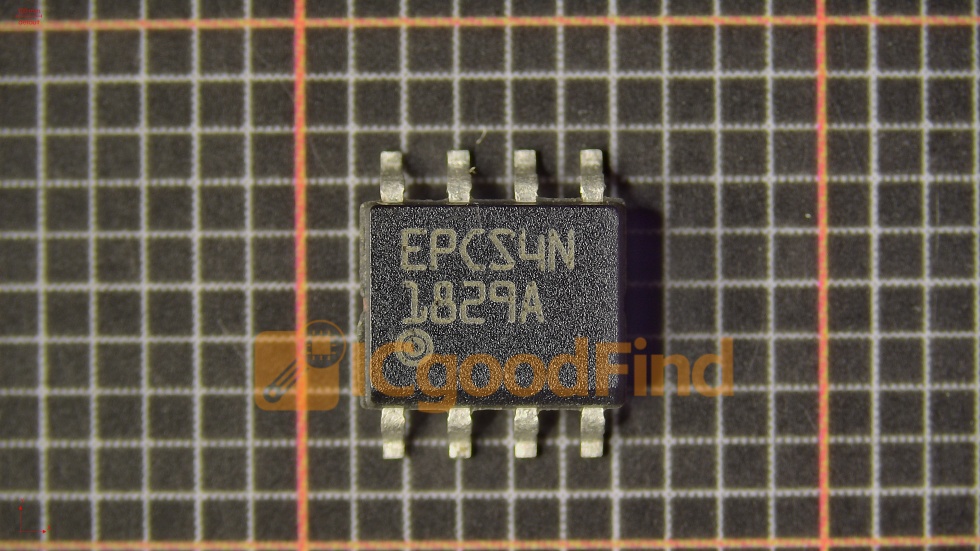
- Package Type: The “ESF” designator refers to a 16-pin SOP (SOIC-16) package with a 300-mil body width. This is a widely used, industry-standard footprint that simplifies PCB layout and allows drop-in replacement with other vendors’ 512Mb SPI NOR parts.
- Pin Compatibility: Standard pins for /CS, CLK, DI (IO0), DO (IO1), /WP (IO2), /HOLD (IO3), plus power and ground. The package also includes a /RESET pin for hardware reset functionality, which is crucial for recovery from unexpected software hangs.
1.5 Endurance and Data Retention
- Program/Erase Endurance: Rated for 100,000 program/erase cycles per sector – a robust figure for frequent OTA (over-the-air) firmware updates.
- Data Retention: Guaranteed 20 years of data retention at 85°C (or 100 years at 55°C). This makes the device suitable for long-lifecycle deployments in medical devices and smart grid meters.
Part 2: Performance Optimization and Advanced Features
Beyond raw specifications, the MT25QL512ABB8ESF-0SIT incorporates several advanced features that significantly enhance system-level performance and design flexibility.
2.1 Execute-in-Place (XIP) and Memory Mapping
One of the primary use cases for this NOR flash is XIP, where the CPU executes code directly from the flash without copying it to RAM first. The device supports 256-byte and 4KB sub-sector erase in addition to standard 64KB sector erase. This granularity allows developers to update small bootloader patches without erasing large blocks, reducing write latency and wear. The “Continuous Read” mode further reduces overhead by allowing the host to issue a single command and then stream data indefinitely, which is ideal for high-frame-rate graphical assets in HMI displays.
2.2 Advanced Security and Protection
- Non-Volatile Configuration Register (NVCR): Allows permanent locking of memory regions to prevent accidental overwrites – a critical feature for boot code integrity.
- Volatile and Non-Volatile Status Registers: Provide real-time control over write protection (WP#) and hold (HOLD#) functions.
- One-Time Programmable (OTP) Area: A dedicated 512-byte OTP region for storing unique device serial numbers, MAC addresses, or cryptographic keys. This eliminates the need for a separate EEPROM.
2.3 Deep Power-Down and Standby Current
For battery-powered IoT sensors, power consumption is paramount. The MT25QL512ABB8ESF-0SIT offers: - Deep Power-Down (DPD) mode: Current drops to 2 µA (typical) – a 99% reduction from standby. - Standby Current: 25 µA (typical) at 3.3V. - Active Read Current: 25 mA (typical) at 133MHz Quad I/O – a reasonable trade-off for the high throughput.
2.4 JEDEC SFDP Compliance
The device includes a Serial Flash Discoverable Parameters (SFDP) table, compliant with JEDEC JESD216B. This allows host firmware to automatically detect the flash’s capacity, timing, and instruction set, simplifying software portability across different flash vendors. For system integrators, this means faster bring-up time and reduced firmware maintenance.
2.5 Software Reset and Wrapper Commands
A dedicated software reset command (66h/99h) restores the device to a known state without cycling power. This is particularly useful in multi-drop SPI buses where one device may hang due to noise. Additionally, the “Read ID” command returns a 20-byte unique ID, enabling robust inventory tracking and counterfeit prevention – a key concern when sourcing from non-authorized channels. ICGOODFIND mitigates this risk by offering only parts with full manufacturer traceability and datasheet verification.
Part 3: Application Scenarios and Design Considerations
The combination of high density, industrial temperature range, and fast read speed makes the MT25QL512ABB8ESF-0SIT a versatile choice across multiple verticals.
3.1 Automotive Electronics (Body Control & Infotainment)
In modern vehicles, the flash stores not only the bootloader but also calibration maps, UI assets, and event data recorders. The -40°C to +85°C range covers under-dash and cabin environments. The 100K endurance supports frequent map updates and over-the-air (OTA) patches. The Quad I/O 133MHz mode ensures that the infotainment system boots in under 2 seconds, meeting user expectations for instant-on experience.
3.2 Industrial IoT and Edge Computing Gateways
Industrial gateways often run Linux or RTOS from NOR flash. The MT25QL512ABB8ESF-0SIT provides enough capacity for a compressed kernel (approx. 8-16MB) plus a read-only root filesystem (approx. 32MB), leaving room for logs and configuration. The 4KB sub-sector erase is ideal for frequently updated configuration files, reducing write amplification. The DPD mode allows the gateway to enter ultra-low-power sleep states between polling intervals, extending battery life in remote monitoring stations.
3.3 Networking and Telecom Infrastructure
Routers, switches, and small-cell base stations require fast boot from flash to minimize service disruption after a power outage. The continuous read mode enables high-speed streaming of FPGA bitstreams or DSP firmware. The hardware reset pin provides a fail-safe mechanism for remote recovery – a critical feature for unattended base stations. Moreover, the 20-year retention ensures that firmware remains intact over the typical 10-15 year lifecycle of telecom equipment.
3.4 Design Considerations for Engineers
- Decoupling: Place a 100nF ceramic capacitor close to the VCC pin (pin 8) and a 10µF bulk capacitor on the power rail to handle peak currents during program/erase operations.
- PCB Layout: Keep the CLK trace as short as possible and avoid vias to minimize signal integrity issues at 133MHz. Use series termination resistors (22Ω-33Ω) on CLK and data lines if the trace length exceeds 2 inches.
- Write Protection: Tie the /WP pin to VCC through a 10kΩ pull-up resistor if write protection is not needed. For critical boot code, use the NVCR to set permanent protection on the first 64KB sector.
- Sourcing Authenticity: Given the popularity of this part, counterfeit devices are a real risk. Always purchase from authorized distributors or trusted aggregators. ICGOODFIND provides a searchable database of verified inventory from global suppliers, allowing you to compare pricing, lead times, and batch codes before committing to a purchase.
Conclusion
The MT25QL512ABB8ESF-0SIT is more than just a large NOR flash; it is a high-performance, security-aware, and power-optimized memory subsystem that addresses the toughest requirements of modern embedded design. Its 512Mb density, 133MHz Quad I/O throughput, industrial temperature tolerance, and 100K endurance make it an ideal choice for automotive, industrial, and networking applications where reliability is non-negotiable. The inclusion of SFDP, OTP, and deep power-down modes further elevates its utility, allowing engineers to reduce BOM complexity and accelerate time-to-market.
When integrating this component, pay close attention to PCB layout, power decoupling, and write-protection strategies to fully leverage its capabilities. And when sourcing, prioritize authenticity and supply-chain transparency. Platforms like ICGOODFIND simplify this process by offering real-time inventory checks, cross-referencing tools, and direct links to vetted distributors, ensuring that your production line never stalls due to counterfeit or out-of-stock components.
In a world where firmware complexity grows exponentially, having a dependable, high-density NOR flash like the MT25QL512ABB8ESF-0SIT is not a luxury – it is a strategic advantage.







