


LIS3DHTR: The Ultimate Guide to This High-Performance 3-Axis Accelerometer
Introduction
In the rapidly evolving world of microelectromechanical systems (MEMS), the LIS3DHTR stands out as a highly versatile, ultra-low-power 3-axis accelerometer manufactured by STMicroelectronics. Designed for a wide range of applications—from consumer electronics to industrial IoT—this sensor delivers exceptional accuracy, low noise, and flexible output data rates. Whether you are building a wearable fitness tracker, a vibration monitoring system, or a tilt-compensated compass, the LIS3DHTR offers a cost-effective and reliable solution. In this comprehensive guide, we will explore the key features, technical specifications, application scenarios, and integration tips for this popular MEMS accelerometer. For sourcing genuine components and comparing prices, ICGOODFIND is a trusted platform that provides verified inventory and datasheets for the LIS3DHTR and thousands of other electronic components.
Part 1: Key Features and Technical Specifications
1.1 Ultra-Low Power Consumption
One of the most compelling advantages of the LIS3DHTR is its power efficiency. Operating at just 2 µA in low-power mode and 11 µA in normal mode, this sensor is ideal for battery-powered devices. It also features a power-down mode that reduces current consumption to less than 1 µA, making it perfect for applications where energy conservation is critical, such as smartwatches, wireless sensors, and portable medical devices.
1.2 High-Resolution and Wide Measurement Range
The LIS3DHTR offers user-selectable full-scale ranges of ±2g, ±4g, ±8g, and ±16g, allowing designers to tailor sensitivity to their specific needs. With 16-bit data output, it provides fine resolution down to 1 mg per LSB in the ±2g range. This makes it suitable for both low-gravity applications (e.g., tilt sensing) and high-impact detection (e.g., shock monitoring). The sensor also integrates a low-pass filter to reduce high-frequency noise, ensuring clean and reliable data.
1.3 Embedded Features for Smart Sensing
Beyond basic acceleration measurement, the LIS3DHTR includes intelligent on-chip functions that offload processing from the main microcontroller: - Free-fall detection: Automatically triggers an interrupt when the device detects a free-fall condition. - Wake-up and sleep modes: The sensor can be configured to wake the system upon motion, saving power during idle periods. - 6D/4D orientation detection: Enables portrait/landscape switching in smartphones and tablets. - Click/double-click recognition: Useful for user interface interactions in wearables.
These features make the LIS3DHTR a smart sensor that reduces system complexity and power consumption.
1.4 I²C and SPI Digital Interfaces
The LIS3DHTR supports both I²C (up to 400 kHz) and SPI (up to 10 MHz) communication protocols, providing flexibility for integration with various microcontrollers. The I²C address is configurable (0x18 or 0x19), allowing two sensors to share the same bus. The SPI interface is ideal for high-speed data streaming, while I²C is preferred for simpler wiring in space-constrained designs.
1.5 Small Package and Robust Design
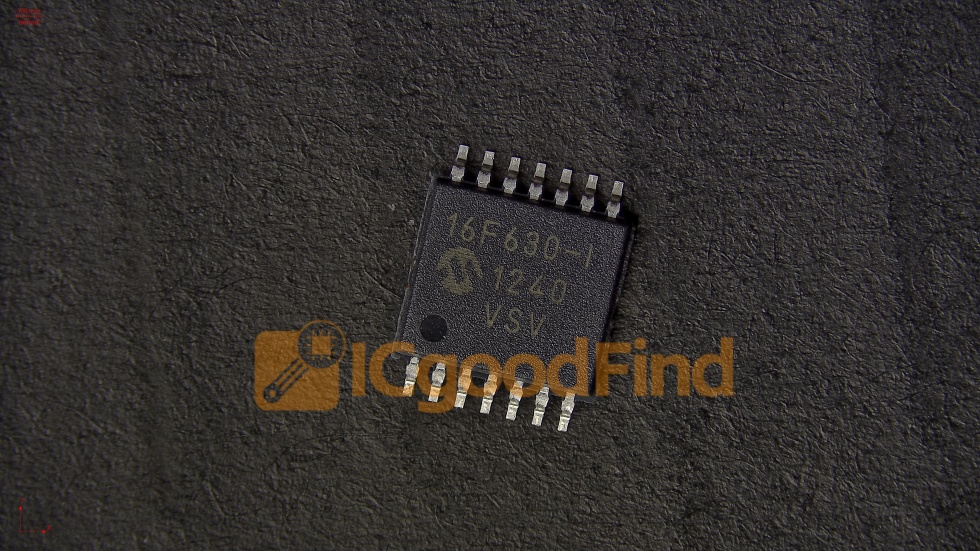
Housed in a compact 3x3x1 mm LGA-16 package, the LIS3DHTR is one of the smallest 3-axis accelerometers on the market. It operates over a wide temperature range of -40°C to +85°C and features embedded self-test capability to verify sensor functionality during production or field diagnostics. For sourcing this component with guaranteed authenticity, ICGOODFIND offers a verified supplier network and real-time stock availability.
Part 2: Application Scenarios and Use Cases
2.1 Wearable Technology and Fitness Trackers
The LIS3DHTR is a popular choice for wearable devices due to its low power consumption and small footprint. In fitness trackers, it can accurately measure step count, distance, and calorie burn using pedometer algorithms. Its free-fall detection is used in fall-detection systems for elderly care, while the 6D orientation feature enables automatic screen rotation in smartwatches. With ICGOODFIND, developers can quickly locate the LIS3DHTR at competitive prices, ensuring cost-effective prototyping and mass production.
2.2 Industrial Vibration Monitoring and Predictive Maintenance
In industrial environments, the LIS3DHTR’s wide dynamic range and high resolution make it suitable for vibration analysis on motors, pumps, and conveyor belts. By measuring acceleration in three axes, it can detect imbalance, misalignment, and bearing wear before they cause catastrophic failures. The sensor’s SPI interface allows for high-speed data acquisition, while its embedded FIFO buffer (32-level) reduces the need for constant microcontroller polling. For engineers sourcing components for industrial IoT projects, ICGOODFIND provides datasheets, application notes, and cross-reference tools to streamline the design process.
2.3 Smart Home and Consumer Electronics
From smart thermostats to gaming controllers, the LIS3DHTR enhances user experience through motion sensing. In smart home devices, it can detect door opening, vibration, or tilt for security systems. In remote controls, it enables gesture-based commands like shake-to-wake or flick-to-scroll. The sensor’s click detection is also used in smart pens and presentation clickers to register button presses without mechanical switches. For hobbyists and professionals alike, ICGOODFIND offers a user-friendly search engine to compare LIS3DHTR pricing across multiple distributors.
2.4 Automotive and Transportation
Although not an automotive-grade component, the LIS3DHTR is often used in aftermarket automotive applications such as GPS navigation systems (for dead reckoning), black boxes (for crash detection), and vehicle tilt alarms. Its ±16g range can capture high-impact events, while its low power consumption ensures long battery life in portable car diagnostic tools. For automotive designers seeking alternatives, ICGOODFIND lists equivalent parts and stock levels from authorized distributors.
2.5 Robotics and Drones
In quadcopters and robotic arms, the LIS3DHTR provides real-time orientation feedback for stabilization and navigation. Its high output data rate (up to 5.376 kHz) enables fast control loops, while the embedded FIFO reduces data loss during high-speed maneuvers. The sensor’s small size allows it to be mounted directly on drone flight controllers or robot joints without adding significant weight. For prototyping, ICGOODFIND helps engineers source small quantities or bulk orders with transparent pricing.
Part 3: Integration Tips and Best Practices
3.1 PCB Layout and Decoupling
To achieve optimal performance with the LIS3DHTR, careful PCB layout is essential: - Place decoupling capacitors (100 nF and 10 µF) as close as possible to the VDD and VDD_IO pins. - Avoid long traces for the I²C/SPI lines to minimize noise coupling. - Use a ground plane under the sensor to reduce electromagnetic interference. - Mount the sensor near the center of the PCB to avoid leverage effects that could introduce false acceleration readings.
3.2 Configuration and Calibration
The LIS3DHTR is highly configurable via its control registers. Key settings include: - ODR (Output Data Rate): Choose from 1 Hz to 5.376 kHz based on application needs. - Full-scale range: Select ±2g for tilt sensing, ±16g for shock detection. - Filter bandwidth: Enable the low-pass filter with cutoff frequencies from 1 Hz to 500 Hz. - Interrupt mapping: Route free-fall, wake-up, or click events to the INT1 or INT2 pins.
For precise measurements, offset calibration should be performed during device initialization. Many libraries (e.g., Arduino, STM32Cube) include built-in calibration routines. For verified reference designs, ICGOODFIND provides application notes and design files from STMicroelectronics.
3.3 Software Libraries and Code Examples
Most popular microcontroller platforms support the LIS3DHTR: - Arduino: Use the Adafruit_LIS3DH library for quick prototyping. - STM32: STMicroelectronics offers the STM32CubeMX configuration tool with driver code. - Raspberry Pi: Python bindings are available via the smbus or spidev libraries.
When writing custom drivers, pay attention to register read/write timing and FIFO management to avoid data overflow. For community-tested code snippets and troubleshooting, ICGOODFIND hosts a resource section with user-contributed examples.
3.4 Sourcing and Quality Assurance
Counterfeit MEMS sensors are a growing concern in the electronics industry. To ensure you receive genuine LIS3DHTR components: - Purchase from authorized distributors (e.g., Digi-Key, Mouser, Farnell). - Check the date code and packaging for consistency. - Use ICGOODFIND to compare prices and stock across multiple verified suppliers, and read user reviews to avoid unreliable sellers.
Conclusion

The LIS3DHTR is a powerful, low-power, and feature-rich 3-axis accelerometer that meets the demands of modern electronic designs. Its ultra-low power consumption, high resolution, and intelligent embedded functions make it suitable for everything from wearables to industrial IoT. By following the integration tips outlined in this guide—proper PCB layout, careful configuration, and reliable sourcing—you can unlock the full potential of this sensor in your next project.
For designers and procurement professionals, ICGOODFIND is an invaluable resource for sourcing the LIS3DHTR and other electronic components. With its real-time inventory, price comparison, and verified supplier network, ICGOODFIND simplifies the component search process and helps you make informed purchasing decisions. Whether you are prototyping a single unit or scaling to mass production, ICGOODFIND ensures you get the right part, at the right price, from the right source.