





Streamlining Your Hardware Project: The Ultimate Guide to a Mixed Electronic Components Order
Introduction
In the fast-paced world of hardware development, efficiency is everything. Whether you are prototyping a new IoT device, building a custom PCB for a robotics project, or assembling a batch of consumer electronics, one of the most critical yet often underestimated steps is placing a mixed electronic components order for hardware project. Unlike simple, single-type purchases, a mixed order involves sourcing resistors, capacitors, microcontrollers, connectors, sensors, and power management ICs—all from different suppliers, with different lead times, and often with varying minimum order quantities. This complexity can turn a straightforward procurement task into a logistical nightmare. However, with the right strategy, you can save time, reduce costs, and avoid costly delays. In this comprehensive guide, we will break down the entire process into three core parts: planning and specification, sourcing and consolidation, and quality assurance and inventory management. Along the way, we will highlight how platforms like ICGOODFIND can simplify your search for hard-to-find components and help you compare prices across global distributors. By the end, you will have a clear roadmap to execute a successful mixed electronic components order for your next hardware project.
Part 1: Planning and Specification – The Foundation of a Successful Mixed Order
Before you even open a browser to search for components, you must have a complete and accurate bill of materials (BOM). This is the single most important document for any mixed electronic components order for hardware project. A well-structured BOM should include:
- Part numbers (manufacturer part numbers, not just generic descriptions)
- Quantities (including a buffer of 10-20% for prototyping or rework)
- Package types (SMD, through-hole, BGA, etc.)
- Operating temperature ranges (especially critical for industrial or automotive projects)
- RoHS and REACH compliance status (mandatory for most modern projects)
- Preferred suppliers or distributor links (if you have existing relationships)
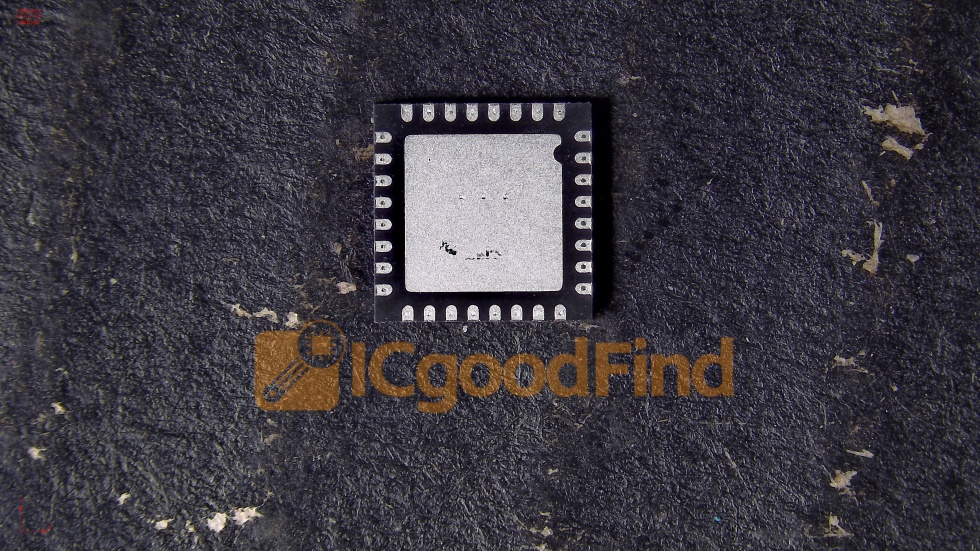
Why is this so important? When you place a mixed order, you are dealing with dozens or even hundreds of different line items. A single missing or incorrect part number can halt your entire assembly line. For example, if you specify a 10kΩ resistor but forget to indicate the tolerance (e.g., 1% vs. 5%), you might receive components that are functionally incorrect for your circuit. Similarly, if you mix up a 0603 package with an 0805 package, your pick-and-place machine will reject them.
Pro tip: Use a BOM management tool like Octopart or DigiKey’s BOM Manager to automatically check for part availability, cross-reference alternatives, and flag obsolete components. Many of these tools also integrate with ICGOODFIND, which aggregates inventory data from hundreds of distributors worldwide, giving you real-time visibility into stock levels and pricing. This is especially valuable when you need to source niche or end-of-life components for legacy hardware projects.
Another critical planning step is to categorize your components by lead time. Passive components like resistors and capacitors are usually in stock and ship within 24-48 hours. Active components like FPGAs, microcontrollers, and specialized sensors may have lead times of 8-20 weeks or more. By separating your BOM into “short lead time” and “long lead time” groups, you can place partial orders and avoid holding up your entire project waiting for a single IC. For a mixed electronic components order for hardware project, this segmentation is the key to maintaining a steady workflow.
Finally, consider the logistics of your order. Will you ship everything to one address? Do you need to consolidate multiple shipments from different suppliers? Some distributors offer kitting services where they combine all your line items into a single box, but this often comes with a fee. Alternatively, you can use a freight forwarder or a platform like ICGOODFIND that offers consolidated shipping options. The goal is to minimize the number of packages you receive while ensuring each component arrives in good condition.
Part 2: Sourcing and Consolidation – Navigating the Global Supply Chain
Once your BOM is finalized, the next challenge is sourcing every component at the best possible price and delivery time. This is where the complexity of a mixed electronic components order for hardware project really shines. You cannot simply buy everything from one distributor because:
- No single distributor stocks every component. Even giants like Mouser, DigiKey, and Arrow have gaps in their inventory.
- Pricing varies wildly. A resistor that costs \(0.01 at one supplier might be \)0.10 at another, and for expensive ICs, the difference can be hundreds of dollars.
- Minimum order quantities (MOQs) can be a barrier. Some manufacturers require you to buy 1000 units of a specialized connector when you only need 50.
The solution is a multi-pronged sourcing strategy:
-
Start with authorized distributors. For critical components like microcontrollers, FPGAs, and power management ICs, always buy from authorized sources (DigiKey, Mouser, Farnell, etc.) to guarantee authenticity. Counterfeit parts are a real risk in the electronics industry, and a single fake IC can destroy your entire project.
-
Use aggregator platforms for hard-to-find parts. This is where ICGOODFIND becomes invaluable. It searches across thousands of suppliers, including both authorized distributors and independent brokers, to find components that are out of stock elsewhere. For example, if you need a specific STMicroelectronics microcontroller that is on allocation, ICGOODFIND might show you a broker with 200 units in stock at a premium price. While you should always verify the broker’s reputation (check for ISO 9001 certification and customer reviews), this can be a lifesaver when your project is on a tight deadline.
-
Consider alternative parts. If a component is unobtainable, look for a pin-compatible or functionally equivalent alternative. Many distributors offer “cross-reference” tools. For instance, if your BOM calls for a Texas Instruments TPS54331 voltage regulator, you might find that a Renesas ISL85415 can be used with minor PCB layout changes. Always test alternatives in your prototype before committing to a large mixed order.
-
Negotiate for volume discounts. Even if your total order is small, you can often get a better price by bundling multiple line items from the same distributor. For a mixed electronic components order for hardware project, try to consolidate as many components as possible with one or two primary distributors. Then, use a secondary source (like ICGOODFIND) only for the outliers.
Consolidation is the next critical step. If you are ordering from five different suppliers, you will receive five separate packages, each with its own shipping cost and customs paperwork (if international). To reduce costs, consider using a consolidation service offered by some freight forwarders or by ICGOODFIND itself. They receive all your packages at a central warehouse, repack them into a single shipment, and forward them to you. This not only saves on shipping but also simplifies tracking and reduces the risk of lost packages.
Important note on customs and tariffs: If you are sourcing components internationally, be aware of import duties and taxes. For a mixed electronic components order for hardware project, the total value of the shipment often determines the tariff rate. Some countries offer duty-free entry for samples or low-value shipments, but this varies. Always check with your local customs authority or use a broker to avoid unexpected fees.
Part 3: Quality Assurance and Inventory Management – Protecting Your Investment
After you have placed your mixed electronic components order for hardware project and received the shipment, the work is not over. Quality assurance (QA) is non-negotiable. Even from authorized distributors, components can arrive damaged, mislabeled, or counterfeit. Here is a step-by-step QA process:
-
Visual inspection. Check each reel, tube, or tray for physical damage. Look for bent leads, discolored packaging, or signs of moisture exposure. For SMD components, use a microscope to verify that the markings match the part number.
-
Electrical testing. For critical components like voltage regulators, op-amps, or microcontrollers, test a sample from each batch using a multimeter, oscilloscope, or a dedicated test jig. For passive components, use an LCR meter to verify capacitance, resistance, and inductance values.
-
Counterfeit detection. This is especially important for ICs sourced from independent brokers. Look for:
- Inconsistent markings (font, alignment, or color differences)
- Missing or altered date codes
- Unusual surface finish (e.g., sandblasted or re-marked surfaces)
- Weight differences (counterfeit ICs often use cheaper, lighter materials)
If you suspect counterfeits, send a sample to a third-party lab for X-ray or decapsulation analysis. Platforms like ICGOODFIND often provide supplier ratings and authenticity guarantees, but always perform your own due diligence.
- ESD and moisture sensitivity. Many components are sensitive to electrostatic discharge (ESD) and moisture. Ensure that your storage area is ESD-safe (anti-static mats, wrist straps, and humidity control). For moisture-sensitive devices (MSL 2 or higher), bake them according to the manufacturer’s specifications before reflow soldering.
Inventory management is the final piece of the puzzle. A mixed electronic components order for hardware project often results in a large number of small-value parts that are easy to lose or misplace. Implement a simple inventory system:
- Label everything. Use barcode labels or RFID tags for each reel or tray. Include the part number, quantity, date of receipt, and supplier.
- Use a digital inventory tool. Free tools like PartKeepr or Inventree allow you to track stock levels, set reorder points, and generate BOM reports. For larger projects, consider a cloud-based ERP system.
- Store components by category. Keep resistors together, capacitors together, etc. Use compartmentalized storage bins or anti-static cabinets.
- Track lot numbers. If a component fails in the field, you need to trace it back to the original batch. Lot numbers are essential for recalls or warranty claims.
Finally, plan for future orders. After your first mixed electronic components order for hardware project, analyze what went well and what didn’t. Did you over-order on certain parts? Did you underestimate lead times? Use this data to refine your BOM and sourcing strategy for the next iteration. Many hardware teams find that using a platform like ICGOODFIND for ongoing price monitoring helps them spot market trends and reorder at the optimal time.
Conclusion
Placing a mixed electronic components order for hardware project is a multifaceted challenge that requires careful planning, strategic sourcing, and rigorous quality control. By starting with a complete BOM, categorizing components by lead time, using aggregator platforms like ICGOODFIND to find hard-to-source parts, and consolidating shipments to reduce costs, you can turn a potentially chaotic process into a streamlined operation. Remember that quality assurance is not an afterthought—it is the shield that protects your project from counterfeit components and manufacturing defects. And with a solid inventory management system in place, you will be ready for both current production runs and future revisions.
In the end, the success of your hardware project depends not just on your circuit design or software code, but on the reliability of the components that bring it to life. By mastering the art of the mixed electronic components order, you ensure that your hardware is built on a foundation of quality, availability, and cost-efficiency. So next time you sit down to order parts, take a deep breath, follow this guide, and watch your project move from concept to reality without unnecessary delays.







