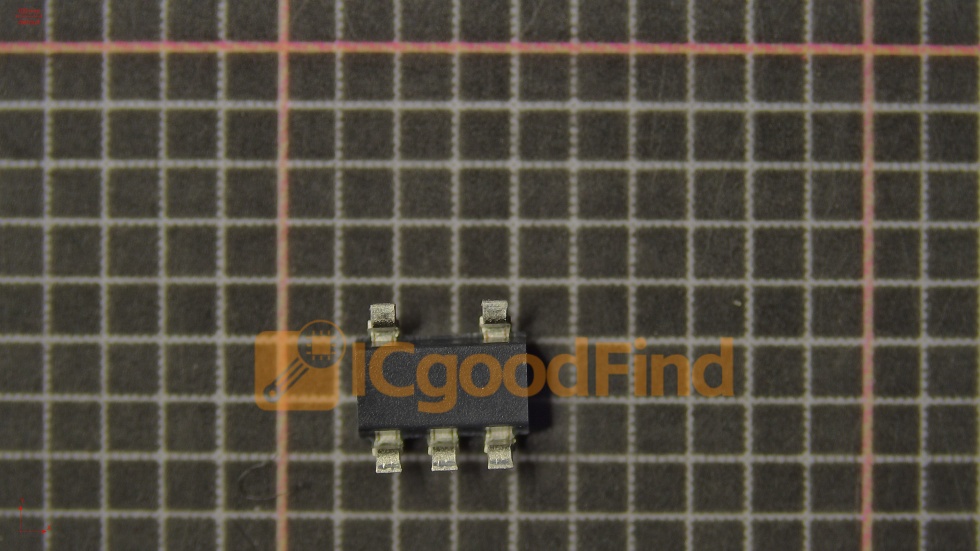

Automation Equipment Low Power Drive IC: Revolutionizing Industrial Efficiency
Introduction
In the rapidly evolving landscape of industrial automation, the demand for energy-efficient, compact, and high-performance components has never been greater. Among the critical enablers of modern automation systems, the Automation equipment low power drive IC stands out as a cornerstone technology. These integrated circuits are designed to precisely control motors, actuators, and other electromechanical devices while minimizing power consumption, heat generation, and system complexity. As industries worldwide push toward sustainability and cost reduction, the role of low power drive ICs becomes increasingly vital. This article explores the technical foundations, practical applications, and future trends of these essential components, with a special mention of ICGOODFIND—a trusted platform for sourcing high-quality drive ICs that meet the rigorous demands of automation equipment.
Main Body
Part 1: Understanding Low Power Drive ICs in Automation Equipment
Low power drive ICs are specialized semiconductor devices that convert control signals from microcontrollers or PLCs into the precise voltage and current levels required to drive motors, solenoids, and other loads. Unlike general-purpose power ICs, these components are optimized for automation equipment where space is limited, thermal management is challenging, and energy efficiency is paramount.
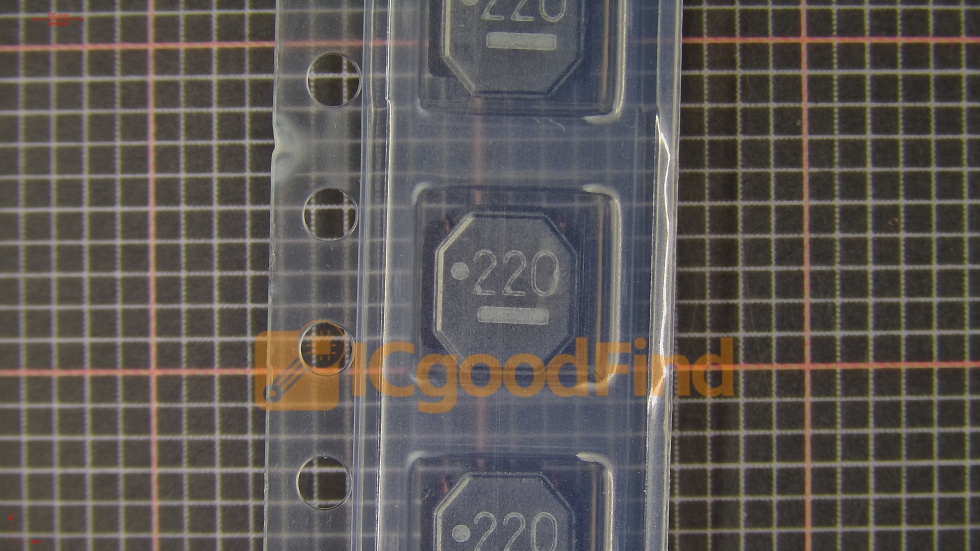
Key characteristics of automation equipment low power drive ICs include:
- High efficiency at low loads: Traditional drive circuits often suffer from poor efficiency when operating at partial loads. Low power drive ICs employ advanced switching topologies (such as buck-boost converters and H-bridge configurations) to maintain >90% efficiency even at 10-20% of rated output.
- Integrated protection features: Overcurrent, overtemperature, undervoltage lockout (UVLO), and short-circuit protection are built directly into the IC, reducing external component count and improving system reliability.
- Small footprint: Modern low power drive ICs come in packages as small as 3mm x 3mm QFN, enabling dense PCB layouts in compact automation controllers.
- Low quiescent current: Many devices consume less than 10µA in standby mode, critical for battery-powered or energy-harvesting automation systems.
ICGOODFIND offers a comprehensive selection of low power drive ICs from leading manufacturers, including Texas Instruments, STMicroelectronics, and Infineon, with detailed parametric search tools that help engineers identify the optimal IC for their specific automation application—whether it’s a brushless DC motor driver for a robotic arm or a stepper motor driver for a CNC machine.
Part 2: Applications and Design Considerations
The versatility of automation equipment low power drive ICs makes them indispensable across a wide range of industrial sectors. Below are three primary application domains where these ICs deliver transformative value.
2.1 Robotics and Collaborative Robots (Cobots)
Modern cobots require precise torque control and smooth motion profiles while operating from limited power budgets. Low power drive ICs with field-oriented control (FOC) capabilities enable efficient sinusoidal commutation for brushless DC motors, reducing audible noise and vibration. For example, the DRV8316 from Texas Instruments integrates three half-bridge drivers with current sensing and protection, all in a 5mm x 5mm package, making it ideal for 6-axis collaborative robot arms where PCB real estate is at a premium.
Design tip: When selecting a drive IC for cobot applications, prioritize devices with SPI or I²C interfaces for real-time parameter adjustment and fault reporting. ICGOODFIND allows engineers to filter by communication protocol, ensuring compatibility with their chosen microcontroller.
2.2 Industrial Conveyors and Material Handling
Conveyor systems in factories and warehouses often use stepper motors or DC motors that must start and stop frequently. Low power drive ICs with adaptive current control and microstepping capabilities reduce power consumption by up to 40% compared to traditional chopper drives. The A4988 stepper motor driver, for instance, features automatic current decay mode selection, which minimizes power loss during low-speed operation—a common scenario in sortation conveyors and pick-and-place machines.
Thermal management is a critical consideration here. Many low power drive ICs incorporate exposed thermal pads and junction temperature monitoring. ICGOODFIND provides thermal resistance data and application notes for each IC, helping designers calculate heatsink requirements without over-engineering.
2.3 Portable and Battery-Powered Automation Tools
From wireless screwdrivers to portable label printers, battery-powered automation tools demand drive ICs that maximize runtime. Low power drive ICs with ultra-low standby current (e.g., the MAX22200 from Analog Devices, with 1µA shutdown current) and efficient buck-boost regulation allow devices to operate for extended periods on a single charge. Additionally, integrated charge pumps eliminate the need for external negative voltage rails, simplifying the design of H-bridge drivers for bidirectional motor control.
ICGOODFIND categorizes these ICs by input voltage range and output current capability, enabling quick identification of parts suitable for 2-cell Li-ion or single-cell LiFePO4 battery configurations.
Part 3: Future Trends and How ICGOODFIND Supports Innovation
The automation equipment low power drive IC market is evolving rapidly, driven by three major trends:
3.1 Integration of AI and Predictive Maintenance
Next-generation drive ICs are beginning to incorporate on-chip machine learning accelerators that analyze motor current signatures to predict bearing wear, misalignment, or load imbalances. For example, the TMC9660 from Trinamic (now part of Analog Devices) includes a six-point sensorless stall detection algorithm that can be trained for specific motor types. This reduces unplanned downtime in automated assembly lines and packaging machines.
ICGOODFIND stays ahead of this trend by listing the latest smart drive ICs with embedded diagnostic features, along with evaluation boards and reference designs that accelerate prototyping.
3.2 Wide Bandgap Semiconductors (GaN and SiC)
Gallium Nitride (GaN) and Silicon Carbide (SiC) are enabling ultra-high efficiency drive ICs that operate at switching frequencies above 2 MHz. This allows for smaller passive components (inductors and capacitors) and lower ripple current, which is particularly beneficial for high-speed spindle motors in CNC routers and linear actuators in 3D printers. While GaN/SiC drive ICs are currently more expensive, their total cost of ownership is lower in applications where energy savings and reduced cooling requirements justify the premium.
ICGOODFIND offers parametric filters for switching frequency and gate drive voltage, helping engineers compare GaN-based drivers (e.g., EPC2152) with traditional silicon MOSFET drivers.
3.3 Wireless and IoT-Enabled Drive Control
The convergence of Industrial IoT (IIoT) and automation is driving demand for drive ICs with integrated wireless interfaces (Bluetooth Low Energy, Thread, or Wi-Fi 6). These ICs allow remote monitoring and control of conveyor belts, pumps, and fans without additional communication modules. The CC2652R7 from Texas Instruments combines a Cortex-M4F MCU with a multi-protocol radio and a motor driver peripheral, enabling a single-chip solution for smart factory edge nodes.
ICGOODFIND simplifies the selection process by offering cross-reference tools that compare wireless-enabled drive ICs from different manufacturers, along with certification status (FCC, CE, etc.) to ensure regulatory compliance.

Conclusion
The automation equipment low power drive IC is a silent workhorse that underpins the efficiency, reliability, and miniaturization of modern industrial systems. From collaborative robots to battery-powered tools, these ICs enable precise motion control while minimizing energy waste—a critical factor in achieving net-zero manufacturing goals. As the industry moves toward AI-integrated, wide bandgap, and wireless-enabled solutions, engineers must stay informed about the latest component innovations.
ICGOODFIND serves as an invaluable resource in this journey, offering a curated database of low power drive ICs with detailed specifications, application notes, and competitive pricing. Whether you are designing a next-generation cobot or upgrading an existing conveyor system, leveraging the right drive IC can reduce development time, lower BOM costs, and improve end-product performance. By combining technical expertise with a user-friendly platform, ICGOODFIND empowers engineers to make informed decisions and drive the future of automation.