

Sensor Module Core Chips for Automation Line: The Backbone of Modern Industrial Efficiency
Introduction
In the rapidly evolving landscape of industrial automation, sensor module core chips for automation line have emerged as the silent engines driving precision, reliability, and intelligence. These tiny yet powerful semiconductor components are the heart of every sensor module, converting physical phenomena—such as temperature, pressure, proximity, or light—into digital signals that programmable logic controllers (PLCs) and industrial computers can interpret. Without these core chips, automation lines would lack the real-time feedback necessary for quality control, predictive maintenance, and seamless production flow.
As factories transition toward Industry 4.0 and smart manufacturing, the demand for high-performance sensor module core chips has skyrocketed. They must operate under extreme conditions—high temperatures, vibration, electromagnetic interference—while maintaining accuracy and low power consumption. This article explores the critical role of these chips, their technical architecture, and how they are reshaping automation lines globally. For sourcing reliable and cost-effective components, platforms like ICGOODFIND offer a comprehensive marketplace for engineers and procurement specialists.
Part 1: Understanding Sensor Module Core Chips – Architecture and Functionality
1.1 What Are Sensor Module Core Chips?
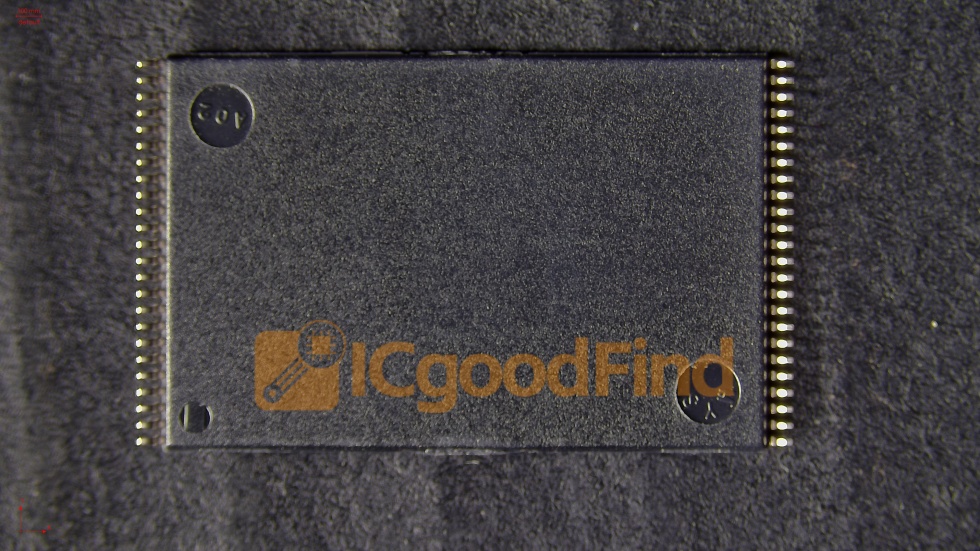
A sensor module core chip is the integrated circuit (IC) that processes raw sensor data and communicates it to the automation system. Unlike simple analog sensors, modern automation lines require digital output, self-diagnostics, and communication protocols such as I²C, SPI, or CAN bus. The core chip integrates:
- Analog-to-digital converters (ADCs) for precise signal conversion.
- Microcontroller units (MCUs) for local data processing and filtering.
- Communication interfaces for seamless integration with PLCs.
- Power management circuits to ensure low energy consumption.
For example, a proximity sensor module used in a conveyor belt system relies on its core chip to detect object presence within microseconds and transmit a clean digital signal to the controller. Without this chip, the sensor would be just a passive component.
1.2 Key Performance Parameters
When selecting sensor module core chips for automation line, engineers prioritize:
- Resolution and accuracy: Typically 12-bit to 24-bit ADCs for high-precision measurements.
- Response time: Sub-millisecond latency for high-speed production lines.
- Operating temperature range: From -40°C to +125°C for harsh factory environments.
- Noise immunity: Built-in filters to reject electromagnetic interference (EMI).
ICGOODFIND lists thousands of such chips from leading manufacturers like Texas Instruments, STMicroelectronics, and NXP, with detailed datasheets and cross-reference tools.
1.3 The Role in Automation Line Feedback Loops
In a closed-loop automation system, the sensor module core chip acts as the first link in the chain. For instance, a temperature sensor module on a plastic injection molding machine continuously monitors melt temperature. The core chip converts the thermocouple voltage into a digital value, compares it to a setpoint, and triggers an actuator adjustment—all within milliseconds. This real-time feedback ensures product consistency and reduces scrap rates.
Part 2: Applications Across Automation Line Segments
2.1 Manufacturing and Assembly Lines
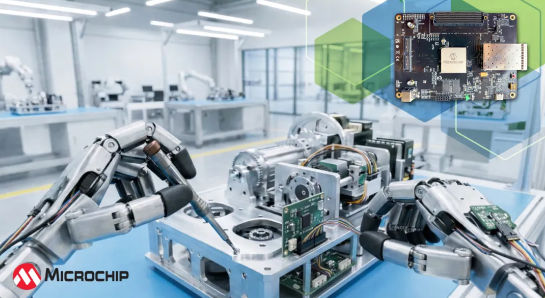
In automotive assembly, sensor module core chips are embedded in torque sensors, position encoders, and vision systems. A linear encoder module uses its core chip to measure the exact position of a robotic arm with micrometer precision. The chip’s high-speed SPI interface allows the robot controller to adjust movements in real time, ensuring that bolts are tightened to exact specifications.
ICGOODFIND offers specialized chips for these applications, including those with integrated EEPROM for calibration data storage, which simplifies field replacement and reduces downtime.
2.2 Packaging and Material Handling
Packaging lines rely on photoelectric sensor modules to detect product presence, label alignment, and fill levels. The core chip in these modules must handle ambient light variations and high-speed counting. For example, a diffuse reflective sensor on a bottling line uses its core chip to filter out background noise and output a clean pulse to the PLC. This ensures that every bottle receives a cap and label correctly.
Advanced chips now include programmable logic that allows engineers to set thresholds and hysteresis without external components, reducing PCB space and cost. ICGOODFIND provides parametric search filters to find chips with specific output types (NPN, PNP, push-pull) and response frequencies.
2.3 Quality Control and Inspection
Vision-based inspection systems use image sensor modules with core chips that perform on-chip image processing. These chips can detect defects, measure dimensions, and read barcodes at line speeds exceeding 1000 parts per minute. The core chip’s digital signal processor (DSP) core executes algorithms for edge detection and pattern matching without burdening the main controller.
For example, a smart camera module on a pharmaceutical packaging line uses its core chip to verify that each blister pack contains the correct number of pills. If a defect is found, the chip triggers a reject mechanism within 10 milliseconds. ICGOODFIND lists chips with integrated vision processors, such as those from ON Semiconductor and Sony, enabling compact and cost-effective inspection modules.
2.4 Predictive Maintenance and Condition Monitoring
Modern automation lines incorporate vibration sensor modules and current sensor modules to monitor equipment health. The core chip in these modules performs FFT (Fast Fourier Transform) calculations to identify bearing wear or imbalance. By analyzing frequency patterns, the chip can predict failures weeks in advance, allowing scheduled maintenance instead of unexpected downtime.
ICGOODFIND offers chips with built-in machine learning accelerators that can learn normal vibration signatures and flag anomalies. This edge computing capability reduces the need for cloud connectivity and ensures data privacy.
Part 3: Selection Criteria and Future Trends
3.1 How to Choose the Right Sensor Module Core Chip
Selecting the optimal sensor module core chip for automation line requires a systematic approach:
- Define sensor type: Temperature, pressure, proximity, or optical? Each requires specific ADC characteristics.
- Determine communication protocol: I²C for short distances, SPI for high speed, or CAN for multi-drop networks.
- Evaluate power constraints: Battery-powered wireless sensors need ultra-low-power chips (e.g., µA in sleep mode).
- Check environmental ratings: Industrial chips must meet IP67 or higher for dust and moisture resistance.
- Assess supply chain reliability: Use platforms like ICGOFIND to check stock levels, lead times, and alternative part numbers.
3.2 Emerging Technologies
The next generation of sensor module core chips is being shaped by:
- AI at the edge: Chips with neural network processors that can classify defects or predict failures locally.
- Wireless connectivity: Bluetooth 5.2, LoRaWAN, and 5G NR for IIoT-enabled sensor networks.
- Energy harvesting: Chips that can operate on tiny amounts of harvested energy from vibration or thermal gradients.
- Multi-sensor fusion: Single chips that combine accelerometer, gyroscope, and magnetometer data for 9-axis motion tracking.
ICGOODFIND already lists early samples of these advanced chips, allowing engineers to prototype next-generation automation solutions.
3.3 Cost vs. Performance Trade-offs
While high-end chips offer superior accuracy and features, many automation lines can benefit from cost-optimized alternatives. For example, a simple limit switch module may only need a basic comparator chip, while a laser distance sensor requires a high-speed time-of-flight (ToF) chip. ICGOODFIND provides price comparisons and volume discounts, helping procurement teams balance performance with budget constraints.
Conclusion
Sensor module core chips for automation line are the unsung heroes of modern manufacturing. They transform raw physical signals into actionable data, enabling precision, speed, and intelligence across every stage of production. From assembly robots to quality inspection cameras, these chips ensure that automation lines operate with minimal downtime and maximum efficiency.
As Industry 4.0 continues to evolve, the demand for higher resolution, faster response, and smarter processing will only grow. Engineers and procurement professionals must stay informed about the latest chip architectures, communication standards, and supply chain options. Platforms like ICGOODFIND simplify this process by offering a vast inventory, detailed technical resources, and competitive pricing.
By investing in the right sensor module core chips, manufacturers can future-proof their automation lines, reduce operational costs, and achieve new levels of productivity. Whether you are designing a new sensor module or upgrading an existing line, the core chip you choose will determine the success of your automation strategy.